





Redstem Stork's-bill
Erodium cicutarium
Redstem Stork's-bill is a small plant with pretty pink flowers. It grows close to the ground and can be found in many places, making it a friendly sight in nature.
Habitat: Grasslands
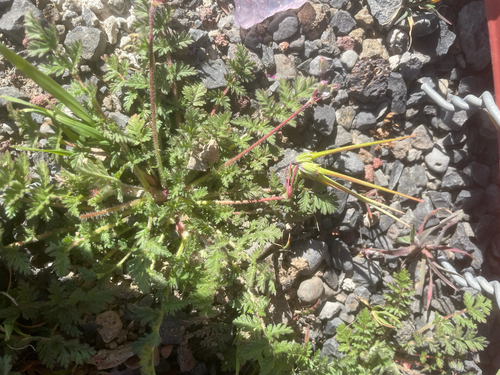
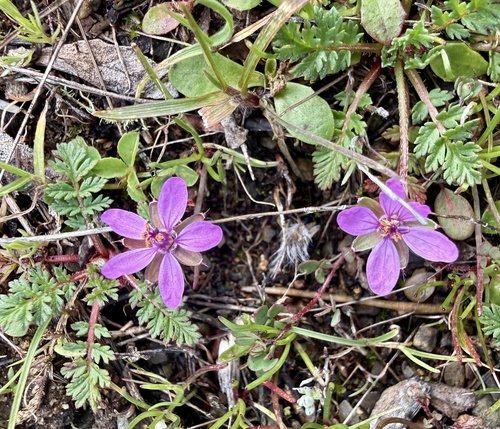
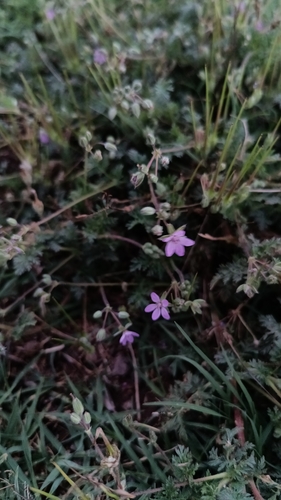
The Redstem Stork's-bill has distinctive reddish stems and fern-like leaves, deeply divided and often hairy. Its small, five-petaled flowers are usually pale pink or purplish, standing out against its low-growing foliage. The plant's most unique visual feature is its long, slender, stork's-bill shaped seed pod.
Category
PlantsRarity
Common
Danger
1/5 · Very low
Snaps
27
It's sometimes called 'filaree' from an Arabic word meaning 'thread-like' for its stems!
Its name 'stork's-bill' comes from its long, beak-like seed pod!
This adaptable plant can bloom almost any time of year in warmer climates!
Young Redstem Stork's-bill leaves are edible and taste like mild parsley or celery.
Redstem Stork's-bill has spiral seeds that can twist and 'drill' themselves into the soil for planting, especially after rain.
The dried 'stork's bill' part of its fruit reacts to humidity, twisting to help fling seeds further away.
It can grow in very poor, dry soils where many other plants struggle, thanks to its resilient root system.
Apis mellifera
Helps spread pollen between flowers.
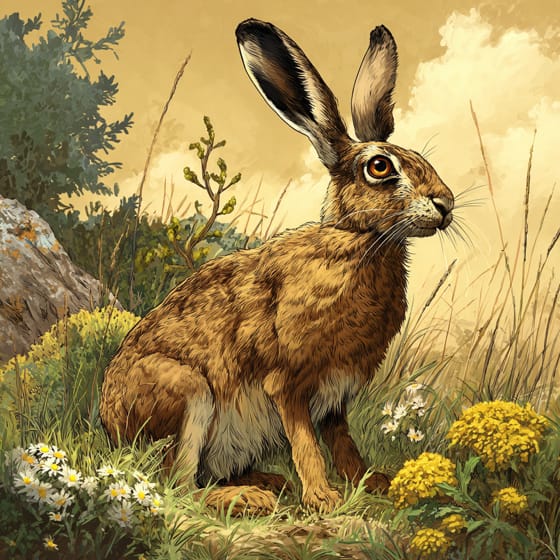
Lepus europaeus
Young leaves and stems are a food source.
Ovis aries
Often grazed by livestock in pastures.
Aphis gossypii
Sucks sap from stems and leaves.
Flowering plants are any plants that produce flowers as part of their reproductive cycle.
Spring blooming plants produce their flowers during the spring season, often signifying the end of winter and the start of new growth.
Medicinal plants possess chemical compounds that can be used for therapeutic purposes to treat illnesses or maintain health.
Drought-tolerant plants can survive and flourish in conditions with limited water availability.

Edible plants are those parts of a plant that are considered safe for human consumption.

Grassland habitats are terrestrial biomes dominated by grasses and herbaceous plants, supporting a variety of grazing animals.

Describes plants that are particularly attractive and beneficial to a wide range of pollinating organisms.
No aliases listed yet.
Danger
1/5 · Very low
Always look but don’t touch plants without asking an adult, just to be safe.
The easiest way to identify Redstem Stork's-bill is to use the Snappit nature identifier app.
5-50 cm
10-60 cm
0.5-1 cm
Spring to Fall
Yes
None
Annual
Zoom in to split clusters and explore where this object has been snapped.
Apr 3, 2026
Grand CouleePhoto attribution
(c) solidstate, some rights reserved (CC BY)
License: CC BY 4.0 ↗
Image may be shown cropped inside the card frame.
Feb 20, 2026
El Sereno Open SpacePhoto attribution
no rights reserved
License: CC0 1.0 ↗
Image may be shown cropped inside the card frame.
May 29, 2025
GlenrioPhoto attribution
(c) Michael Thaibinh, some rights reserved (CC BY)
License: CC BY 4.0 ↗
Image may be shown cropped inside the card frame.

New Mexico, US
You might spot Pronghorn, Great-Tailed Grackle, and Redstem Stork's-Bill.
View guide →

Wyoming, US
You might spot Elk, Killdeer, and Black-Billed Magpie.
View guide →

Texas, US
You might spot Christmas Cholla, Dakota Mock Vervain, and Honey Mesquite.
View guide →

New York, US
You might spot Coral, Sea Lion, and African Penguin.
View guide →

Arizona, US
You might spot Golden Eagle, Black Bear, and Cougar.
View guide →

Montana, US
You might spot Tiger, Grizzly Bear, and Red Panda.
View guide →
Take the discovery with you
Snap it with Snappit to identify it, learn what makes it special, and add the discovery to your collection.








.jpg&width=800)



_001.jpg&width=800)



