_fem%2C_oso_flaco%2C_sloco%2C_ca_oso_(1)_(8718083235).jpg&width=800)





Ruddy Duck
Oxyura jamaicensis
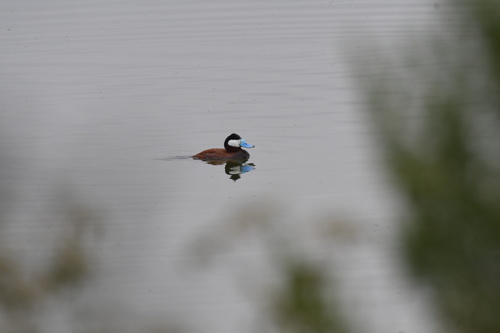
The Ruddy Duck is a small, colorful bird known for its bright blue bill and rusty-red body. Male Ruddy Ducks are especially striking during mating season when they show off their beautiful colors.
Habitat: Wetlands
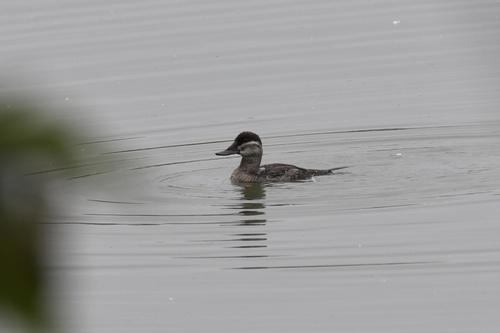
The Ruddy Duck is a small, stout duck with a distinctive stiff tail often held upright. Breeding males have a bright blue bill and rusty-red body, while females are duller brown with a dark bill stripe and paler cheek.
Category
BirdsRarity
Common
Danger
1/5 · Very low
Snaps
16
A male Ruddy Duck’s bill turns a super bright sky blue during mating season!
Ruddy Duck eggs are surprisingly huge, making them one of the biggest duck eggs!
Ruddy Ducks are very clumsy on land but are amazing underwater swimmers!
These ducks can hold their stiff tail feathers straight up in the air!
Ruddy Duck has a stiff, fan-like tail that helps them steer expertly underwater and when performing unique courtship displays.
Ruddy Duck can slow its heart rate and oxygen use, allowing them to stay underwater for surprisingly long periods.
They mostly eat tiny aquatic insects and plants found by diving deep underwater.
Age differences: Young chicks eat more insects, while adults consume more plant material.

Haliaeetus leucocephalus
Bald Eagles are aerial predators that hunt adult Ruddy Ducks.
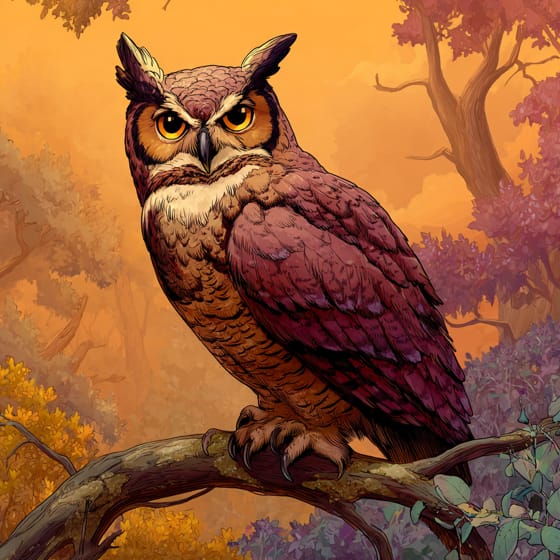
Bubo virginianus
Great Horned Owls can snatch ducks from the water at night.
Anas platyrhynchos
Ruddy Ducks sometimes lay their eggs in the nests of other ducks.
Chironomus plumosus
Ruddy Ducks dive for midge larvae and other tiny aquatic insects.
Feathered describes animals, primarily birds, possessing a covering of feathers.
Social animals live in organized groups, cooperating for survival benefits such as foraging, defense, and raising offspring.
Colorful describes organisms or objects displaying a wide range of bright and distinct colors.
Filter feeders obtain nutrients by straining suspended food particles and small organisms from water.

This trait identifies organisms whose diet primarily consists of insects and other small invertebrates.

This habitat trait identifies species found in wetlands, which are areas of land saturated with water, either permanently or seasonally, including marshes, swamps, and bogs.

Diurnal animals are primarily active during daylight hours, typically resting or sleeping at night.

This trait identifies organisms that exhibit exceptional swiftness in movement for hunting, escape, or travel.

Aquatic habitats encompass environments where organisms live predominantly in water, including oceans, rivers, lakes, and wetlands.

Migratory animals undertake seasonal movements from one region to another, typically in response to changes in climate or food availability.
No aliases listed yet.
Danger
1/5 · Very low
Always watch birds from a distance and do not try to touch them.
The easiest way to identify Ruddy Duck is to use the Snappit nature identifier app.
35-43 cm
53-62 cm
0.42-0.85 kg
5-13 years
60 km/h
They mostly eat tiny aquatic insects and plants found by diving deep underwater.
Wetlands
Zoom in to split clusters and explore where this object has been snapped.
Jun 6, 2026
Mount EcclesiaPhoto attribution
(c) zr217, some rights reserved (CC BY)
License: CC BY 4.0 ↗
Image may be shown cropped inside the card frame.
Jun 6, 2026
Mount EcclesiaPhoto attribution
(c) zr217, some rights reserved (CC BY)
License: CC BY 4.0 ↗
Image may be shown cropped inside the card frame.

California, US
You might spot Snowy Egret, Great Blue Heron, and Willet.
View guide →
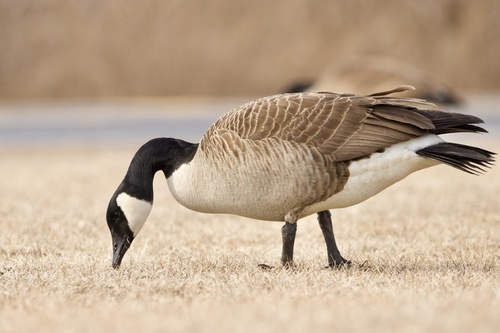
Illinois, US
You might spot Canada Goose, House Sparrow, and Rock Pigeon.
View guide →

California, US
You might spot American Avocet, Great Egret, and Snowy Egret.
View guide →

Wyoming, US
You might spot Elk, American White Pelican, and Arrowleaf Balsamroot.
View guide →

Montana, US
You might spot Western Ponderosa Pine and Great Horned Owl.
View guide →

Illinois, US
You might spot Canada Goose, House Sparrow, and Rock Pigeon.
View guide →
Take the discovery with you
Snap it with Snappit to identify it, learn what makes it special, and add the discovery to your collection.




.jpg&width=800)







