





Southern Cricket Frog
Acris gryllus
The Southern Cricket Frog is a small, lively frog that loves to hop around. They make a funny sound that sounds like a cricket, especially during warm days and nights.
Habitat: Wetlands
The Southern Cricket Frog is a tiny amphibian, typically green, brown, or gray, with rough, warty skin. It often has a distinct dark triangle mark between its eyes and dark stripes on its legs, making it visually distinct from smooth-skinned frogs.
Category
AmphibiansRarity
Common
Danger
1/5 · Very low
Snaps
6
Look for a dark triangle mark often between their eyes, a secret symbol!
The Southern Cricket Frog is one of the smallest frogs in North America!
Their chirping call sounds exactly like crickets rubbing their legs together!
These tiny frogs can lay hundreds of eggs in a single breeding season!
Southern Cricket Frog can jump up to 6 feet, about 60 times its body length, to escape danger quickly.
Southern Cricket Frog has a distinct call, sounding like crickets clicking, that helps them find mates.
Southern Cricket Frog can change its skin color (green, brown, or gray) to perfectly blend into its surroundings.
These tiny frogs gobble up small insects, spiders, and other tiny creatures they find nearby.
Age differences: Tadpoles eat algae and detritus; adults are insectivores.
Thamnophis sirtalis
Common Garter Snakes prey on these small frogs.
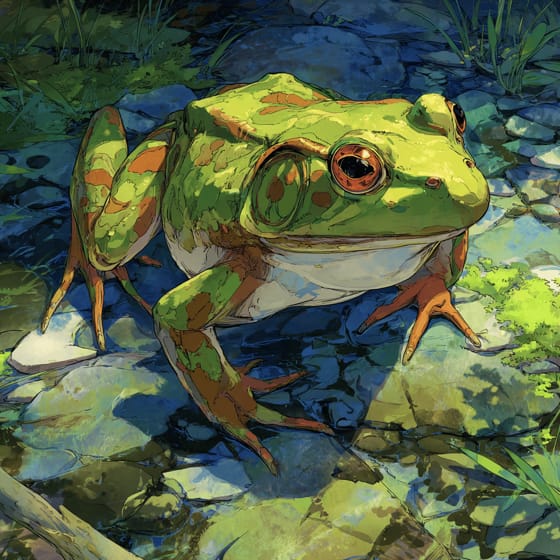
Lithobates catesbeianus
Larger bullfrogs frequently ambush smaller cricket frogs.

Ardea alba
Great Egrets stalk shallow water to catch frogs.
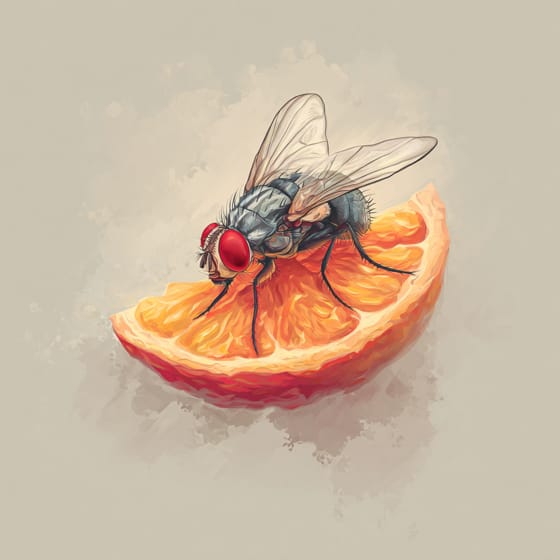
Drosophila melanogaster
Southern Cricket Frogs hunt small fruit flies.
Social animals live in organized groups, cooperating for survival benefits such as foraging, defense, and raising offspring.
Camouflaged describes organisms that possess coloring or patterns that allow them to blend into their environment.
This trait identifies organisms whose diet primarily consists of insects and other small invertebrates.
This habitat trait identifies species found in wetlands, which are areas of land saturated with water, either permanently or seasonally, including marshes, swamps, and bogs.

Diurnal animals are primarily active during daylight hours, typically resting or sleeping at night.

Freshwater habitats include non-saline aquatic environments such as rivers, lakes, ponds, and wetlands, vital for numerous species.

This trait identifies organisms that exhibit exceptional swiftness in movement for hunting, escape, or travel.

Nocturnal animals are primarily active during the nighttime hours, typically resting or sleeping during the day.

Describes organisms that transfer pollen, enabling the fertilization and reproduction of plants.
No aliases listed yet.
Danger
1/5 · Very low
Always watch where you step when near water to protect frogs and other animals.
The easiest way to identify Southern Cricket Frog is to use the Snappit nature identifier app.
1.5-3.8 cm
0.002-0.008 kg
1-2 years
0.5 km/h
These tiny frogs gobble up small insects, spiders, and other tiny creatures they find nearby.
Wetlands
Ambush
Zoom in to split clusters and explore where this object has been snapped.

Georgia, US
You might spot Anole, Pond Slider, and Spanish Moss.
View guide →
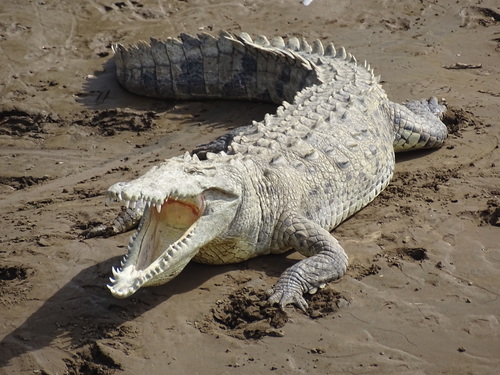
Florida, US
You might spot American Crocodile and American Alligator.
View guide →

Alabama, US
You might spot Dwarf Palmetto and Sensitive Fern.
View guide →

Florida, US
You might spot Yellow Pitcher Plant and Parrot Pitcher Plant.
View guide →
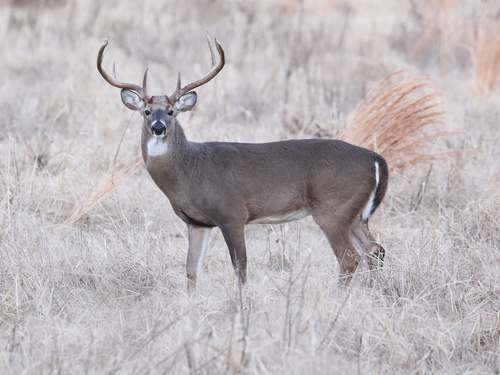
Florida, US
You might spot White-Tailed Deer, American Alligator, and Garberia.
View guide →

North Carolina, US
You might spot Spiny Spikemoss, Carolina Wicky, and Longleaf Pine.
View guide →
Take the discovery with you
Snap it with Snappit to identify it, learn what makes it special, and add the discovery to your collection.








.JPG&width=800)



.jpg&width=800)

