.jpg&width=800)





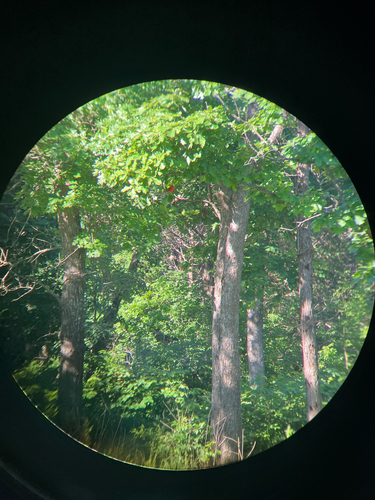
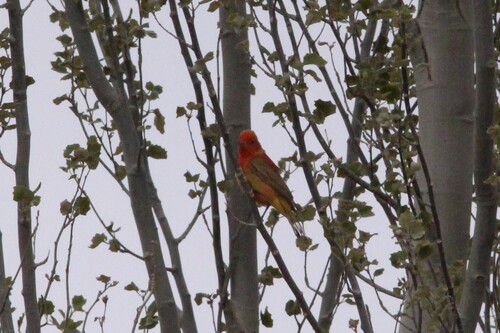
Summer Tanager
Piranga rubra
The Summer Tanager is a bright red bird that loves to sing! It can be found in warm places and enjoys eating insects and fruits. Its cheerful song makes it a favorite among bird watchers.
Habitat: Forests
The Summer Tanager is a medium-sized songbird, distinct for its males being entirely vibrant red, resembling a 'fire-bird'. Females are dull yellow-green with dusky wings, unlike the black wings of other red tanagers. Its stout, pale bill is also a distinguishing feature.
Category
BirdsRarity
Common
Danger
1/5 · Very low
Snaps
30
Male Summer Tanagers get their vibrant red color from chemicals in the insects they eat!
Some tanagers travel thousands of miles, flying from Canada to South America each year!
Summer Tanagers are one of the few birds that regularly eat venomous stinging insects like wasps!
Their nests can be so thin, you might actually see the eggs right through the bottom!
Summer Tanager can deftly snatch flying insects like bees and wasps right out of the air, helping them catch food on the wing.
Summer Tanager can rub stinging insects against a branch to remove their venomous stingers, allowing them to eat safely.
These colorful birds mostly feast on flying insects, especially bees and wasps, but also enjoy some fruits.
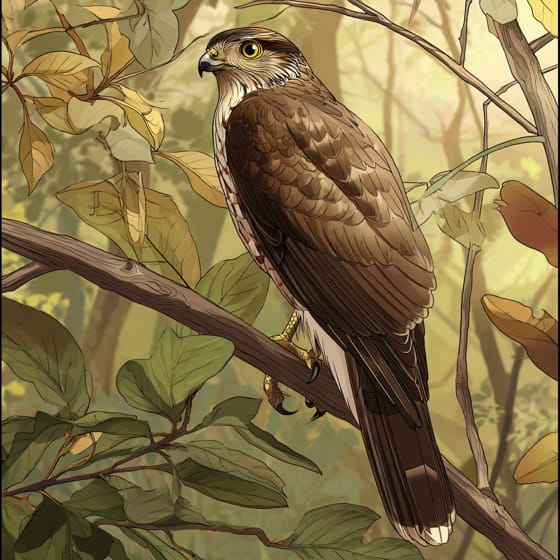
Accipiter cooperii
Hunts adult tanagers in woodlands.
Apis mellifera
Captures and consumes these insects as a key food.
Thamnophis sirtalis
Preys on eggs and nestlings in their nests.
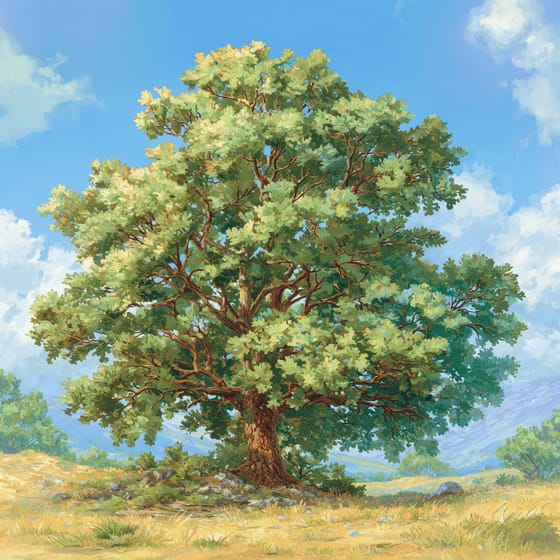
Quercus alba
Frequently builds nests in the sturdy branches of these trees.
Feathered describes animals, primarily birds, possessing a covering of feathers.
Social animals live in organized groups, cooperating for survival benefits such as foraging, defense, and raising offspring.
Singing animals produce complex vocalizations, often for purposes of attracting mates, defending territory, or communicating within their species.
Colorful describes organisms or objects displaying a wide range of bright and distinct colors.

This trait identifies organisms whose diet primarily consists of insects and other small invertebrates.

Forest habitats are terrestrial environments dominated by dense tree cover, supporting a high diversity of plant and animal life.

Migratory animals undertake seasonal movements from one region to another, typically in response to changes in climate or food availability.
Danger
1/5 · Very low
Enjoy watching birds from a distance, and don't try to touch or catch them.
The easiest way to identify Summer Tanager is to use the Snappit nature identifier app.
17-19 cm
28-30 cm
0.028-0.032 kg
4-7 years
40 km/h
These colorful birds mostly feast on flying insects, especially bees and wasps, but also enjoy some fruits.
Forests
Zoom in to split clusters and explore where this object has been snapped.
Jun 19, 2026
Shaw Nature ReservePhoto attribution
(c) Laurie, some rights reserved (CC BY)
License: CC BY 4.0 ↗
Image may be shown cropped inside the card frame.
May 4, 2026
Gallup Commercial Historic DistrictPhoto attribution
(c) William Harmon, some rights reserved (CC BY)
License: CC BY 4.0 ↗
Image may be shown cropped inside the card frame.
Jun 7, 2026

Arizona, US
You might spot Northern Cardinal, Engelmann's Hedgehog Cactus, and Queen.
View guide →

California, US
You might spot Peridot Sweat Bee and Western Fence Lizard.
View guide →

Michigan, US
You might spot Yellow Lady's Slipper and Ring-Billed Gull.
View guide →
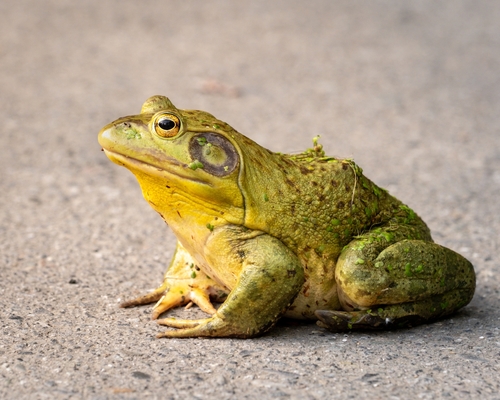
Virginia, US
You might spot American Bullfrog, Snapping Turtle, and Great Blue Heron.
View guide →

Michigan, US
You might spot Eastern Box Turtle, Autumn Olive, and Common Watersnake.
View guide →
Virginia, US
You might spot American Bullfrog, Snapping Turtle, and Great Blue Heron.
View guide →
Take the discovery with you
Snap it with Snappit to identify it, learn what makes it special, and add the discovery to your collection.




.jpg&width=800)







