





tree privet
Ligustrum lucidum
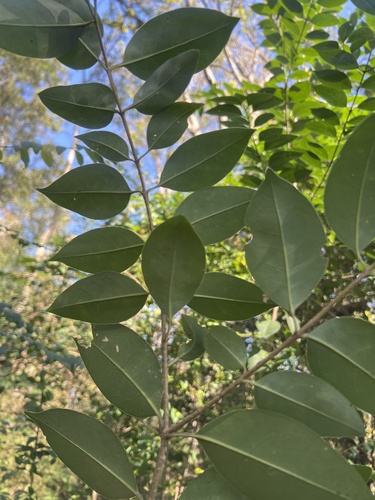
Tree privet is a bushy plant that can grow tall and has shiny green leaves. It often has small white flowers that turn into black berries, which birds love to eat!
Habitat: Urban areas
The tree privet has dense, glossy dark green leaves that remain all year. It produces clusters of small, strongly fragrant white flowers, followed by abundant small, round, dark purple to black berries.
Category
PlantsRarity
Common
Danger
2/5 · Low
Snaps
3
In some places, it grows so well it takes over other plants!
Its wood is so dense, it's been used to make carving tools.
Some privet trees can live for over a hundred years!
This plant is related to the olive tree, a tasty fruit!
Tree privet has evergreen leaves that provide year-round shelter for small animals, even in winter.
Tree privet can produce thousands of dark berries, which birds love to eat, helping to spread its seeds far and wide.
Tree privet can grow in tough places like polluted city air, helping it thrive where many other plants struggle.
Apis mellifera
Gathers nectar and pollen from its flowers.
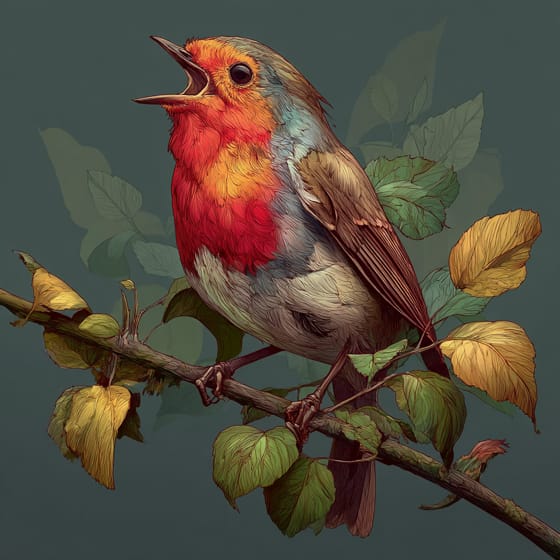
Turdus migratorius
Consumes its berries, aiding seed dispersal.
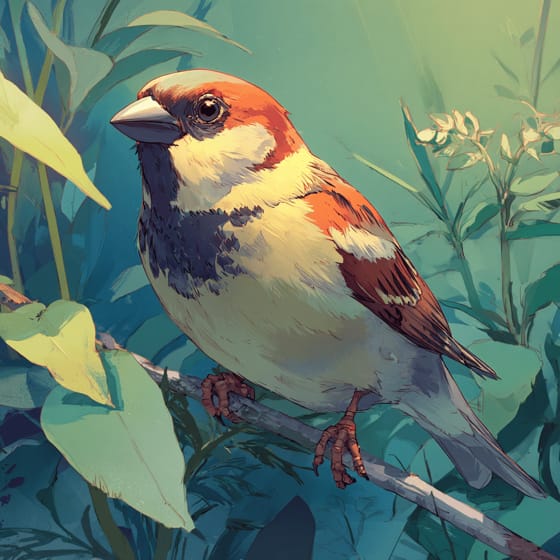
Passer domesticus
Uses its dense foliage for nesting and cover.
Flowering plants are any plants that produce flowers as part of their reproductive cycle.
Shade tolerant plants are adapted to grow and thrive in areas with low light levels, requiring less direct sunlight.
A shrub is a woody plant smaller than a tree, typically with multiple stems branching from or near the ground.
Broadleaf trees are angiosperms characterized by flat, wide leaves that are typically shed annually in temperate climates.

Evergreen plants retain their foliage throughout the year, never shedding all their leaves at once.

Fruit-bearing plants produce fruits, which are the mature ovaries of flowering plants containing seeds.

Rapid growing plants exhibit accelerated growth rates, quickly increasing in size and biomass within a short period.

This habitat trait indicates species that can coexist with humans in urban and suburban environments, utilizing man-made structures and green spaces.
No aliases listed yet.
Danger
2/5 · Low
While tree privet is fun to look at, it's best not to eat any berries without asking an adult.
The easiest way to identify tree privet is to use the Snappit nature identifier app.
500-1500 cm
300-1000 cm
0.5-1 cm
Summer
No
Mild
Perennial
Zoom in to split clusters and explore where this object has been snapped.
Nov 17, 2024
Icehouse Historic DistrictPhoto attribution
(c) sblumen, some rights reserved (CC BY)
License: CC BY 4.0 ↗
Image may be shown cropped inside the card frame.

Texas, US
You might spot Giraffes, Tiger, and Hippopotamus.
View guide →

South Carolina, US
You might spot Eastern Pondhawk and Four-Spotted Pennant.
View guide →

Alabama, US
You might spot Spanish Moss, Mediterranean House Gecko, and Anole.
View guide →

Alabama, US
You might spot Spanish Moss, Mapleleaf, and Mediterranean House Gecko.
View guide →
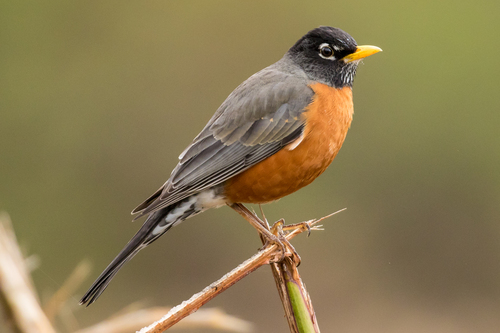
Illinois, US
You might spot American Robin and Northern Mockingbird.
View guide →
Take the discovery with you
Snap it with Snappit to identify it, learn what makes it special, and add the discovery to your collection.








.jpg&width=800)


_001.jpg&width=800)


