.jpg&width=800)





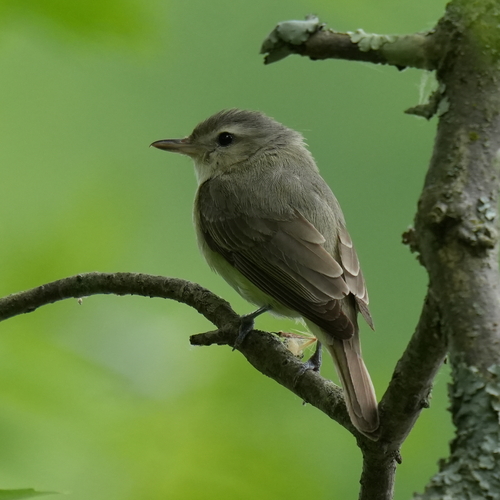
Warbling Vireo
Vireo gilvus
The Warbling Vireo is a small, cheerful bird known for its lovely songs. It has a greenish-yellow body and loves to sing while perched in trees, making it a delightful sight in nature.
Habitat: Forests
The Warbling Vireo is a small, plain songbird with grayish-olive upperparts and clean whitish underparts. It has a faint white eyebrow stripe and no wing bars, giving it a rather unadorned appearance that distinguishes it from other vireos.
Category
BirdsRarity
Common
Danger
1/5 · Very low
Snaps
11
Female vireos build their entire nest alone, a tiny woven masterpiece.
Some Warbling Vireos travel over 4,000 km during migration each year!
Their unique song sounds like a cheerful, musical "roller coaster" ride!
They often sing so high in the trees, they're easier to hear than see!
Warbling Vireo can weave a sturdy, cup-shaped nest, hidden high in leafy trees, protecting their young from harm.
Warbling Vireo has a long, cheerful, warbling song that helps them attract a mate and defend their nesting territory.
Warbling Vireo can spot tiny insects hiding on leaves from afar, helping them find food efficiently for their family.
Tiny insect eaters that help keep garden pests away!
.jpg&width=800)
Molothrus ater
Lays eggs in Warbling Vireo nests.

Populus tremuloides
Often builds nests in aspen and other deciduous trees.
Malacosoma americanum
Feeds on these common forest pests.
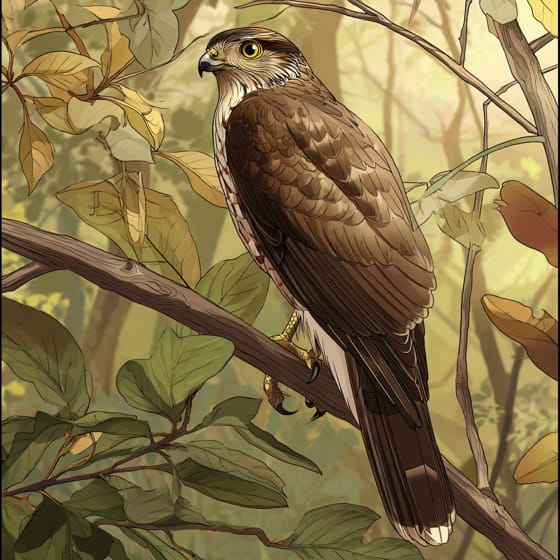
Accipiter cooperii
Small songbirds like vireos are prey for this hawk.
Feathered describes animals, primarily birds, possessing a covering of feathers.
Social animals live in organized groups, cooperating for survival benefits such as foraging, defense, and raising offspring.
Singing animals produce complex vocalizations, often for purposes of attracting mates, defending territory, or communicating within their species.
This trait identifies organisms whose diet primarily consists of insects and other small invertebrates.

Forest habitats are terrestrial environments dominated by dense tree cover, supporting a high diversity of plant and animal life.

Diurnal animals are primarily active during daylight hours, typically resting or sleeping at night.

Migratory animals undertake seasonal movements from one region to another, typically in response to changes in climate or food availability.
No aliases listed yet.
Danger
1/5 · Very low
Enjoy watching birds from a distance and don't disturb their nests.
The easiest way to identify Warbling Vireo is to use the Snappit nature identifier app.
11-14 cm
20-22 cm
0.01-0.014 kg
5-7 years
35 km/h
Tiny insect eaters that help keep garden pests away!
Forests
Zoom in to split clusters and explore where this object has been snapped.
Jun 6, 2026
Reeves-Reed ArboretumPhoto attribution
(c) foxsu, some rights reserved (CC BY)
License: CC BY 4.0 ↗
Image may be shown cropped inside the card frame.

US
You might spot Monarch, Ipsilon Dart Moth, and Canada Goose.
View guide →

Washington, US
You might spot Pacific Banana Slug and Oregon Forestsnail.
View guide →

Connecticut, US
You might spot Spongy Moth, Eastern Tent Caterpillar Moth, and Monarch.
View guide →

Oregon, US
You might spot Belding's Ground Squirrel and Yellow-Headed Blackbird.
View guide →

Connecticut, US
You might spot Spongy Moth and Eastern Tent Caterpillar Moth.
View guide →

Illinois, US
You might spot Cassin's 13-Year Cicada, Duck, and White-Tailed Deer.
View guide →
Take the discovery with you
Snap it with Snappit to identify it, learn what makes it special, and add the discovery to your collection.




.jpg&width=800)







