





White-dotted Prominent
Nadata gibbosa
The White-dotted Prominent is a special caterpillar that turns into a beautiful moth. It has white dots on its body that help it blend in with the leaves, making it hard for predators to see!
Habitat: Forests
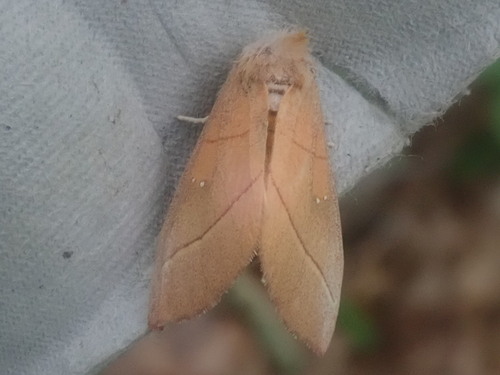
The White-dotted Prominent is a creamy white to pale yellowish-brown moth with a distinctive, raised tuft of scales on its thorax, giving it a 'humped' appearance. Its forewings feature wavy dark lines and a small, often obscure, white dash or dot near the center, making it visually unique among similar-sized moths.
Category
InsectsRarity
Common
Danger
1/5 · Very low
Snaps
20
Its caterpillars are masters of disguise, often looking exactly like a chewed leaf edge to hide!
The adult moth has a funny, furry 'hump' on its back, giving it a unique silhouette.
The tiny white dot on its wing, which gives it part of its name, can sometimes be hard to spot!
Unlike many insects, adult White-dotted Prominent moths often don't eat at all during their adult life!
White-dotted Prominent caterpillars can perfectly mimic dead twigs or chewed leaf edges, helping them blend seamlessly into their surroundings.
This moth has special hearing organs on its chest that help it detect the ultrasonic calls of hunting bats, allowing it to escape danger.
Caterpillars munch on tree leaves; adults usually don't eat.
Age differences: Larvae (caterpillars) are herbivorous, feeding on tree leaves. Adults typically do not feed, relying on energy stored from the larval stage.
Furry describes animals possessing a dense covering of soft hair or fur.
Solitary animals live alone for most of their lives, only interacting with others for mating or parental care.
Camouflaged describes organisms that possess coloring or patterns that allow them to blend into their environment.
This trait characterizes organisms whose diet consists entirely or primarily of plant material.

Forest habitats are terrestrial environments dominated by dense tree cover, supporting a high diversity of plant and animal life.

Diurnal animals are primarily active during daylight hours, typically resting or sleeping at night.

Describes organisms that transfer pollen, enabling the fertilization and reproduction of plants.
No aliases listed yet.
Danger
1/5 · Very low
Always look but don't touch insects, as some can be delicate.
The easiest way to identify White-dotted Prominent is to use the Snappit nature identifier app.
35-50 mm
20-25 mm
60-90 days
Caterpillars munch on tree leaves; adults usually don't eat.
Forests
Foraging
6
Zoom in to split clusters and explore where this object has been snapped.
Jul 21, 2023
Doane's FallsPhoto attribution
no rights reserved
License: CC0 1.0 ↗
Image may be shown cropped inside the card frame.

Tennessee, US
You might spot House Sparrow, Northern Mockingbird, and Gulf Fritillary.
View guide →

Maryland, US
You might spot Osprey, Duck, and Spotted Lanternfly.
View guide →
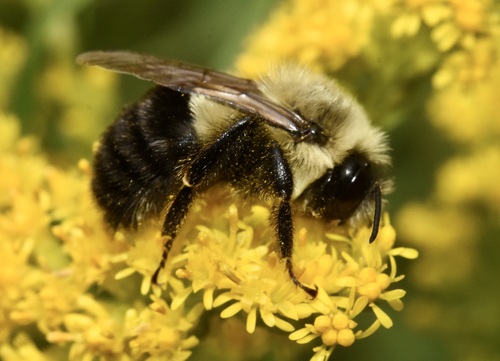
Ohio, US
You might spot Common Eastern Bumble Bee, Sensitive Fern, and Mayapple.
View guide →

Wisconsin, US
You might spot American Cancer-Root and Eastern White Pine.
View guide →

Illinois, US
You might spot Eastern Red-Backed Salamander and Blanchard's Cricket Frog.
View guide →

Tennessee, US
You might spot Monarch and Eastern Tiger Swallowtail.
View guide →
Take the discovery with you
Snap it with Snappit to identify it, learn what makes it special, and add the discovery to your collection.







.jpg&width=800)



