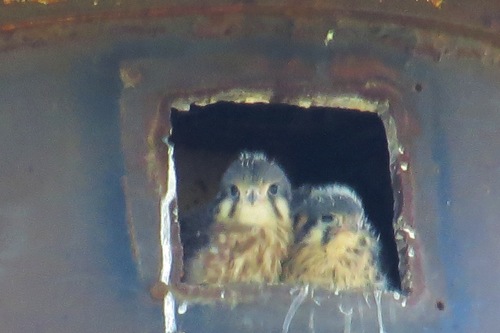
American Kestrel

Discover the heart of Osceola, Arkansas, in its vibrant Hale Avenue Historic District.
Discover the heart of Osceola, Arkansas, in its vibrant Hale Avenue Historic District.
This district, spanning five blocks along Hale Avenue and encompassing nearby streets, is a living museum of early 20th-century American commercial architecture. It showcases a remarkable collection of buildings primarily constructed between 1900 and the 1920s, reflecting Osceola's boom period following its relocation closer to the railroad. Visitors can admire diverse architectural styles, from Early Commercial to Art Deco, Neo-Classical, and Italianate, all preserved within a cohesive urban landscape.
Key architectural landmarks within the district include the grand Mississippi County Courthouse, a striking Neo-Classical edifice with a distinctive copper-domed roof, built in 1912. Other highlights are the intricately detailed Bank of Osceola Building, which once featured Native American head representations, and the Art Deco stylings of the Florida Brothers Building. The historic Patterson Building and the Osceola Times Building also contribute to the district's charm, showcasing early 20th-century commercial design.
Exploring the Hale Avenue Historic District offers a unique glimpse into the past, presenting a meticulously preserved commercial core that highlights the town's historical and architectural significance. It's a testament to Osceola's heritage and a perfect destination for those who appreciate the beauty and stories embedded in historic urban environments. The district's commitment to preserving its unique architectural flavor makes it a memorable experience. Don't forget to bring the Snappit nature identification app along to scan local species.
The Hale Avenue Historic District emerged from a significant turning point in Osceola's history. Founded in 1875, the city underwent a relocation beginning in 1900 to be closer to the newly established railroad lines. This strategic move sparked a period of rapid growth and a building boom, particularly along Hale Avenue, which became the main east-west commercial corridor. Most of the buildings seen today date from this era, continuing through the 1920s. The district's historical significance was formally recognized when it was first listed on the National Register of Historic Places on September 14, 1987. Its boundaries were later expanded in 2003 and 2008 to include more of the architecturally significant properties that contribute to its character. The district now represents a well-preserved example of a small American downtown commercial center from the early 20th century.
Take a self-guided walking tour to observe the various architectural styles and historical plaques. Many buildings feature unique brickwork, cornices, and window designs that tell the story of their construction.
Osceola experiences hot, humid summers and mild winters. Spring and fall offer pleasant temperatures for outdoor exploration. There are no specific seasonal events tied to wildlife, but local heritage festivals, such as the Osceola Heritage Music Festival in May, may add to the visit.
As a downtown historic district, sidewalks generally provide accessibility. However, visitors should be prepared for varying sidewalk conditions and potential steps or unramped entrances to older buildings if they wish to enter.
Admire its Neo-Classical design and copper dome.
Note its elaborate detailing and historic significance.
Discover its distinct Art Deco style.
Observe its decorative brickwork and original storefront elements.
Each card links to a full Explore page with photos, traits, and fun facts.
Start with the big picture, then zoom in to explore individual wildlife observations around this place.
Wear comfortable shoes for walking, as the best way to experience the district is on foot.
Bring a camera to capture the unique architectural details and historic streetscapes.
Consider visiting the Mississippi County Historical Center (located in the Patterson Building) for more in-depth information about the district's history and its buildings.
Look for historical markers and plaques on buildings to learn about their past.
Check with the Osceola Chamber of Commerce for any available walking tour guides or brochures.
Plan your visit during daylight hours to fully appreciate the architectural nuances and details of the buildings.
Jun 8, 2016
Photo attribution
(c) johnyochum, some rights reserved (CC BY)
License: CC BY 4.0 ↗
Image may be shown cropped inside the card frame.
Jun 8, 2016
Photo attribution
(c) johnyochum, some rights reserved (CC BY)
License: CC BY 4.0 ↗
Image may be shown cropped inside the card frame.
Jun 7, 2016
Photo attribution
(c) johnyochum, some rights reserved (CC BY)
License: CC BY 4.0 ↗
Image may be shown cropped inside the card frame.
Sep 10, 2006
Photo attribution
(c) Gordon C. Snelling, some rights reserved (CC BY)
License: CC BY 4.0 ↗
Image may be shown cropped inside the card frame.
Aug 22, 2006
Photo attribution
(c) Gordon C. Snelling, some rights reserved (CC BY)
License: CC BY 4.0 ↗
Image may be shown cropped inside the card frame.

Maryland, US
You might spot White-Tailed Deer and Eastern Gray Squirrel.
View guide →
.jpg)
District of Columbia, US
You might spot Eastern Gray Squirrel, Duck, and House Sparrow.
View guide →

Illinois, US
You might spot American Robin, Canada Goose, and House Sparrow.
View guide →

Virginia, US
You might spot Spotted Lanternfly and Northern Cardinal.
View guide →
Take the discovery with you
Identify the wildlife you spot, learn as you go, and keep a collection of the adventure.