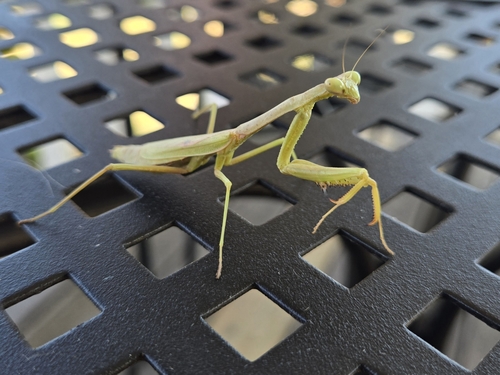





Anole

Discover Greenville's past in this charming historic district.
Discover Greenville's past in this charming historic district. The Fort Dale-College Street Historic District, nestled in northwest Greenville, Alabama, is a remarkably preserved residential neighborhood that offers a picturesque glimpse into the city's affluent history. Spanning approximately 32.5 acres, this district boasts a collection of 44 contributing buildings, primarily residences, dating from circa 1850 to 1936, and was rightfully listed on the National Register of Historic Places in 1986. It stands as one of Greenville's oldest surviving affluent residential areas, showcasing a rich tapestry of architectural evolution.
The district is an architectural treasure trove, featuring a diverse array of 19th and early 20th-century styles that reflect different eras of prosperity and taste. Visitors can admire grand Greek Revival homes, elegant Second Empire residences, intricate Queen Anne designs, and charming Colonial Revival, Bungalow, and even Tudor and Spanish Revival styles. Key examples include the 1857 Dunklin-Kendrick House with its distinctive full-height tetrastyle portico and Corinthian columns, the 1865 Griffith House showcasing a mansard and hip roof, and the 1928 Robert Burnett House, a beautiful Tudor-style dwelling. The area also tells stories of prominent local figures, including mayors, state legislators, merchants, and physicians who once called these stately homes their own.
A visit to the Fort Dale-College Street Historic District is a memorable journey through time, offering more than just beautiful buildings; it's an immersive experience into the social and economic evolution of Greenville. Strolling along its tree-lined streets, one can appreciate the meticulous craftsmanship and varied architectural influences that shaped this vibrant community. It provides a unique opportunity to connect with the past, understanding the lives of those who built and lived in these homes and contributed to the foundational fabric of Greenville. Planning to visit? Download the Snappit app to identify the wildlife you spot in real-time.
The Fort Dale-College Street Historic District emerged on land originally granted federally in the 1820s, with significant development beginning in the 1850s, fueled by the prosperity of cotton cultivation and railroad expansion. Following the Creek War, which opened much of central Alabama for settlement, the area quickly became an affluent residential enclave. The initial land sales saw William Dunklin and later William Burnette parceling out the land that would become this district. Post-Civil War, the area continued to grow, reflecting Greenville's incorporation as a city in 1871 and the expansion of its mercantile and professional classes. The district is particularly significant for its association with the early development of organized education in Greenville, notably through the Thigpen School-Smith House, built in 1875, which is the last known remaining building associated with 19th-century schooling in the town. Its period of significance, from approximately 1850 to 1936, encompasses a range of architectural styles and the contributions of many notable political and professional figures who resided within its boundaries.
Take a self-guided walking tour to admire the diverse architectural styles, photograph the stately homes, and imagine life in Greenville's past. Look for historical markers that might provide additional context about specific properties or residents.
Summers can be hot and humid, so early mornings or late afternoons are recommended if visiting in peak summer. Winters are generally mild, but layers are advisable.
As a residential neighborhood, the district features sidewalks suitable for walking. Individual homes are private residences and not open to the public unless otherwise specified for a special event.
The district itself is the main exhibit, showcasing a remarkable collection of historic homes. Don't miss the pre-Civil War Greek Revival structures like the Dunklin-Kendrick House (504 Fort Dale Street), the Second Empire-style Griffith House (508 Fort Dale Street), and the Thigpen School-Smith House (225 N. College Street), which was once a schoolhouse. Look for the variety of architectural styles, including Queen Anne, Colonial Revival, Bungalow, Arts and Crafts, Tudor, Spanish Revival, and Neoclassical.
Each card links to a full Explore page with photos, traits, and fun facts.
Start with the big picture, then zoom in to explore individual wildlife observations around this place.
Wear comfortable shoes
You'll be doing a fair amount of walking on sidewalks to fully explore the district.
Bring a camera
The diverse architectural styles and well-preserved homes offer excellent photographic opportunities.
Respect private property
Remember that these are private residences; admire from the street and do not trespass.
Look for details
Pay attention to the intricate details, decorative elements, and varied materials used in the homes to appreciate the craftsmanship of different periods.
Consider a local guide (if available)
While a self-guided tour is great, a local historian might offer deeper insights into the specific stories of the homes and their residents.
Oct 13, 2025
Photo attribution
(c) respecttheknob, some rights reserved (CC BY)
License: CC BY 4.0 ↗
Image may be shown cropped inside the card frame.
May 27, 2026
May 2, 2026
Apr 26, 2026
Apr 25, 2026

Maryland, US
You might spot White-Tailed Deer and Eastern Gray Squirrel.
View guide →
.jpg)
District of Columbia, US
You might spot Eastern Gray Squirrel, Duck, and House Sparrow.
View guide →

Illinois, US
You might spot American Robin, Canada Goose, and House Sparrow.
View guide →

Virginia, US
You might spot Spotted Lanternfly and Northern Cardinal.
View guide →
Take the discovery with you
Identify the wildlife you spot, learn as you go, and keep a collection of the adventure.