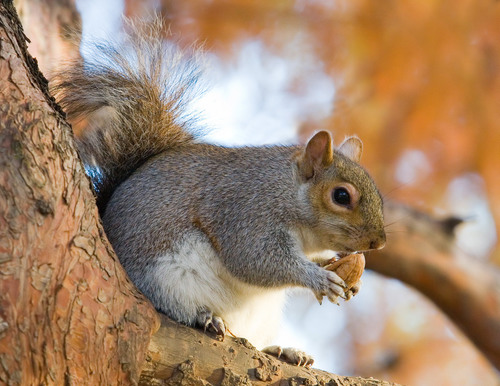
Eastern Gray Squirrel
The New York State Agricultural Experiment Station, known by its brand name Cornell AgriTech, is a world-renowned hub for agricultural research and innovation in Geneva, New York.
The New York State Agricultural Experiment Station, known by its brand name Cornell AgriTech, is a world-renowned hub for agricultural research and innovation in Geneva, New York. It is a vital arm of Cornell University's College of Agriculture and Life Sciences, dedicated to pioneering scientific breakthroughs that advance specialty crops and food systems. This sprawling 900-acre campus is where the future of food is actively being shaped, with a focus on delivering practical, sustainable solutions for farmers and the broader food industry.
The station's extensive grounds feature diverse research areas, including vast apple orchards, grape vineyards, berry fields, and experimental vegetable plots. These living laboratories are home to thousands of unique plant varieties, many of which were developed right on site, such as the popular RubyFrost and SnapDragon apples, and numerous wine and table grape cultivars like Cayuga White and Noiret. Visitors during public events can also explore greenhouses, witness cutting-edge food science demonstrations, and learn about integrated pest management techniques.
Visiting Cornell AgriTech offers a unique and engaging experience, providing an up-close look at the science that impacts our daily lives, from the fruits we eat to the beverages we enjoy. Public open houses and special tours allow guests to interact with scientists, learn about new crop developments, and understand the vital role agricultural research plays in ensuring food security and a thriving economy. It's an inspiring destination for anyone curious about where their food comes from and how agricultural innovation addresses global challenges. Turn your visit into a safari! Use the Snappit app to scan and log wildlife sightings here.
The New York State Agricultural Experiment Station was formally established by an Act of the New York State Legislature on June 26, 1880, with a clear mission to promote agriculture through scientific investigation and experimentation. After considering numerous locations, a 125-acre parcel in Geneva, New York, was selected, and the state purchased the land, including an Italianate villa now known as Parrott Hall, in 1882. Initially, research encompassed a broad range of agricultural pursuits, including dairy, horticulture, and field crops. The institution became part of Cornell University's College of Agriculture and Life Sciences in 1923. Following World War II, the station significantly narrowed its focus, evolving into a distinguished horticultural research institute primarily dedicated to fruit and vegetable crops, a specialization that continues to define its work today.
Engage in field tours, observe scientific demonstrations, learn about new fruit, vegetable, and grape varieties, and potentially taste experimental produce or beverages. Public events are designed to be interactive and educational.
Late summer and early fall are generally the most active times for outdoor plant growth and harvest, making August and September prime months for public events to see the research in action.
Cornell AgriTech aims for inclusivity, offering accessible bathrooms in key buildings like Jordan Hall and Barton Lab. While much of the research takes place outdoors in fields, visitors with mobility concerns are encouraged to contact the station administration in advance of their visit for specific accommodations regarding field and lab tour access.
Depending on the event, highlights often include tours of research orchards (apples, peaches, cherries, berries), grape vineyards, experimental vegetable fields, and greenhouses. The historic Parrott Hall, the original station headquarters, is also a notable landmark. During open events, visitors might see food science lab demonstrations and learn about advanced agricultural technologies.
Each card links to a full Explore page with photos, traits, and fun facts.
Start with the big picture, then zoom in to explore individual wildlife observations around this place.
Always check the official Cornell AgriTech website for an event calendar, as public access to research areas is typically limited to scheduled Open Houses and tours.
Wear comfortable, closed-toe shoes suitable for walking, as tours often involve extensive walking on varied terrain in fields and orchards.
Consider visiting during late summer or early fall to experience the research fields and orchards at their most active, with many crops nearing harvest.
Bring sun protection (hat, sunscreen) and water, especially if planning to spend extended time outdoors during field tours.
If you have specific accessibility needs or questions about facilities, contact Cornell AgriTech's visitor services or main office in advance of your visit.
Jun 5, 2026
Jun 3, 2026
May 30, 2026
May 30, 2026
May 27, 2026

Maryland, US
You might spot White-Tailed Deer and Eastern Gray Squirrel.
View guide →
.jpg)
District of Columbia, US
You might spot Eastern Gray Squirrel, Duck, and House Sparrow.
View guide →

Illinois, US
You might spot American Robin, Canada Goose, and House Sparrow.
View guide →

Virginia, US
You might spot Spotted Lanternfly and Northern Cardinal.
View guide →
Take the discovery with you
Identify the wildlife you spot, learn as you go, and keep a collection of the adventure.





















.jpg&width=800)