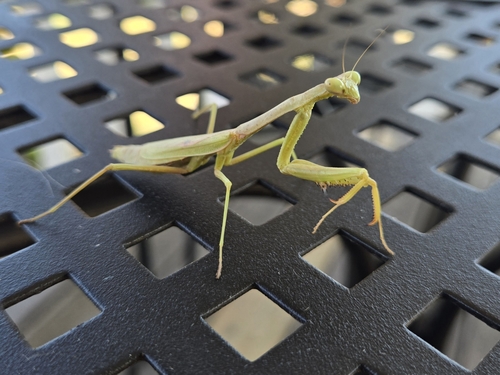





Anole

Greenville's Post Office Historic District offers a journey through early 20th-century commercial architecture.
Greenville's Post Office Historic District offers a journey through early 20th-century commercial architecture. This charming district preserves a significant concentration of late 19th and early 20th-century commercial and civic buildings, showcasing a slice of downtown Greenville's vibrant past. Designated a historic district, it stands as a testament to the town's growth as a key trade center following the advent of the railroad.
Visitors can marvel at a diverse architectural tapestry, including six well-preserved commercial storefronts from the early 1900s, a striking Art Deco movie theater, and a stately Neoclassical bank building. The centerpiece is the iconic 1932 U.S. Post Office, a WPA-built structure reflecting Neoclassical and Colonial Revival styles, which continues to serve the community today. These structures collectively tell the story of Greenville's economic and cultural development, making the district a living museum of urban history.
Exploring this district offers a unique opportunity to appreciate Greenville's architectural heritage and understand its evolution. It's a memorable experience for anyone interested in history, architecture, or simply enjoying a stroll through a charming, historically significant downtown area. The district’s buildings, many of which are largely unaltered, provide a direct connection to the early 20th century. Explore the grounds like a pro—download the Snappit app to instantly identify animals and plants.
The Post Office Historic District's development was largely spurred by the arrival of rail service in Greenville in the late 1850s, transforming the town into a crucial trade hub between Montgomery and Mobile. The influx of capital during this period led to the construction of brick commercial buildings, with significant development occurring from the early 1890s through the late 1930s. The district includes buildings constructed between approximately 1890 and 1936. Key structures, like the First National Bank (1923) and the Ritz Theatre (1936), emerged during this boom. The U.S. Post Office building, designed by James Wetmore and completed in 1932 as a Works Progress Administration (WPA) project, became a central communication hub for the town. The Post Office Historic District was officially recognized for its significance and listed on the National Register of Historic Places in 1986.
Walk along West and East Commerce Streets, taking in the historical buildings. Appreciate the varying architectural styles, from simple vernacular storefronts to more ornate Art Deco and Neoclassical designs. Consider a self-guided architectural tour focusing on the details of the facades. The area also hosts local businesses.
Greenville experiences hot, humid summers and mild winters. Spring brings blooming camellias to the "Camellia City" which can enhance the downtown area's charm, though not directly within this specific district.
As a downtown streetscape, the district is generally accessible for walking. Sidewalks and street crossings are present. Specific accessibility features within individual commercial buildings would vary, but the public street area is open to all. The Post Office itself has lot parking available.
The 1932 U.S. Post Office building with its Neoclassical/Colonial Revival style and distinctive carved eagle.
The Art Deco architecture of the Ritz Theatre (1936).
The Neoclassical design of the First National Bank (1923).
The collection of late 19th and early 20th-century commercial storefronts along West Commerce Street.
Each card links to a full Explore page with photos, traits, and fun facts.
Start with the big picture, then zoom in to explore individual wildlife observations around this place.
Wear comfortable shoes
The best way to experience the district is by walking its streets and taking in the architecture.
Look up and down
Pay attention not only to the general structure but also to the intricate details of cornices, window frames, and historical markers.
Visit during daylight hours
Natural light will best illuminate the architectural details for viewing and photography.
Combine with other downtown attractions
The district is part of a broader historic downtown area; consider exploring nearby shops or eateries to make a full outing.
Research before you go
While this report provides key highlights, a quick online search for any current local events or specific building tours might enhance your visit.
Bring a camera
The unique architectural styles, especially the Art Deco and Neoclassical elements, offer great photographic opportunities.
Oct 13, 2025
Photo attribution
(c) respecttheknob, some rights reserved (CC BY)
License: CC BY 4.0 ↗
Image may be shown cropped inside the card frame.
May 27, 2026
May 2, 2026
Apr 26, 2026
Apr 25, 2026

Maryland, US
You might spot White-Tailed Deer and Eastern Gray Squirrel.
View guide →
.jpg)
District of Columbia, US
You might spot Eastern Gray Squirrel, Duck, and House Sparrow.
View guide →

Illinois, US
You might spot American Robin, Canada Goose, and House Sparrow.
View guide →

Virginia, US
You might spot Spotted Lanternfly and Northern Cardinal.
View guide →
Take the discovery with you
Identify the wildlife you spot, learn as you go, and keep a collection of the adventure.