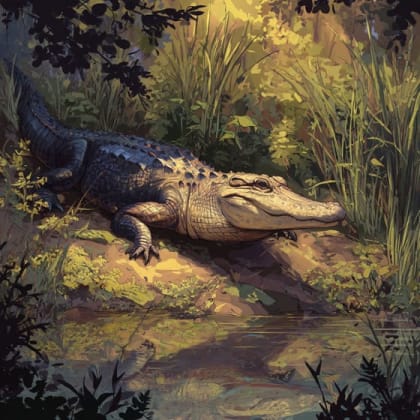





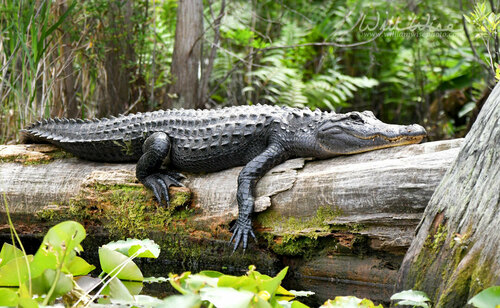
American Alligator
The Seth Lore and Irwinton Historic District in Eufaula, Alabama, offers a captivating journey through American history and architectural splendor.
The Seth Lore and Irwinton Historic District in Eufaula, Alabama, offers a captivating journey through American history and architectural splendor.
This expansive historic district, recognized on the National Register of Historic Places, boasts one of Alabama's most comprehensive collections of 19th and early 20th-century architecture, making it a true Southern gem. With over 700 contributing structures, visitors can immerse themselves in a meticulously preserved streetscape showcasing an impressive array of styles, from grand Italianate and Greek Revival mansions to charming Victorian homes and intricate commercial buildings. It's a living museum, reflecting the prosperity and distinct character of a bygone era.
Key highlights within the district include the opulent Shorter Mansion, a magnificent Neoclassical Revival estate with seventeen Corinthian columns, and Fendall Hall, an Italianate marvel known for its exquisite Victorian-era murals. Beyond these iconic homes, discover architectural masterpieces like the High Gothic First Presbyterian Church with its imported brick and Tiffany window, the Italianate Masonic Temple, and the Eufaula Carnegie Library. The district also encompasses a vibrant Central Business District featuring well-preserved mid-to-late 19th-century commercial structures that tell tales of early Southern commerce.
A visit to the Seth Lore and Irwinton Historic District is an unforgettable experience for anyone with a passion for history, architecture, or simply the charm of the Old South. Whether you're strolling along tree-lined Eufaula Avenue or delving into the stories held within its grand homes, the district offers a unique blend of cultural enrichment and picturesque beauty. It’s a place where history comes alive, inviting you to step back in time and appreciate the enduring legacy of Eufaula, Alabama. Eager to name that creature? Identify any animal you find during your visit using the Snappit app.
The Seth Lore and Irwinton Historic District traces its origins to the town of Irwinton, settled in 1823. Captain Seth Lore played a pivotal role in developing the downtown area in 1834, even naming the four main avenues — Livingston, Orange, Randolph, and Eufaula — as an acronym for his surname "LORE". In 1843, the town was officially renamed Eufaula, honoring a Creek Indian tribe and resolving persistent mail misdirection issues with another Irwinton in Georgia. Eufaula subsequently flourished as a vital river town, serving as a significant port for cotton distribution and a commercial hub for surrounding regions. The district was initially listed on the National Register of Historic Places in 1973 as the Lore Historic District, identifying 72 specific buildings. Its boundaries were significantly expanded and the district renamed "Seth Lore and Irwinton Historic District" in 1986, encompassing 738 contributing buildings of architectural or historical significance within an area of approximately 600 acres. The Eufaula Heritage Association, founded in 1965, has been instrumental in preserving the town's historic treasures, acquiring the Shorter Mansion and establishing the annual Eufaula Pilgrimage, which showcases many of the district's private residences.
Take a self-guided walking or driving tour using maps available from the Eufaula Barbour Chamber of Commerce. Explore the diverse architectural styles, from grand mansions to quaint cottages. Visit the interior of Shorter Mansion and Fendall Hall. Walk or bike the Yoholo Micco Creek Indian Trail, which starts within the district and offers natural beauty.
The Eufaula Pilgrimage in late March/early April is a major annual event. Summers can be hot and humid, while winters are generally mild.
The district's streets are generally accessible for walking and driving. The Yoholo Micco Creek Indian Trail is paved, offering an accessible outdoor experience. Specific accessibility for individual historic homes and buildings may vary; it is advisable to check with specific venues like Shorter Mansion and Fendall Hall regarding their facilities.
A Greek Revival masterpiece, housing the Eufaula Historical Museum with artifacts and exhibits.
A state-owned Italianate house museum featuring rare Victorian-era murals.
An 1869 High Gothic church with imported brick and a notable Tiffany window.
An Italianate structure from 1904 with distinctive second-floor balconies.
Each card links to a full Explore page with photos, traits, and fun facts.
Start with the big picture, then zoom in to explore individual wildlife observations around this place.
Wear comfortable shoes
** The best way to experience the district's charm and intricate architectural details is on foot.
Pick up a map
Obtain a walking or driving tour map from the Eufaula Barbour Chamber of Commerce to guide your exploration and learn about specific buildings.
Consider the Eufaula Pilgrimage
If possible, plan your visit during the annual Pilgrimage in spring to gain access to the interiors of numerous private historic homes.
Allow time for Shorter Mansion and Fendall Hall: These two landmark homes offer ticketed tours and provide deeper insights into the district's history and architectural significance.
Explore beyond the main avenues
While Eufaula Avenue and Randolph Avenue are central, venture onto side streets like Broad Street and Barbour Street to discover more hidden gems and commercial architecture.
Bring your camera
The district is incredibly photogenic, with unique architectural details, tree-lined streets, and picturesque homes at every turn.
May 25, 2026
May 25, 2026
May 25, 2026
May 10, 2026
May 10, 2026

Maryland, US
You might spot White-Tailed Deer and Eastern Gray Squirrel.
View guide →
.jpg)
District of Columbia, US
You might spot Eastern Gray Squirrel, Duck, and House Sparrow.
View guide →

Illinois, US
You might spot American Robin, Canada Goose, and House Sparrow.
View guide →

Virginia, US
You might spot Spotted Lanternfly and Northern Cardinal.
View guide →
Take the discovery with you
Identify the wildlife you spot, learn as you go, and keep a collection of the adventure.