





Bulbous Bluegrass
Poa bulbosa
Bulbous Bluegrass is a special grass that grows in many places. It has round, bulb-like roots that help it survive in different weather. This grass is great for making fields look green and pretty!
Habitat: Grasslands
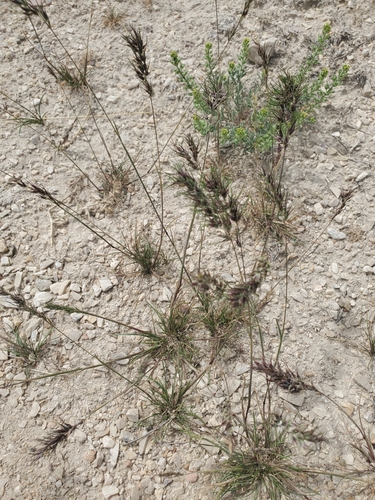
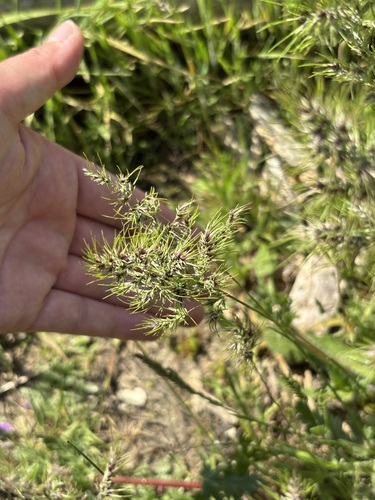
The Bulbous Bluegrass has slender, upright stems with a distinctive swollen, onion-like base or bulbils near the ground. Its narrow, flat leaves often display a cool bluish-green hue, forming dense tufts that stand out in fields and disturbed areas.
Category
PlantsRarity
Common
Danger
1/5 · Very low
Snaps
3
It's often one of the first plants to sprout green in early spring!
Its tiny underground bulbs are like hidden snack bars for hungry animals!
Some say its leaves look like they're dusted with a hint of blue!
This amazing grass can clone itself without needing any seeds at all!
Bulbous Bluegrass can grow tiny plantlets called bulbils directly on its stem, helping it reproduce rapidly without seeds.
Bulbous Bluegrass has a swollen bulb-like base that stores water and nutrients, helping it survive long periods of dry weather.
Bulbous Bluegrass can sprout and grow very early in spring, giving it a head start over other plants for sunlight and space.
Flowering plants are any plants that produce flowers as part of their reproductive cycle.
Ornamental plants are cultivated primarily for their aesthetic appeal, enhancing landscapes and gardens with their attractive foliage, flowers, or form.
Grass-like plants are herbaceous plants that visually resemble true grasses, typically having long, narrow leaves.
Shade tolerant plants are adapted to grow and thrive in areas with low light levels, requiring less direct sunlight.

Drought-tolerant plants can survive and flourish in conditions with limited water availability.

Grassland habitats are terrestrial biomes dominated by grasses and herbaceous plants, supporting a variety of grazing animals.

Rapid growing plants exhibit accelerated growth rates, quickly increasing in size and biomass within a short period.
No aliases listed yet.
Danger
1/5 · Very low
Always be gentle when touching plants, and wash your hands afterward.
The easiest way to identify Bulbous Bluegrass is to use the Snappit nature identifier app.
10-40 cm
5-20 cm
Spring
Yes
None
Perennial
Wind
Zoom in to split clusters and explore where this object has been snapped.
May 14, 2026
Toadstool Geologic ParkPhoto attribution
(c) hr_dragonfly, some rights reserved (CC BY)
License: CC BY 4.0 ↗
Image may be shown cropped inside the card frame.
Mar 15, 2026
San Joaquin Experimental RangePhoto attribution
(c) Nina S. Zhao, some rights reserved (CC BY)
License: CC BY 4.0 ↗
Image may be shown cropped inside the card frame.

Massachusetts, US
You might spot Painted Turtle and Eastern White Pine.
View guide →

California, US
You might spot Gray Pine, Gambel Oak, and Caterpillar Scorpionweed.
View guide →

Nebraska, US
You might spot Lark Sparrow, Rock Wren, and Scarlet Globemallow.
View guide →

British Columbia, CA
You might spot Oregon Grape, Shinyleaf Meadowsweet, and Bush Penstemon.
View guide →

Massachusetts, US
You might spot African Lion, Tiger, and Southern White Rhinoceros.
View guide →

Massachusetts, US
You might spot Common Eastern Bumble Bee, Painted Turtle, and Bee.
View guide →
Take the discovery with you
Snap it with Snappit to identify it, learn what makes it special, and add the discovery to your collection.











.jpg&width=800)



_001.jpg&width=800)



