





California black oak
Quercus kelloggii
The California black oak is a tall tree with beautiful leaves that turn bright colors in the fall. It provides shade and homes for many animals in the forest.
Habitat: Forests
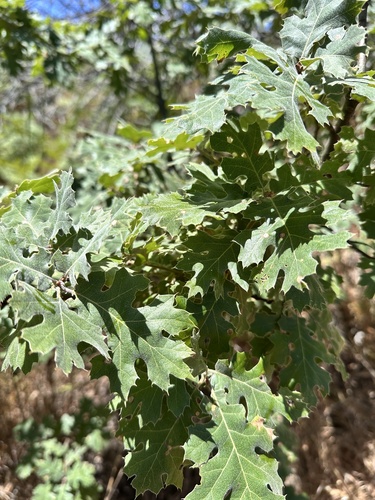
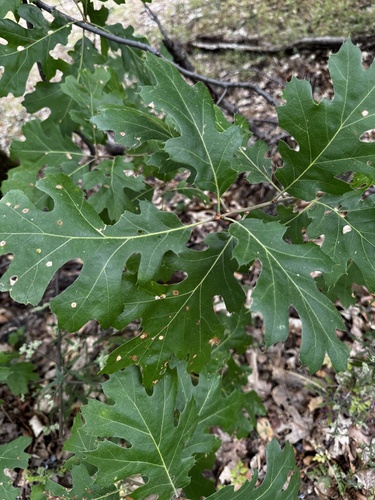
The California black oak has large, dark green, deeply lobed leaves that turn brilliant golden-orange or red in fall. Its bark is dark gray to black, thick, and furrowed, distinguishing it from smoother-barked oaks. This stately tree produces distinctive large acorns.
Category
PlantsRarity
Common
Danger
1/5 · Very low
Snaps
11
Its acorns were a major food source for many California Native American tribes for thousands of years!
Some California black oaks can live for over 500 years, standing tall for centuries!
The largest California black oak on record is over 100 feet tall, as high as a ten-story building!
Unlike many plants, it makes both male and female flowers on the same tree, but they look very different!
California black oak has thick, furrowed bark that protects its inner tissues, helping it survive and regrow after mild to moderate wildfires.
This oak produces abundant large acorns, providing vital food for many wildlife species and aiding in its widespread reproduction.
The California black oak has deep root systems, allowing it to access groundwater and endure long dry periods in its native habitats.

Sciurus griseus
Eats acorns, helping spread seeds.

Cyanocitta stelleri
Buried acorns by jays often grow into new trees.
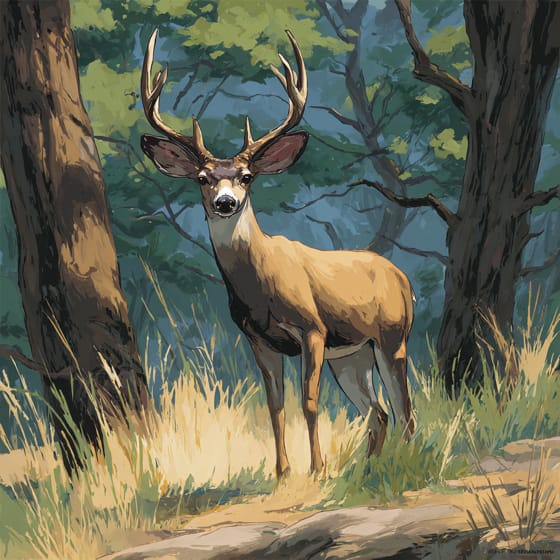
Odocoileus hemionus
Browses on young leaves and twigs.
Ursus americanus
Feasts on ripe acorns as an important food.
Deciduous plants periodically shed all their leaves, typically during autumn or dry seasons.
Broadleaf trees are angiosperms characterized by flat, wide leaves that are typically shed annually in temperate climates.
Nut bearing plants produce hard-shelled fruits, commonly known as nuts, which contain a single seed and are a valuable food source.
Edible plants are those parts of a plant that are considered safe for human consumption.

Fall color refers to the seasonal change in foliage pigmentation, primarily in deciduous plants, displaying vibrant hues.

Forest habitats are terrestrial environments dominated by dense tree cover, supporting a high diversity of plant and animal life.

This trait characterizes organisms with an exceptionally long lifespan compared to others of their kind.

Describes a species whose presence and role have a disproportionately large effect on its environment.
No aliases listed yet.
Danger
1/5 · Very low
Stay on paths when exploring forests and watch for falling branches.
The easiest way to identify California black oak is to use the Snappit nature identifier app.
1000-3600 cm
800-2500 cm
Spring
Yes
Mild
Perennial
Wind
Zoom in to split clusters and explore where this object has been snapped.
Jun 3, 2026
Armstrong Redwoods State Natural ReservePhoto attribution
no rights reserved
License: CC0 1.0 ↗
Image may be shown cropped inside the card frame.
May 28, 2026
ColomaPhoto attribution
(c) J. Roe, some rights reserved (CC BY)
License: CC BY 4.0 ↗
Image may be shown cropped inside the card frame.

California, US
You might spot Redwood Sorrel, Redwood, and Button's Banana Slug.
View guide →

California, US
You might spot White Globe Lily, Rose Campion, and Pipevine Swallowtail.
View guide →

California, US
You might spot Western Fence Lizard and California Poppy.
View guide →
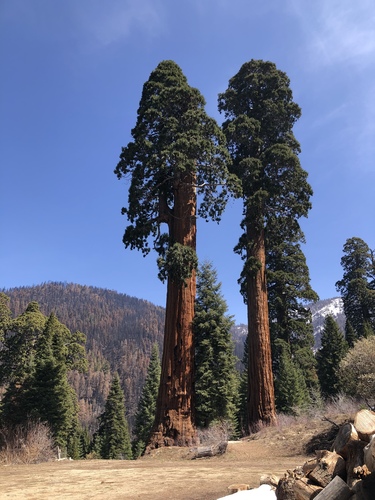
California, US
You might spot Sequoia, Mountain Misery, and Black Bear.
View guide →

California, US
You might spot Sequoia, California Incense-Cedar, and White Fir.
View guide →

California, US
You might spot Yellow Star-Tulip and Mountain Misery.
View guide →
Take the discovery with you
Snap it with Snappit to identify it, learn what makes it special, and add the discovery to your collection.







.jpg&width=800)


_001.jpg&width=800)


