





Crested Wheatgrass
agropyron cristatum
Crested Wheatgrass is a hardy plant that grows in many places, making it a favorite for animals. Its lush green blades are perfect for munching and provide great cover for tiny critters.
Habitat: Crested Wheatgrass thrives in grasslands and open fields.
The Crested Wheatgrass is a hardy, bluish-green perennial grass forming dense clumps. It has stiff, upright stems topped with distinctive flattened, comb-like seed heads that appear in late spring, making it easy to identify among other grasses.
Category
PlantsRarity
Common
Danger
0/5 · No known danger
Snaps
4
Did you know Crested Wheatgrass has roots that can grow over 10 feet deep? Wow!
Farmers often plant this grass to feed cattle and other grazing animals.
It was brought to North America from Russia to help stop soil erosion.
Its unique seed head looks like a tiny hair comb or a zipper!
Crested Wheatgrass has incredibly deep roots that help it find water far underground, allowing it to survive very dry periods.
Crested Wheatgrass can form dense root networks that hold soil firmly in place, helping prevent erosion on sloped land.
Crested Wheatgrass is very cold-tolerant and one of the first grasses to sprout green in spring, providing vital early food for animals.

Bison bison
An important food source for North American bison.
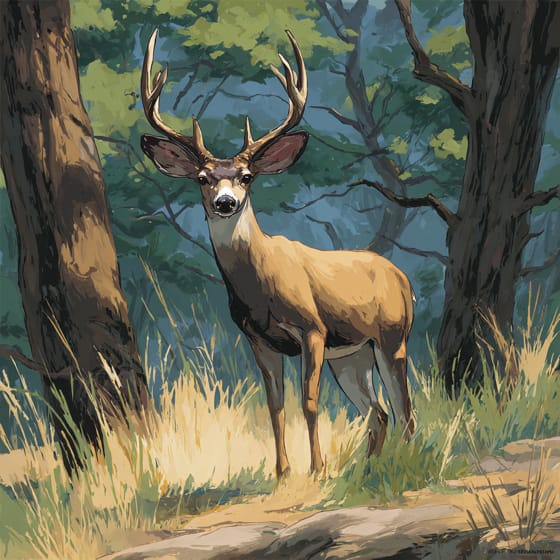
Odocoileus hemionus
Grazes on its leaves and shoots, especially in spring.
Microtus pennsylvanicus
Builds nests and finds cover within dense clumps of grass.
Anas platyrhynchos
Often nests among the protective cover of dense grasses.

Melanoplus differentialis
Feeds on the leaves and stems of this common grass.
Social animals live in organized groups, cooperating for survival benefits such as foraging, defense, and raising offspring.
Colorful describes organisms or objects displaying a wide range of bright and distinct colors.
Grassland habitats are terrestrial biomes dominated by grasses and herbaceous plants, supporting a variety of grazing animals.
This trait characterizes organisms whose diet consists entirely or primarily of plant material.

Describes organisms that break down dead organic material, recycling nutrients back into the ecosystem.
Danger
0/5 · No known danger
No special safety notes yet.
The easiest way to identify Crested Wheatgrass is to use the Snappit nature identifier app.
30-70 cm
20-40 cm
0.5-1 cm
Late spring to early summer
Yes
None
Perennial
Zoom in to split clusters and explore where this object has been snapped.

Colorado, US
You might spot Common Starlily and Wholeleaf Paintbrush.
View guide →

North Dakota, US
You might spot Woodhouse's Toad, Scarlet Globemallow, and Turkey.
View guide →

Oregon, US
You might spot Granite Prickly Phlox, Red-Tailed Hawk, and Pronghorn.
View guide →

Idaho, US
You might spot Elk, Morrison's Bumble Bee, and Common Cowparsnip.
View guide →

British Columbia, CA
You might spot Yellow-Bellied Marmot and Rubber Rabbitbrush.
View guide →

South Dakota, US
You might spot Scarlet Globemallow, Leadplant, and Yellow Salsify.
View guide →
Take the discovery with you
Snap it with Snappit to identify it, learn what makes it special, and add the discovery to your collection.









.jpg&width=800)



_001.jpg&width=800)




