





Eastern Towhee
Pipilo erythrophthalmus
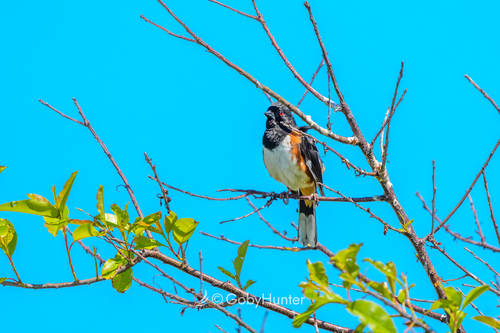
The Eastern Towhee is a colorful bird with a black head and bright orange sides. They love to hop around on the ground looking for tasty seeds and insects to eat.
Habitat: Forests
The Eastern Towhee is a medium-sized bird with striking rufous (rusty orange) sides and a white belly. Males have a sleek black head and back, while females sport a brownish head and back. Both sexes show distinctive white patches on their outer tail feathers, especially visible in flight.
Category
BirdsRarity
Common
Danger
1/5 · Very low
Snaps
47
Sometimes people call them "chewink" because of their sharp call.
Their bright red eyes stand out against their dark feathers!
They often hop backwards with both feet to find yummy treats.
Young towhees look like grown-ups, but with brown streaks.
Eastern Towhee can kick leaves and dirt with both feet at once to uncover hidden insects and seeds on the forest floor.
Eastern Towhee has a distinctive 'Drink-your-tea!' song that helps them communicate and claim their territory.
Eastern Towhee can blend into dense underbrush because of its dark plumage, helping them avoid predators.
These omnivores scratch the ground for insects and seeds, and also enjoy tasty berries.
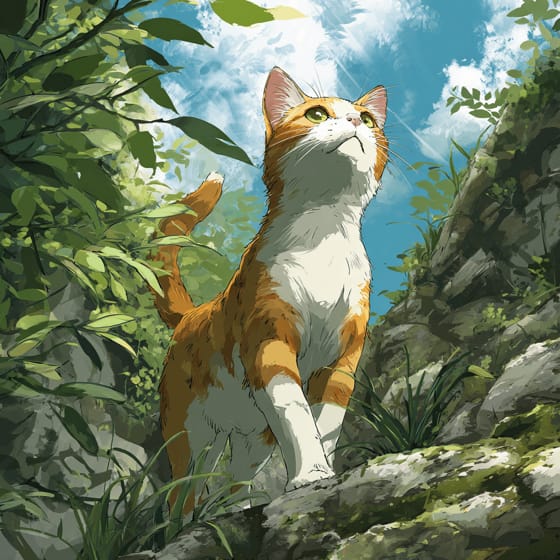
Felis catus
A significant nest and adult predator.
.jpg&width=800)
Molothrus ater
Lays eggs in towhee nests for them to raise.
.jpg&width=800)
Rubus allegheniensis
Consumes the fruit for energy and nutrients.
Formica fusca
Forages for ants among leaf litter.
Feathered describes animals, primarily birds, possessing a covering of feathers.
Social animals live in organized groups, cooperating for survival benefits such as foraging, defense, and raising offspring.
Singing animals produce complex vocalizations, often for purposes of attracting mates, defending territory, or communicating within their species.
Colorful describes organisms or objects displaying a wide range of bright and distinct colors.

This trait identifies organisms whose diet primarily consists of insects and other small invertebrates.

Forest habitats are terrestrial environments dominated by dense tree cover, supporting a high diversity of plant and animal life.

Diurnal animals are primarily active during daylight hours, typically resting or sleeping at night.
Danger
1/5 · Very low
Enjoy watching birds from a distance and don't try to touch them.
The easiest way to identify Eastern Towhee is to use the Snappit nature identifier app.
17-23 cm
28-33 cm
0.032-0.05 kg
6-10 years
35 km/h
These omnivores scratch the ground for insects and seeds, and also enjoy tasty berries.
Forests
Zoom in to split clusters and explore where this object has been snapped.
Jun 2, 2026
Stone Harbor Bird SanctuaryPhoto attribution
(c) GobyHunter, some rights reserved (CC BY)
License: CC BY 4.0 ↗
Image may be shown cropped inside the card frame.

New York, US
You might spot Sundial Lupine, Spotted Horsemint, and New Jersey Tea.
View guide →

Pennsylvania, US
You might spot Mountain Laurel, Ghost Pipe, and Sweetfern.
View guide →

North Carolina, US
You might spot American Robin and Eastern Gray Squirrel.
View guide →

South Carolina, US
You might spot Anole, Asian Lady Beetle, and Gulf Fritillary.
View guide →

Connecticut, US
You might spot Hay-Scented Fern, Canada Mayflower, and Wood Frog.
View guide →

Virginia, US
You might spot Northern Cardinal and Eastern Gray Squirrel.
View guide →
Take the discovery with you
Snap it with Snappit to identify it, learn what makes it special, and add the discovery to your collection.




.jpg&width=800)







