_Sweden.jpg&width=800)





Essex Skipper
Thymelicus lineola
The Essex Skipper is a small butterfly with orange-brown wings. It loves to flutter around flowers and is often seen in sunny places during the summer.
Habitat: Grasslands
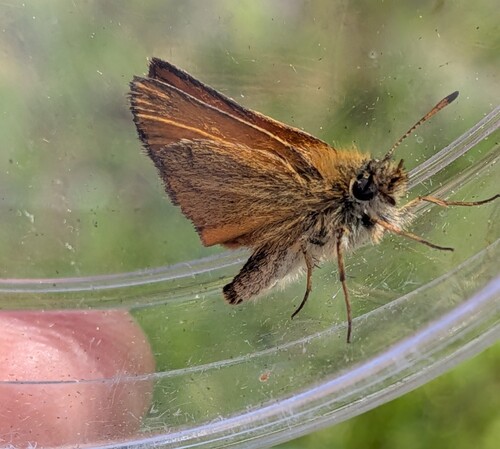
The Essex Skipper has warm orange-brown wings with slightly darker borders. Its most unique visual feature is the underside of its antennae, which is entirely black, unlike similar species. Males often display a faint dark scent-streak on their forewings.
Category
InsectsRarity
Common
Danger
1/5 · Very low
Snaps
5
Did you know adult Essex Skippers only live for about two weeks? They spend most of their life as a caterpillar!
Female Essex Skippers lay their tiny, round eggs inside grass stems, where they stay safe all winter long.
If you look closely at their antennae, the very tip is black underneath – a secret clue to identify them!
The 'skipper' part of their name comes from their super fast, jerky flying style, like skipping a stone!
Essex Skippers have earthy-toned wings that help them blend perfectly into grassy meadows, keeping them safe from hungry predators.
Essex Skippers can fly in a quick, darting, 'skipping' motion that helps them evade predators and move rapidly between flowers.
Essex Skippers have a long, straw-like proboscis that allows them to reach deep inside flowers to drink sugary nectar for energy.
Adults sip sweet flower nectar; caterpillars munch tender grass leaves.
Age differences: Larvae feed on various grass species, while adults exclusively drink nectar from flowers.
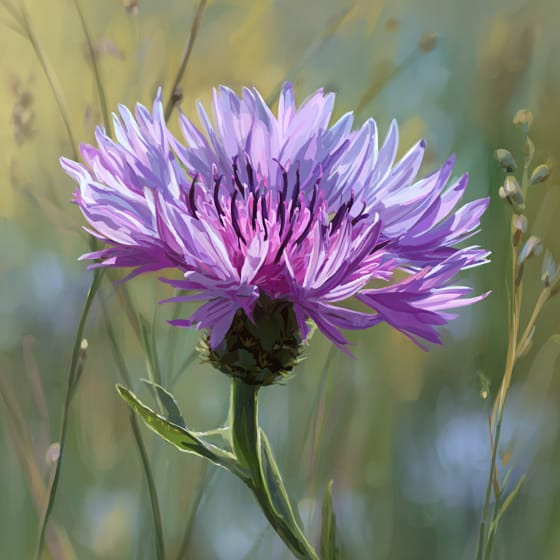
Centaurea nigra
Visits flowers to drink nectar.

Trifolium pratense
Feeds on nectar, helping plant reproduce.
%2C_Parc_de_Woluw%C3%A9%2C_Brussels_(13042792905).jpg&width=800)
Parus major
Can be a food source for birds.
Araneus diadematus
May get caught in spider webs.
Solitary animals live alone for most of their lives, only interacting with others for mating or parental care.
Camouflaged describes organisms that possess coloring or patterns that allow them to blend into their environment.
Colorful describes organisms or objects displaying a wide range of bright and distinct colors.
Grassland habitats are terrestrial biomes dominated by grasses and herbaceous plants, supporting a variety of grazing animals.

This trait characterizes organisms whose diet consists entirely or primarily of plant material.

Describes plants that are particularly attractive and beneficial to a wide range of pollinating organisms.

Diurnal animals are primarily active during daylight hours, typically resting or sleeping at night.

Describes organisms that transfer pollen, enabling the fertilization and reproduction of plants.
No aliases listed yet.
Danger
1/5 · Very low
Butterflies are gentle creatures. Just watch them from a distance and don't try to catch them.
The easiest way to identify Essex Skipper is to use the Snappit nature identifier app.
25-29 mm
15-18 mm
5-20 days
8 km/h
Adults sip sweet flower nectar; caterpillars munch tender grass leaves.
Grasslands
Foraging
Zoom in to split clusters and explore where this object has been snapped.
Jun 16, 2026
WilderPhoto attribution
(c) Jason Hill, some rights reserved (CC BY)
License: CC BY 4.0 ↗
Image may be shown cropped inside the card frame.

Michigan, US
You might spot Monarch, Canada Goose, and Eastern Gray Squirrel.
View guide →

Michigan, US
You might spot Monarch, Canada Goose, and Eastern Gray Squirrel.
View guide →

Montana, US
You might spot Great Blanketflower and Seven-Spotted Lady Beetle.
View guide →

Michigan, US
You might spot Monarch, Canada Goose, and Eastern Gray Squirrel.
View guide →

Michigan, US
You might spot Monarch, Canada Goose, and Eastern Gray Squirrel.
View guide →

Michigan, US
You might spot Monarch, Canada Goose, and Eastern Gray Squirrel.
View guide →
Take the discovery with you
Snap it with Snappit to identify it, learn what makes it special, and add the discovery to your collection.






.jpg&width=800)



