_(cropped).jpg&width=800)





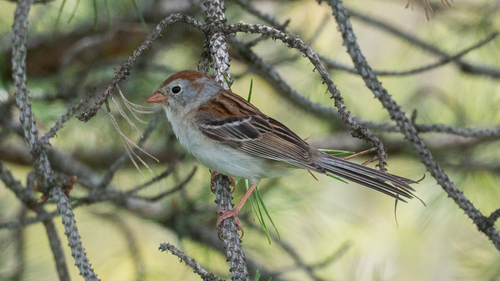
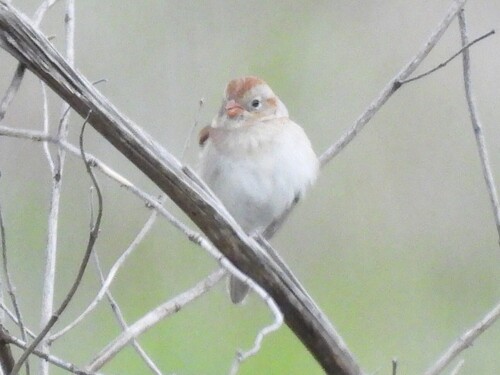
Field Sparrow
Spizella pusilla
The Field Sparrow is a small, cheerful bird that loves to sing! It has a pretty brown and white body and can often be found hopping around in fields and bushes.
Habitat: Grasslands
The Field Sparrow has a rusty-red cap, a clear gray breast without streaks, and a distinctive pink bill. Its back is streaked brown, contrasting with a clear white eye-ring, which helps distinguish it from other sparrows.
Category
BirdsRarity
Common
Danger
1/5 · Very low
Snaps
18
Field Sparrows often raise two broods of chicks in one summer!
Its sweet song sounds like a tiny bouncing ball slowing down!
These tiny birds build nests so hidden, they are hard to spot!
They use their small pink beak to search for seeds and tiny bugs.
Field Sparrows build well-camouflaged nests on the ground or very low in shrubs that helps them hide eggs and chicks.
Field Sparrows possess a variable song, with individuals adapting their melodies that helps them attract mates and define territory.
Field Sparrows can cleverly switch their diet between seeds and insects that helps them find food easily year-round.
This little bird eats a mix of seeds and insects, helping to manage pests and spread plant seeds!
Age differences: Adults consume more seeds, while nestlings are fed a higher proportion of insects for growth.
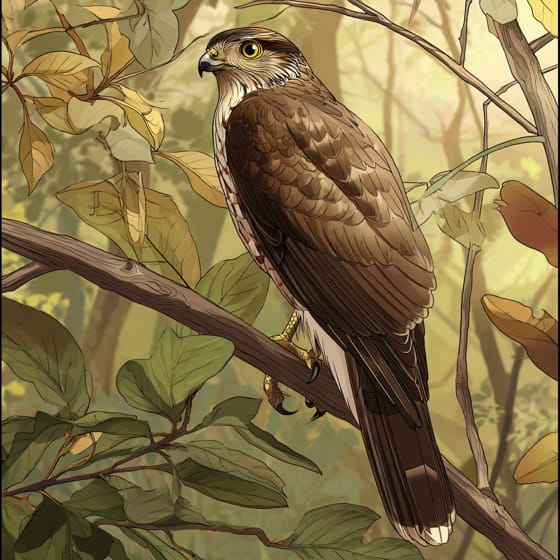
Accipiter cooperii
A common predator of small birds like sparrows.
Thamnophis sirtalis
Preys on eggs and nestlings from ground nests.

Melanoplus differentialis
Eats these insects, especially during breeding season.
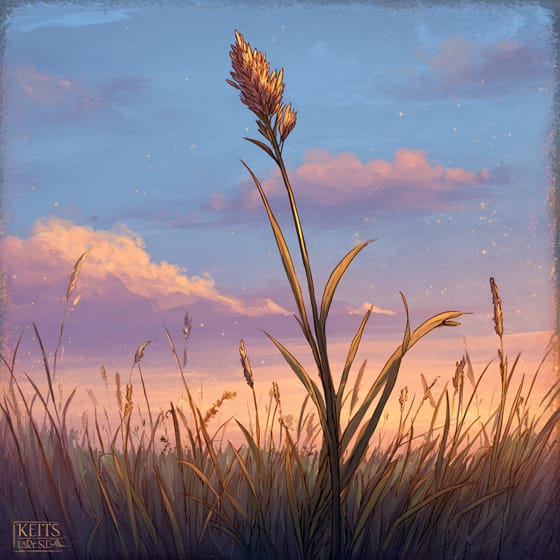
Andropogon gerardii
Uses tall grasses for nesting and cover from predators.
Feathered describes animals, primarily birds, possessing a covering of feathers.
Social animals live in organized groups, cooperating for survival benefits such as foraging, defense, and raising offspring.
Singing animals produce complex vocalizations, often for purposes of attracting mates, defending territory, or communicating within their species.
Grassland habitats are terrestrial biomes dominated by grasses and herbaceous plants, supporting a variety of grazing animals.

This trait identifies organisms whose diet primarily consists of insects and other small invertebrates.

Diurnal animals are primarily active during daylight hours, typically resting or sleeping at night.
No aliases listed yet.
Danger
1/5 · Very low
Enjoy watching birds from a distance and don't try to touch them.
The easiest way to identify Field Sparrow is to use the Snappit nature identifier app.
12-15 cm
19-24 cm
0.011-0.015 kg
3-7 years
38 km/h
This little bird eats a mix of seeds and insects, helping to manage pests and spread plant seeds!
Grasslands
Zoom in to split clusters and explore where this object has been snapped.
Jun 8, 2026
Pennellville Historic DistrictPhoto attribution
no rights reserved
License: CC0 1.0 ↗
Image may be shown cropped inside the card frame.
May 2, 2026
Midewin National Tallgrass PrairiePhoto attribution
(c) P Holroyd, some rights reserved (CC BY)
License: CC BY 4.0 ↗
Image may be shown cropped inside the card frame.

New Jersey, US
You might spot Garlic Mustard, Sensitive Fern, and Common Mugwort.
View guide →

New York, US
You might spot Sundial Lupine, Spotted Horsemint, and New Jersey Tea.
View guide →

Alabama, US
You might spot Eastern Box Turtle, Carolina Wren, and Field Sparrow.
View guide →

Massachusetts, US
You might spot Hemlock Woolly Adelgid, Eastern Newt, and Red Trillium.
View guide →

Illinois, US
You might spot Osage-Orange, Cutleaf Teasel, and Red Clover.
View guide →

Maine, US
You might spot Pink Lady's Slipper, Wood Lily, and Great Blue Heron.
View guide →
Take the discovery with you
Snap it with Snappit to identify it, learn what makes it special, and add the discovery to your collection.




.jpg&width=800)









