.jpg&width=800)





Great-tailed Grackle
Quiscalus mexicanus
The Great-tailed Grackle is a shiny black bird with a long tail. They are known for their loud calls and love to gather in big groups, especially in parks and fields.
Habitat: Urban areas
The Great-tailed Grackle is a medium-sized bird. Males are sleek, iridescent black with a blue-purple sheen and a distinctively long, keel-shaped tail. Females are smaller and duller brown, lacking the male's strong iridescence.
Category
BirdsRarity
Common
Danger
1/5 · Very low
Snaps
70
A male grackle's tail can be as long as its body!
Grackles gather in huge roosts of thousands at night!
Sometimes, they rub ants on their feathers to deter parasites!
They can open sugar packets and snack bags with their beaks.
Great-tailed Grackle can mimic various sounds and make a wide range of calls, which helps them communicate complex information.
Great-tailed Grackle has a long, keel-shaped tail that helps them balance and maneuver deftly during flight.
Great-tailed Grackle can learn and adapt quickly to new food sources, helping them thrive in diverse, even urban, environments.
Great-tailed Grackles are opportunistic eaters, feasting on anything from insects and seeds to human scraps.
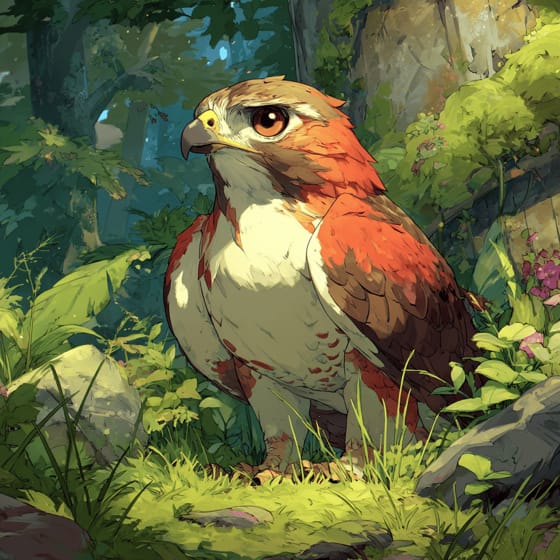
Buteo jamaicensis
A common predator of adult grackles.
Homo sapiens
Benefits from human food waste and altered landscapes.

Zea mays
A significant food source in agricultural areas.
Feathered describes animals, primarily birds, possessing a covering of feathers.
Social animals live in organized groups, cooperating for survival benefits such as foraging, defense, and raising offspring.
This trait identifies organisms whose diet includes both plant and animal matter.
Scavengers consume dead organic matter, helping to decompose carcasses and other waste in the ecosystem.

Singing animals produce complex vocalizations, often for purposes of attracting mates, defending territory, or communicating within their species.

Diurnal animals are primarily active during daylight hours, typically resting or sleeping at night.

This habitat trait indicates species that can coexist with humans in urban and suburban environments, utilizing man-made structures and green spaces.
Danger
1/5 · Very low
It's best to watch these birds from a distance and not feed them directly.
The easiest way to identify Great-tailed Grackle is to use the Snappit nature identifier app.
32-43 cm
45-58 cm
0.08-0.265 kg
10-13 years
55 km/h
Great-tailed Grackles are opportunistic eaters, feasting on anything from insects and seeds to human scraps.
Urban areas
Zoom in to split clusters and explore where this object has been snapped.
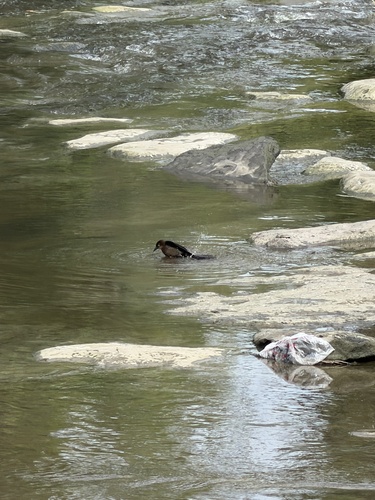
May 23, 2026
Fort McIntoshPhoto attribution
(c) Ian McFaul, some rights reserved (CC BY)
License: CC BY 4.0 ↗
Image may be shown cropped inside the card frame.
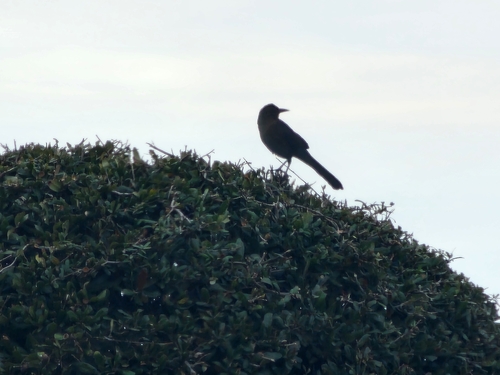
Dec 31, 2025
Mesilla Park Historic DistrictPhoto attribution
(c) Kaden Slone, some rights reserved (CC BY)
License: CC BY 4.0 ↗
Image may be shown cropped inside the card frame.

New Mexico, US
You might spot Pronghorn, Great-Tailed Grackle, and Redstem Stork's-Bill.
View guide →

Texas, US
You might spot Eastern Fox Squirrel and Great-Tailed Grackle.
View guide →

Arizona, US
You might spot Great-Tailed Grackle, Stinknet, and Northern Mockingbird.
View guide →

New Mexico, US
You might spot Duck, Greater Roadrunner, and American Robin.
View guide →

New Mexico, US
You might spot Wood Duck, Duck, and Canada Goose.
View guide →

Texas, US
You might spot Honey Mesquite, Anacua, and Alamo Vine.
View guide →
Take the discovery with you
Snap it with Snappit to identify it, learn what makes it special, and add the discovery to your collection.




.jpg&width=800)









