





Lark Sparrow
Chondestes grammacus
The Lark Sparrow is a cheerful little bird with a lovely song. It has a pretty brown and white pattern that helps it blend into the grass where it likes to live.
Habitat: Grasslands
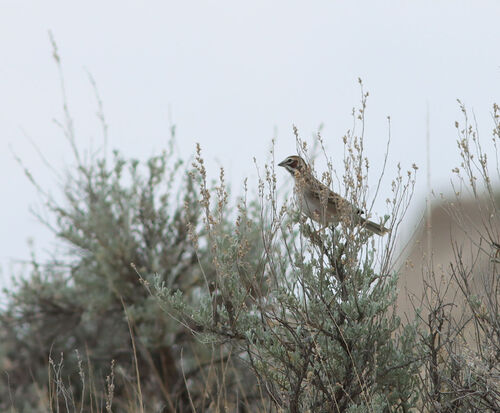
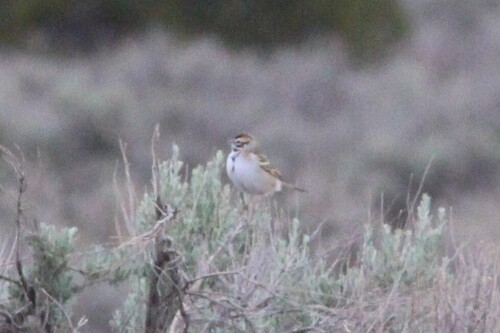
The Lark Sparrow has a striking face pattern with a white eyebrow, a chestnut cheek patch, and a dark stripe on its chin. Its back is brownish with streaks, and it flashes distinctive white outer tail feathers during flight. Its breast is lightly streaked.
Category
BirdsRarity
Common
Danger
1/5 · Very low
Snaps
24
Baby Lark Sparrows have fuzzy crests on their heads that disappear as they grow up!
Lark Sparrows often scratch the ground like a chicken to find hidden tasty bugs!
Their scientific name, Chondestes grammacus, means 'grain-eating songster with lines or markings'!
They sometimes use tiny pieces of string, hair, or even spider silk to build their nests!
Lark Sparrows can sing a complex, varied song with trills and buzzes that helps them attract mates and defend their territory.
Lark Sparrows have bright white outer tail feathers that help them signal to others or evade predators by distraction.
Lark Sparrows can expertly build camouflaged nests directly on the ground, helping them hide eggs and chicks from danger.
These birds enjoy a mix of crunchy seeds and juicy insects, especially during nesting season.
Age differences: Nestlings primarily eat insects for growth, while adults consume more seeds, especially in winter.
.jpg&width=800)
Molothrus ater
Lays its eggs in Lark Sparrow nests, making them raise its young.
Thamnophis sirtalis
Predates on eggs and nestlings found in ground nests.

Melanoplus differentialis
A key insect prey, especially important for feeding growing chicks.
Feathered describes animals, primarily birds, possessing a covering of feathers.
Social animals live in organized groups, cooperating for survival benefits such as foraging, defense, and raising offspring.
Singing animals produce complex vocalizations, often for purposes of attracting mates, defending territory, or communicating within their species.
Camouflaged describes organisms that possess coloring or patterns that allow them to blend into their environment.

Grassland habitats are terrestrial biomes dominated by grasses and herbaceous plants, supporting a variety of grazing animals.

This trait identifies organisms whose diet primarily consists of insects and other small invertebrates.

Diurnal animals are primarily active during daylight hours, typically resting or sleeping at night.
No aliases listed yet.
Danger
1/5 · Very low
Enjoy watching birds from a distance and don't disturb their nests.
The easiest way to identify Lark Sparrow is to use the Snappit nature identifier app.
15-17 cm
25-27 cm
0.02-0.03 kg
2-5 years
55 km/h
These birds enjoy a mix of crunchy seeds and juicy insects, especially during nesting season.
Grasslands
Zoom in to split clusters and explore where this object has been snapped.
May 14, 2026
Toadstool Geologic ParkPhoto attribution
(c) hr_dragonfly, some rights reserved (CC BY)
License: CC BY 4.0 ↗
Image may be shown cropped inside the card frame.
May 4, 2026
Gallup Commercial Historic DistrictPhoto attribution
(c) William Harmon, some rights reserved (CC BY)
License: CC BY 4.0 ↗
Image may be shown cropped inside the card frame.

California, US
You might spot Warrior's Plume and Purple Owl's-Clover.
View guide →

Colorado, US
You might spot Common Side-Blotched Lizard and Eastern Collared Lizard.
View guide →

Texas, US
You might spot Silverleaf Nightshade and Green Comet Milkweed.
View guide →

Kansas, US
You might spot Cliff Swallow and Desert Prince's Plume.
View guide →

Oregon, US
You might spot Blue Mountain Prairie Clover and Munro's Globemallow.
View guide →

Oklahoma, US
You might spot Lace Hedgehog Cactus and Star Cloak Fern.
View guide →
Take the discovery with you
Snap it with Snappit to identify it, learn what makes it special, and add the discovery to your collection.




.jpg&width=800)









