.jpg&width=800)





Lincoln's Sparrow
Melospiza lincolnii
Lincoln's Sparrow is a small, brown bird with a sweet song. They love to hide in tall grass and bushes, making them a bit tricky to spot!
Habitat: Wetlands
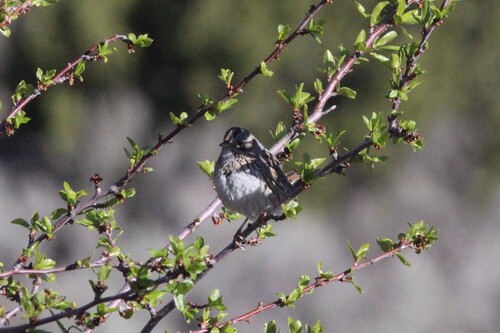
The Lincoln's Sparrow has a streaky brown back, a buffy wash across its breast, and fine streaks along its flanks. Its face is grey with a prominent buffy malar stripe, making it subtly distinct from other sparrows.
Category
BirdsRarity
Common
Danger
1/5 · Very low
Snaps
8
Baby sparrows grow super fast, leaving the nest just 9-12 days after hatching!
Lincoln's Sparrows mostly build cup-shaped nests hidden in wet ground depressions.
Their sweet, bubbly song is often compared to the sound of a 'gurgling stream.'
This sparrow was named by John James Audubon after his friend, Thomas Lincoln!
Lincoln's Sparrow can produce a complex, gurgling song, often sung from dense cover, making it hard to spot.
Lincoln's Sparrow has streaky brown and buff plumage that helps them blend perfectly into marshy grasses and shrubs.
Lincoln's Sparrow can migrate thousands of kilometers twice a year because of strong wings and efficient flight.
These sparrows enjoy a mixed diet of tasty insects and small seeds found close to the ground.

Accipiter striatus
A common predator of small songbirds, including sparrows.
Thamnophis sirtalis
Ground-dwelling snakes may prey on eggs or nestlings.

Poa pratensis
Provides seeds that are an important part of their diet.
Typha latifolia
Dense wetland plants offer crucial nesting sites and cover.
Feathered describes animals, primarily birds, possessing a covering of feathers.
Solitary animals live alone for most of their lives, only interacting with others for mating or parental care.
Singing animals produce complex vocalizations, often for purposes of attracting mates, defending territory, or communicating within their species.
Grassland habitats are terrestrial biomes dominated by grasses and herbaceous plants, supporting a variety of grazing animals.

This trait identifies organisms whose diet primarily consists of insects and other small invertebrates.

This habitat trait identifies species found in wetlands, which are areas of land saturated with water, either permanently or seasonally, including marshes, swamps, and bogs.

Migratory animals undertake seasonal movements from one region to another, typically in response to changes in climate or food availability.
No aliases listed yet.
Danger
1/5 · Very low
Always watch birds from a distance and be quiet so you don't scare them away.
The easiest way to identify Lincoln's Sparrow is to use the Snappit nature identifier app.
13-15 cm
18-22 cm
0.017-0.023 kg
2-5 years
45 km/h
These sparrows enjoy a mixed diet of tasty insects and small seeds found close to the ground.
Wetlands
Zoom in to split clusters and explore where this object has been snapped.
Apr 22, 2026
Gallup Commercial Historic DistrictPhoto attribution
(c) William Harmon, some rights reserved (CC BY)
License: CC BY 4.0 ↗
Image may be shown cropped inside the card frame.

Alaska, US
You might spot Moose, Devil's Club, and Red-Berried Elder.
View guide →

Illinois, US
You might spot Osage-Orange, Cutleaf Teasel, and Red Clover.
View guide →

New Mexico, US
You might spot Sunflower, Sideoats Grama, and Tree Cholla.
View guide →

Michigan, US
You might spot Common Merganser, Tansy, and American Herring Gull.
View guide →

Texas, US
You might spot Duck, Great-Tailed Grackle, and White-Winged Dove.
View guide →

New Mexico, US
You might spot Common Raven, House Sparrow, and Fourwing Saltbush.
View guide →
Take the discovery with you
Snap it with Snappit to identify it, learn what makes it special, and add the discovery to your collection.




.jpg&width=800)









