





Mountain Bluebird
Sialia currucoides
The Mountain Bluebird is a beautiful bird with bright blue feathers. They love to sing and can often be seen flying high in the sky, especially in open areas.
Habitat: Mountain regions
The Mountain Bluebird is known for its stunning sky-blue plumage, particularly bright on males. Females are a duller grey-blue, with more blue on their wings and tail. They lack the rusty-orange breast seen on other bluebird species, making them uniquely vibrant.
Category
BirdsRarity
Common
Danger
1/5 · Very low
Snaps
34
Mountain Bluebirds are the official state bird of Idaho and Nevada. Wow!
Sometimes they dart out from perches to catch flying insects right in the air.
Their dazzling blue color comes from how light hits their feathers, not blue pigment!
They often gather in large flocks during winter, sometimes hundreds strong.
Mountain Bluebird can hover in mid-air because of their strong wings, which helps them spot insects on the ground.
Mountain Bluebird has a knack for finding old tree hollows or nest boxes that helps them keep their eggs and chicks safe.
Mountain Bluebird has special dense feathers that helps them stay warm and survive cold mountain temperatures.
These adaptable birds enjoy a mix of insects in summer and tasty berries when it gets cold.
Age differences: Young chicks are fed only insects by their parents, but adults eat both insects and fruits seasonally.
Schistocerca americana
a common insect prey for these bluebirds

Juniperus communis
provides important winter berries for food
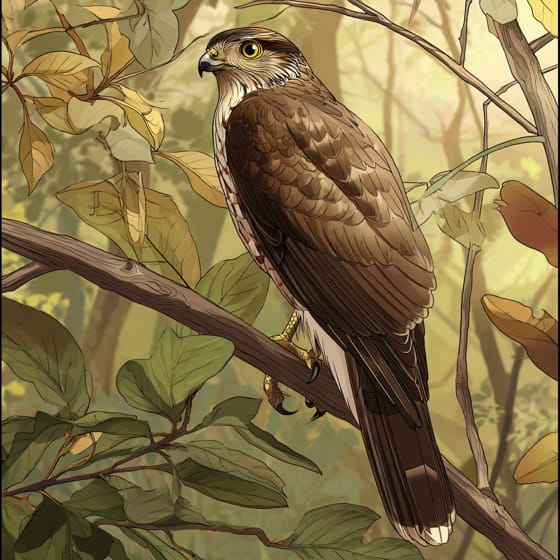
Accipiter cooperii
a fast raptor that hunts bluebirds
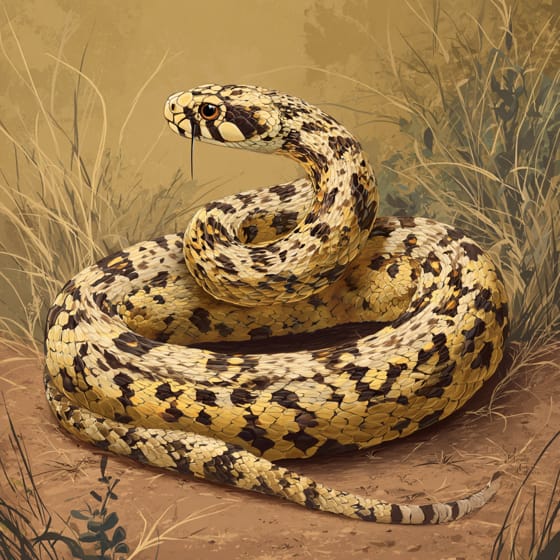
Pituophis catenifer
sometimes preys on eggs or chicks in nests
Feathered describes animals, primarily birds, possessing a covering of feathers.
Social animals live in organized groups, cooperating for survival benefits such as foraging, defense, and raising offspring.
Singing animals produce complex vocalizations, often for purposes of attracting mates, defending territory, or communicating within their species.
Colorful describes organisms or objects displaying a wide range of bright and distinct colors.

This trait identifies organisms whose diet primarily consists of insects and other small invertebrates.

This habitat trait identifies species found in mountainous regions, characterized by high elevation, steep slopes, and varying climate zones.

Diurnal animals are primarily active during daylight hours, typically resting or sleeping at night.
No aliases listed yet.
Danger
1/5 · Very low
Enjoy watching birds from a distance and don't try to catch them.
The easiest way to identify Mountain Bluebird is to use the Snappit nature identifier app.
15-18 cm
28-35 cm
0.028-0.035 kg
6-10 years
48 km/h
These adaptable birds enjoy a mix of insects in summer and tasty berries when it gets cold.
Mountain regions
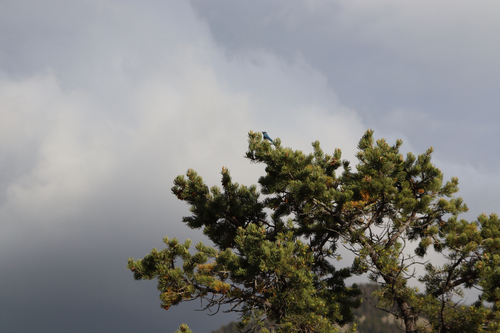
Zoom in to split clusters and explore where this object has been snapped.
Jun 4, 2026
Great Sand Dunes National Park and PreservePhoto attribution
(c) Coryn Fox Corvus, some rights reserved (CC BY)
License: CC BY 4.0 ↗
Image may be shown cropped inside the card frame.
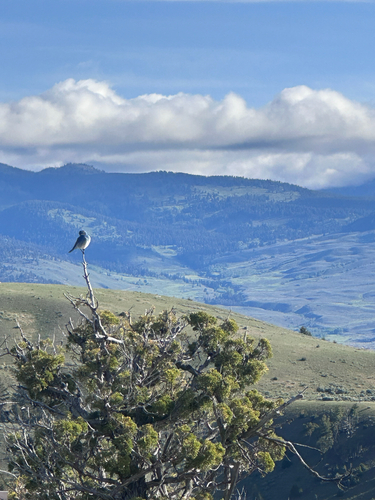
Jun 1, 2026
Mammoth Hot Springs Historic DistrictPhoto attribution
no rights reserved
License: CC0 1.0 ↗
Image may be shown cropped inside the card frame.

Utah, US
You might spot Common Golden-Mantled Ground Squirrel and Steller's Jay.
View guide →

Utah, US
You might spot Common Golden-Mantled Ground Squirrel and Steller's Jay.
View guide →

Wyoming, US
You might spot Moose, Uinta Ground Squirrel, and American Bison.
View guide →

Wyoming, US
You might spot Moose, Arrowleaf Balsamroot, and Black Bear.
View guide →

Wyoming, US
You might spot Elk, Killdeer, and Black-Billed Magpie.
View guide →

Colorado, US
You might spot Great Basin Bristlecone Pine and Mule Deer.
View guide →
Take the discovery with you
Snap it with Snappit to identify it, learn what makes it special, and add the discovery to your collection.




.jpg&width=800)








