.jpg&width=800)





Orange-crowned Warbler
Leiothlypis celata
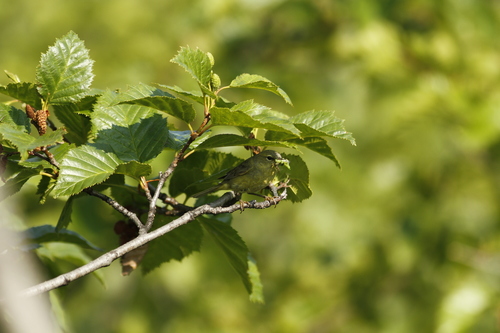
The Orange-crowned Warbler is a small, cheerful bird with a bright yellow belly and a hint of orange on its head. They love to flit around in bushes and trees, singing sweet songs as they search for tasty bugs.
Habitat: Forests
The Orange-crowned Warbler is a small, plain bird with dull olive-green plumage and a faint, sometimes hidden, orange patch on its crown. Unlike many warblers, it lacks strong wing bars or eye rings, giving it a subtle, streaky appearance.
Category
BirdsRarity
Common
Danger
1/5 · Very low
Snaps
12
Some fly over 3,000 miles, from Alaska to Central America!
Their bright orange crown feathers are usually hidden, rarely seen!
They build their cozy, cup-shaped nests hidden right on the ground!
They cleverly drink sweet sap from holes made by woodpeckers!
Orange-crowned Warbler has dull olive plumage that helps them blend perfectly into dense foliage, making them hard for predators to spot.
Orange-crowned Warbler has a brush-tipped tongue that helps them sip nectar from flowers, providing quick energy.
These little birds enjoy a tasty mix of insects, spiders, and a sweet sip of nectar!
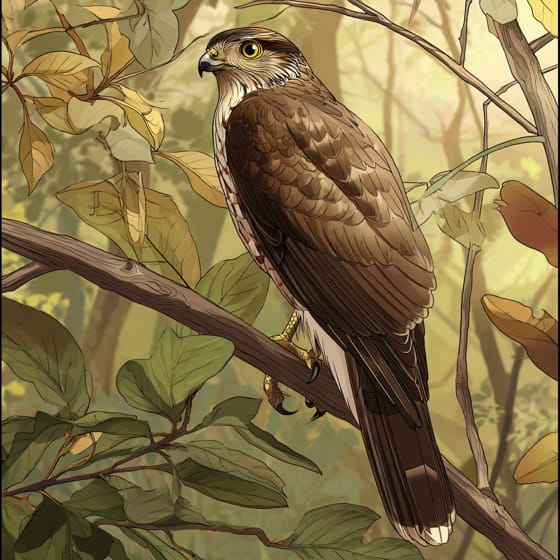
Accipiter cooperii
a common predator of small birds in wooded areas.
Malacosoma disstria
helps control outbreaks of this significant forest pest.
Salix scouleriana
provides critical nesting sites and insect food in its habitat.
_female.JPG&width=800)
Sphyrapicus varius
sips sap from holes made by this woodpecker species.
Feathered describes animals, primarily birds, possessing a covering of feathers.
Social animals live in organized groups, cooperating for survival benefits such as foraging, defense, and raising offspring.
Singing animals produce complex vocalizations, often for purposes of attracting mates, defending territory, or communicating within their species.
Colorful describes organisms or objects displaying a wide range of bright and distinct colors.

This trait identifies organisms whose diet primarily consists of insects and other small invertebrates.

Forest habitats are terrestrial environments dominated by dense tree cover, supporting a high diversity of plant and animal life.

Migratory animals undertake seasonal movements from one region to another, typically in response to changes in climate or food availability.
No aliases listed yet.
Danger
1/5 · Very low
Enjoy watching birds from a distance, and don't try to touch them.
The easiest way to identify Orange-crowned Warbler is to use the Snappit nature identifier app.
11-13 cm
16-19 cm
0.007-0.015 kg
2-5 years
35 km/h
These little birds enjoy a tasty mix of insects, spiders, and a sweet sip of nectar!
Forests
Zoom in to split clusters and explore where this object has been snapped.
May 4, 2026
Gallup Commercial Historic DistrictPhoto attribution
(c) William Harmon, some rights reserved (CC BY)
License: CC BY 4.0 ↗
Image may be shown cropped inside the card frame.
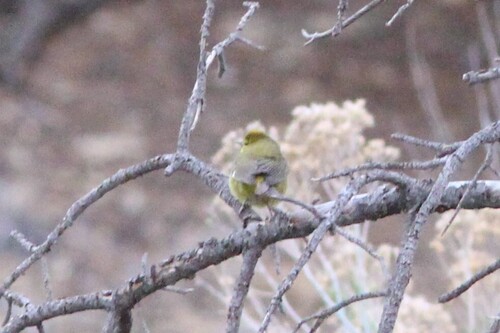
Apr 4, 2026
Arroyo Conejo Open SpacePhoto attribution
(c) Kat B, some rights reserved (CC BY)
License: CC BY 4.0 ↗
Image may be shown cropped inside the card frame.
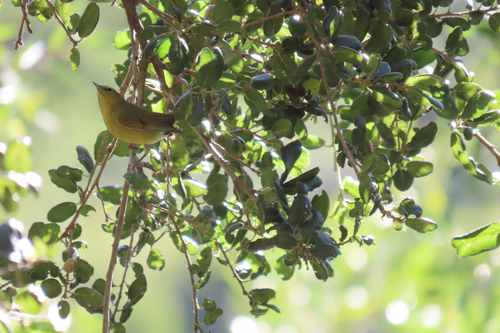
Jul 21, 2015
Gakona Historic DistrictPhoto attribution
(c) Julien Renoult, some rights reserved (CC BY)
License: CC BY 4.0 ↗
Image may be shown cropped inside the card frame.

California, US
You might spot Western Fence Lizard and California Brittlebush.
View guide →

Washington, US
You might spot Pacific Banana Slug and Oregon Forestsnail.
View guide →

Alaska, US
You might spot Canadian Bunchberry, Saskatoon, and Canadian Buffalo-Berry.
View guide →

California, US
You might spot Giraffes, African Lion, and Gorilla.
View guide →

Alaska, US
You might spot Steller Sea Lion, Harbor Seal, and Tufted Puffin.
View guide →
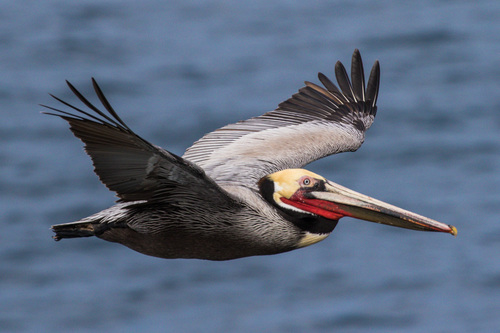
California, US
You might spot Brown Pelican, Black-Crowned Night Heron, and Western Gull.
View guide →
Take the discovery with you
Snap it with Snappit to identify it, learn what makes it special, and add the discovery to your collection.




.jpg&width=800)







