





Rock Wren
Salpinctes obsoletus
The Rock Wren is a small, lively bird that loves to hop around on rocks and boulders. With its brown and white feathers, it blends in well with its rocky home and is often heard singing cheerful songs.
Habitat: Mountain regions
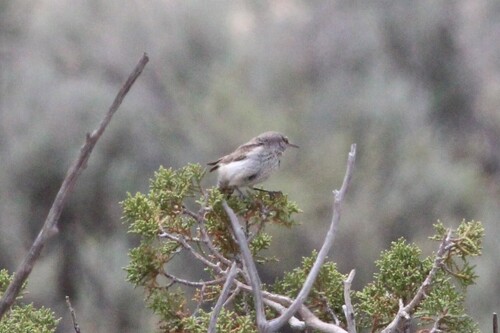
The Rock Wren is a small, pale gray-brown bird with fine barring and a slender, slightly downcurved bill. Its mottled plumage helps it blend seamlessly into its rocky, arid surroundings, making it hard to spot.
Category
BirdsRarity
Common
Danger
1/5 · Very low
Snaps
14
Some Rock Wrens decorate their nests with pebbles, bits of metal, or even snake skin!
The scientific name 'Salpinctes obsoletus' means 'trumpet-like' and 'plain'.
Their song often rattles and trills, sounding like a musical ping-pong ball!
They can extract moisture from insects, helping them survive in very dry desert environments.
Rock Wrens can rapidly hop and climb steep rock faces using strong legs and sharp claws for grip and quick movement.
Rock Wrens have a unique ability to build cup-shaped nests deep within tiny rock crevices, keeping eggs safe from predators.
Rock Wrens have mottled gray and brown feathers that perfectly blend with their rocky habitat, helping them hide from danger.
They mainly munch on tiny insects and spiders found among rocks.

Crotalus atrox
predator of eggs and nestlings in rocky terrain.

Buteo jamaicensis
an aerial predator that hunts small birds.
Formica pallidefulva
forages for ants and other insects among rocks.

Eleodes obscura
finds and consumes various beetle species in arid areas.
Feathered describes animals, primarily birds, possessing a covering of feathers.
Social animals live in organized groups, cooperating for survival benefits such as foraging, defense, and raising offspring.
Singing animals produce complex vocalizations, often for purposes of attracting mates, defending territory, or communicating within their species.
This trait identifies organisms whose diet primarily consists of insects and other small invertebrates.

This habitat trait identifies species found in mountainous regions, characterized by high elevation, steep slopes, and varying climate zones.

Diurnal animals are primarily active during daylight hours, typically resting or sleeping at night.
No aliases listed yet.
Danger
1/5 · Very low
Enjoy watching birds from a distance and don't try to catch them.
The easiest way to identify Rock Wren is to use the Snappit nature identifier app.
13-15 cm
22-25 cm
0.015-0.018 kg
2-6 years
35 km/h
They mainly munch on tiny insects and spiders found among rocks.
Mountain regions
Zoom in to split clusters and explore where this object has been snapped.
May 4, 2026
Gallup Commercial Historic DistrictPhoto attribution
(c) William Harmon, some rights reserved (CC BY)
License: CC BY 4.0 ↗
Image may be shown cropped inside the card frame.

Texas, US
You might spot Texas Hedgehog Cactus, Ornate Tree Lizard, and Cactus Wren.
View guide →

Oklahoma, US
You might spot Lace Hedgehog Cactus and Star Cloak Fern.
View guide →

Nebraska, US
You might spot Lark Sparrow, Rock Wren, and Scarlet Globemallow.
View guide →

New Mexico, US
You might spot Common Side-Blotched Lizard and Kingcup Cactus.
View guide →

Arizona, US
You might spot Golden Eagle, Black Bear, and Cougar.
View guide →

Arizona, US
You might spot Elk, Rock Squirrel, and Common Raven.
View guide →
Take the discovery with you
Snap it with Snappit to identify it, learn what makes it special, and add the discovery to your collection.




.jpg&width=800)









