





sallow sedge
Carex lurida
Sallow sedge is a grassy plant that grows in wet places like marshes and along streams. It has long, slender leaves and can help keep the soil healthy.
Habitat: Wetlands
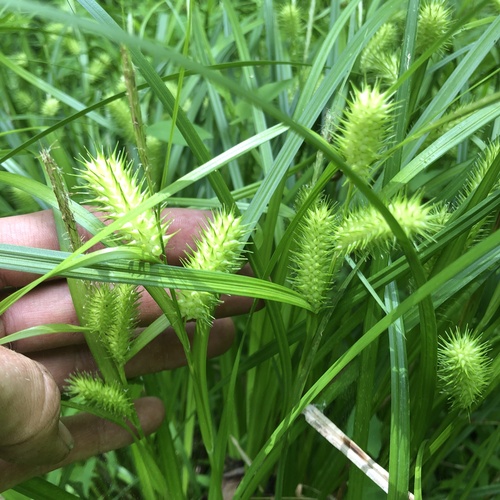
The sallow sedge is a vibrant green, clump-forming plant with grass-like leaves. Its most distinctive features are the yellowish-green flower clusters (spiklets) that often droop and can appear somewhat burr-like when mature.
Category
PlantsRarity
Common
Danger
1/5 · Very low
Snaps
13
It belongs to the sedge family, which looks like grass but has triangular stems!
Its tiny flowers don't have colorful petals; they rely on the wind to spread pollen!
Some people call its spiky seed heads 'bottlebrush sedge' because of their shape!
The plant's scientific name, Carex lurida, means 'pale' or 'sallow' sedge!
Sallow sedge can thrive in waterlogged soil and shallow water, thanks to special adaptations in its roots that let it breathe.
This sedge has unique spiklets that develop into burr-like structures, allowing its seeds to hitchhike on animals or float away on water.
Sallow sedge has a strong, dense root system that helps it hold onto soil in wet, erosion-prone areas, protecting its habitat.
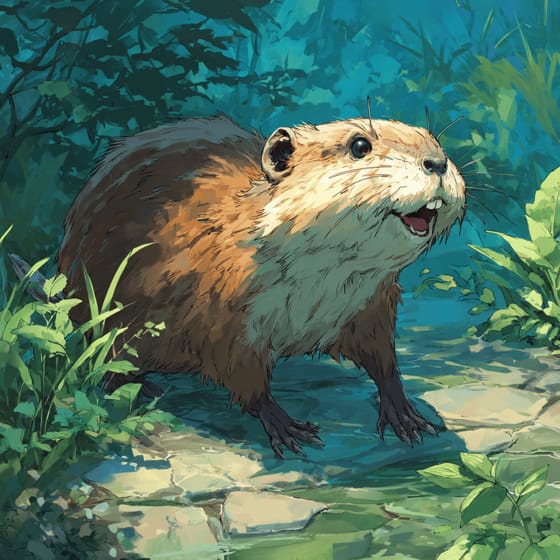
Ondatra zibethicus
Muskrats munch on its leaves and stems in wetlands.
Anas platyrhynchos
Mallard ducks forage for and eat its small, nutritious seeds.
Hyla cinerea
Its dense growth provides hiding spots for small amphibians.

Papilio glaucus
Butterfly caterpillars can find refuge among its leaves.
Flowering plants are any plants that produce flowers as part of their reproductive cycle.
Grass-like plants are herbaceous plants that visually resemble true grasses, typically having long, narrow leaves.
Medicinal plants possess chemical compounds that can be used for therapeutic purposes to treat illnesses or maintain health.
Describes plants that are particularly attractive and beneficial to a wide range of pollinating organisms.

This habitat trait identifies species found in wetlands, which are areas of land saturated with water, either permanently or seasonally, including marshes, swamps, and bogs.

Describes a species whose presence and role have a disproportionately large effect on its environment.
No aliases listed yet.
Danger
1/5 · Very low
Always stay on paths when exploring wetlands and watch your step!
The easiest way to identify sallow sedge is to use the Snappit nature identifier app.
30-100 cm
30-60 cm
1-5 cm
Late Spring to Late Summer
No
None
Perennial
Zoom in to split clusters and explore where this object has been snapped.
May 26, 2026
Harriman Historic DistrictPhoto attribution
(c) Andrew Conboy, some rights reserved (CC BY)
License: CC BY 4.0 ↗
Image may be shown cropped inside the card frame.

New Jersey, US
You might spot Garlic Mustard, Sensitive Fern, and Common Mugwort.
View guide →

New York, US
You might spot Sundial Lupine, Spotted Horsemint, and New Jersey Tea.
View guide →

Massachusetts, US
You might spot Eastern Cottontail and American Robin.
View guide →

Alabama, US
You might spot Anole, Eastern Gray Squirrel, and Asian Lady Beetle.
View guide →

Alabama, US
You might spot Anole, Eastern Gray Squirrel, and Asian Lady Beetle.
View guide →

Alabama, US
You might spot Anole, Eastern Gray Squirrel, and Asian Lady Beetle.
View guide →
Take the discovery with you
Snap it with Snappit to identify it, learn what makes it special, and add the discovery to your collection.








.jpg&width=800)



_001.jpg&width=800)




