





shining sumac
Rhus copallinum
Shining sumac is a lovely shrub with shiny leaves that can turn bright red in the fall. It grows in groups and is great for attracting butterflies and birds to your garden.
Habitat: Forests
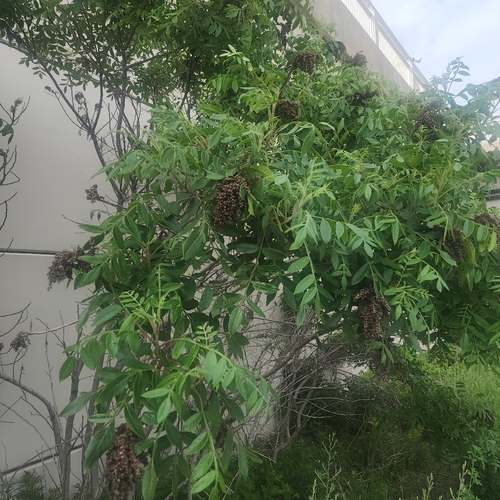
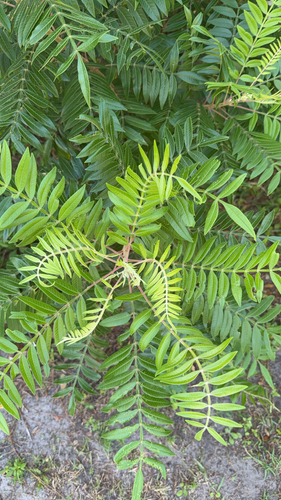
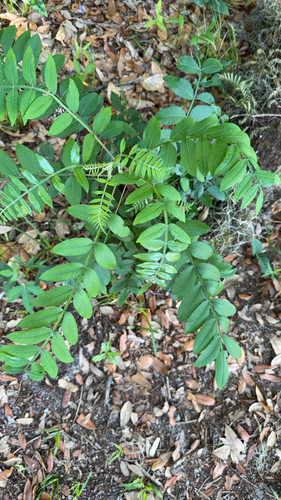
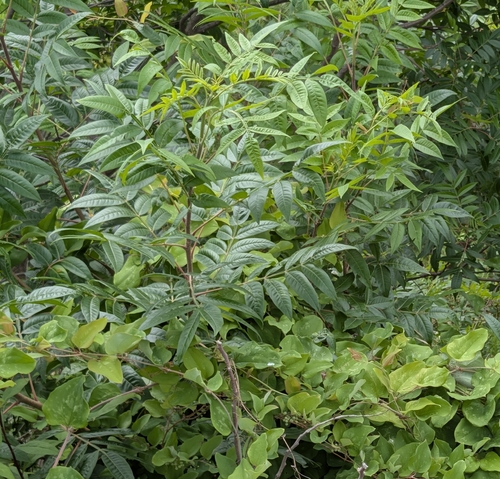
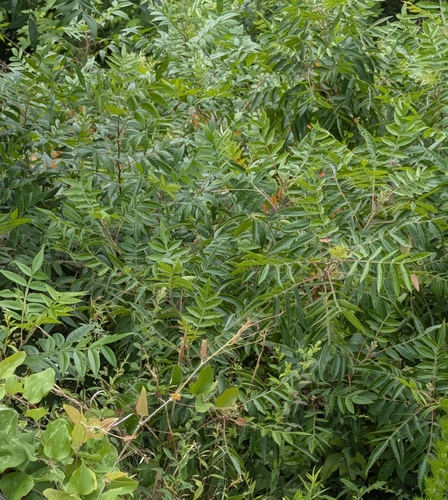
The shining sumac has glossy, dark green leaves with unique "wings" along the central stem. Its small, yellowish-green flowers form upright clusters, later turning into fuzzy, reddish-brown berry cones that stay on through winter.
Category
PlantsRarity
Common
Danger
1/5 · Very low
Snaps
34
In autumn, its leaves transform into an amazing display of fiery red and orange colors!
Its tart red berries can be steeped in water to make a refreshing, lemonade-like drink!
Look closely! Each leaf has little "wings" along its stem, making it easy to identify.
This plant is a "pioneer," often being one of the first to grow in disturbed or open land.
Shining sumac can send out underground stems to quickly grow new plants, helping it colonize open areas.
Its tough roots and leaves help it survive in dry, sandy, or poor soil where many other plants struggle.
This sumac produces bright red, tart berries that provide crucial food for birds when other sources are scarce.
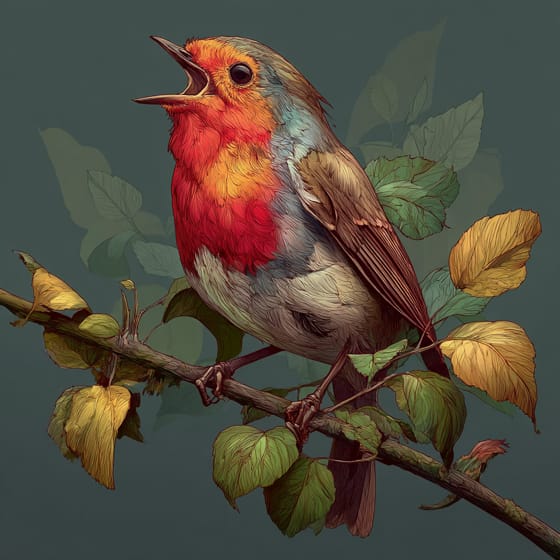
Turdus migratorius
eats winter berries

Odocoileus virginianus
browses on leaves
Apis mellifera
visits flowers for nectar
Deciduous plants periodically shed all their leaves, typically during autumn or dry seasons.
Flowering plants are any plants that produce flowers as part of their reproductive cycle.
A shrub is a woody plant smaller than a tree, typically with multiple stems branching from or near the ground.
Fall color refers to the seasonal change in foliage pigmentation, primarily in deciduous plants, displaying vibrant hues.

Describes plants that are particularly attractive and beneficial to a wide range of pollinating organisms.

Forest habitats are terrestrial environments dominated by dense tree cover, supporting a high diversity of plant and animal life.
Danger
1/5 · Very low
Always look but don't touch plants unless an adult says it's safe.
The easiest way to identify shining sumac is to use the Snappit nature identifier app.
200-800 cm
200-600 cm
0.2-0.5 cm
Summer
Yes
None
Perennial
Zoom in to split clusters and explore where this object has been snapped.
Jun 6, 2026
Ocean City Residential Historic DistrictPhoto attribution
(c) Peter A. Greenberg, some rights reserved (CC BY)
License: CC BY 4.0 ↗
Image may be shown cropped inside the card frame.
Jun 4, 2026
St. Augustine Town Plan Historic DistrictPhoto attribution
(c) Karen M. Janszen, some rights reserved (CC BY-SA)
License: CC BY-SA 4.0 ↗
Image may be shown cropped inside the card frame.
Jun 4, 2026
St. Augustine Town Plan Historic DistrictPhoto attribution
(c) Karen M. Janszen, some rights reserved (CC BY-SA)
License: CC BY-SA 4.0 ↗
Image may be shown cropped inside the card frame.
May 31, 2026
Arrowmont School of Arts and CraftsPhoto attribution
(c) Nick Kleinschmidt, some rights reserved (CC BY)
License: CC BY 4.0 ↗
Image may be shown cropped inside the card frame.
May 31, 2026
Arrowmont School of Arts and CraftsPhoto attribution
(c) Nick Kleinschmidt, some rights reserved (CC BY)
License: CC BY 4.0 ↗
Image may be shown cropped inside the card frame.

New Jersey, US
You might spot Garlic Mustard, Sensitive Fern, and Common Mugwort.
View guide →

Tennessee, US
You might spot Black Bear, Yellow Wakerobin, and Pipevine Swallowtail.
View guide →

Georgia, US
You might spot Gulf Fritillary, Anole, and American Beautyberry.
View guide →

New York, US
You might spot American Robin, Pond Slider, and Northern Cardinal.
View guide →

Arkansas, US
You might spot Widow's-Cross, Yucca Giant-Skipper, and Outis Skipper.
View guide →

New Jersey, US
You might spot Brant, Laughing Gull, and Great Black-Backed Gull.
View guide →
Take the discovery with you
Snap it with Snappit to identify it, learn what makes it special, and add the discovery to your collection.






.jpg&width=800)



_001.jpg&width=800)




