.jpg&width=800)





Wood Forget-me-not
Myosotis sylvatica
The Wood Forget-me-not is a small, beautiful flower with tiny blue petals. It loves to grow in shady places and is often found near streams and in forests.
Habitat: Forests
The Wood Forget-me-not has tiny sky-blue flowers, each with a bright yellow or white center, growing in loose clusters. Its stems and oval-shaped leaves are covered in soft, fine hairs, making it distinct from smoother-leaved varieties.
Category
PlantsRarity
Common
Danger
1/5 · Very low
Snaps
4
Some gardeners call them 'friendly weeds' because they spread charming blue flowers everywhere!
The name 'Forget-me-not' comes from an old legend about true love and a river!
Their tiny seeds have clever hooks that help them hitchhike on animal fur or clothes!
These cheerful plants can even grow in tough spots, like cracks in sidewalks!
Wood Forget-me-not blooms early in the season, providing essential nectar and pollen for hungry pollinators.
Wood Forget-me-not has hairy stems and leaves that help protect it from some hungry herbivores and harsh weather.
Apis mellifera
Gathers nectar and pollen from its tiny blue flowers.
Bombus terrestris
A common visitor, helping transfer pollen between blooms.

Arion ater
Chews on leaves and tender young stems, especially in damp conditions.
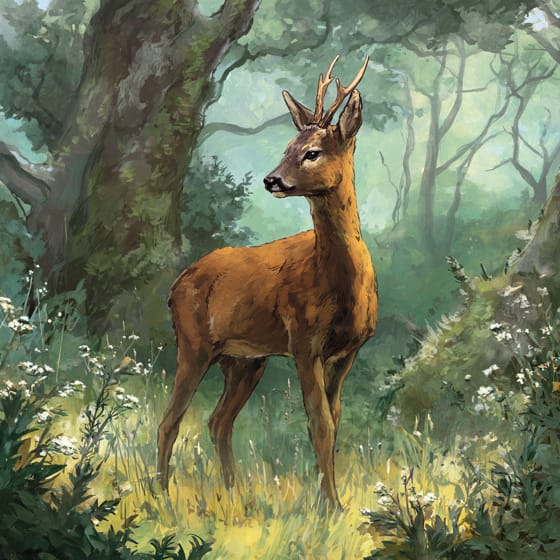
Capreolus capreolus
Browses on its foliage, especially in woodland clearings.
Flowering plants are any plants that produce flowers as part of their reproductive cycle.
Ornamental plants are cultivated primarily for their aesthetic appeal, enhancing landscapes and gardens with their attractive foliage, flowers, or form.
Cluster flowers are inflorescences where individual flowers are arranged closely together on a common stem.
Shade tolerant plants are adapted to grow and thrive in areas with low light levels, requiring less direct sunlight.

Spring blooming plants produce their flowers during the spring season, often signifying the end of winter and the start of new growth.

Describes plants that are particularly attractive and beneficial to a wide range of pollinating organisms.

Forest habitats are terrestrial environments dominated by dense tree cover, supporting a high diversity of plant and animal life.
No aliases listed yet.
Danger
1/5 · Very low
It's best to look at flowers without picking them, so they can keep growing for everyone to enjoy.
The easiest way to identify Wood Forget-me-not is to use the Snappit nature identifier app.
15-30 cm
15-30 cm
0.5-1 cm
Spring to early summer
Yes
None
Biennial
Zoom in to split clusters and explore where this object has been snapped.

Pennsylvania, US
You might spot Pinesap, Great Rhododendron, and Mountain Laurel.
View guide →

New York, US
You might spot Dame's Rocket, American Pokeweed, and American Toad.
View guide →

Oregon, US
You might spot Western Sword Fern, Duck, and Black-Tailed Bumble Bee.
View guide →

California, US
You might spot African Penguin, Coral, and Flies.
View guide →
California, US
You might spot African Penguin, Coral, and Flies.
View guide →

Washington, US
You might spot Rock Pigeon, American Crow, and Dogwoods.
View guide →
Take the discovery with you
Snap it with Snappit to identify it, learn what makes it special, and add the discovery to your collection.






.jpg&width=800)



_001.jpg&width=800)



