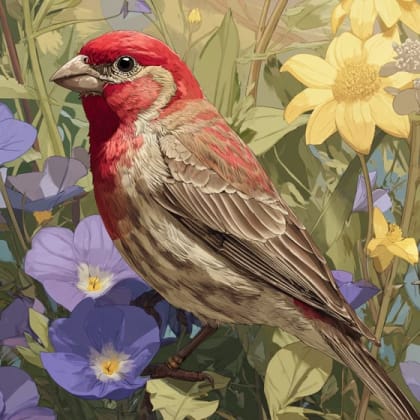





House Finch

The Kern River Preserve protects California's largest remaining lowland riparian forest.
The Kern River Preserve protects California's largest remaining lowland riparian forest. This vital Audubon-managed nature reserve, nestled in the Southern Sierra Nevada, is a designated Globally Important Bird Area, renowned for its extraordinary biodiversity and critical habitat for numerous species. It offers a serene escape into one of the state's most ecologically significant riverine ecosystems, making it a paradise for birdwatchers and nature enthusiasts alike.
Stretching across approximately 3,000 acres along the South Fork Kern River, the preserve is characterized by its lush cottonwood-willow riparian forest, providing essential nesting and foraging grounds. Key avian residents include the federally endangered Southwestern Willow Flycatcher, the federally threatened Western Yellow-billed Cuckoo, and the vibrant Summer Tanager. Beyond its remarkable birdlife, visitors might also spot diverse mammals such as Mule Deer and Bobcat, various reptiles like the Pacific Pond Turtle, and a rich array of native plants, including the rare Alkali Mariposa Lily.
Visiting the Kern River Preserve offers an immersive experience into a thriving natural landscape, where the sounds and sights of wildlife create unforgettable moments. While the main visitor center may have temporary access changes, the surrounding river forest remains accessible, offering unique opportunities for photography, nature education, and quiet contemplation. Its commitment to conservation and the sheer abundance of life it supports make it a truly special destination for anyone seeking to connect with California's natural heritage. Enhance your adventure: download the Snappit app to identify the local species you encounter.
The Kern River Preserve's history dates back to the 1860s as part of Andrew Brown's cattle ranch. Recognizing its immense ecological value, particularly its pristine riparian forest, The Nature Conservancy acquired approximately 1,600 acres of the ranch in 1979 to protect it from development. In 1998, the National Audubon Society assumed ownership and stewardship of the preserve, continuing and expanding conservation efforts. Through subsequent acquisitions and partnerships, the preserve has grown to over 3,000 acres, ensuring the long-term protection of this critical habitat along the South Fork Kern River.
Popular activities include birdwatching, wildlife observation, nature photography, hiking on designated trails, botanizing, and participating in nature education programs.
Spring: Witness a spectacular array of migratory birds, vibrant wildflowers, and lush new growth.
Summer: While temperatures can be warm, early mornings still offer good wildlife viewing. Check for specific activity schedules.
Fall: Enjoy comfortable hiking temperatures, fewer visitors, and the chance to observe fall migrations and changing foliage.
Winter: Experience quiet trails and opportunities for spotting resident bird species, including various woodpeckers and finches at feeders.
The preserve offers a wheelchair-accessible ramp leading to the visitor center and an accessible port-a-potty. While many trails are narrow, some rough old farm roads are wide enough for a wheelchair with a moderately strong helper. **Important Note:** As of late 2025, the Kern River Preserve HQ and Visitor Center entrance were temporarily inaccessible due to river course changes from flooding. Visitors are advised to enjoy the river forest from Fay Ranch Road and the South Fork Wildlife Area in the interim and check the Audubon website for the most current access information.
The rich cottonwood-willow riparian forest, the South Fork Kern River, and various bird observation points are primary attractions. Educational programs and festivals are held throughout the year, including the Kern River Valley Bioregions Festival in April and the Kern Valley Hummingbird Celebration in August.
Each card links to a full Explore page with photos, traits, and fun facts.
Start with the big picture, then zoom in to explore individual wildlife observations around this place.
Check Current Access
Before visiting, verify the current operational status of the HQ and Visitor Center, as temporary closures have occurred due to river course changes. Alternative access points like Fay Ranch Road and the South Fork Wildlife Area may be available.
Go Early
For the best birdwatching opportunities and to avoid warmer temperatures, especially in spring and summer, plan your visit for the early morning hours.
Bring Essentials
Pack binoculars for birdwatching, a camera for photography, plenty of water, snacks, sunscreen, and insect repellent.
Wear Appropriate Footwear
Trails can be unpaved and uneven, so comfortable walking or hiking shoes are recommended.
Leave No Trace
The preserve operates as a "pack in/pack out" facility with no garbage service; be prepared to take all your trash with you.
Pet Policy
Pets are allowed but discouraged and must be kept on a leash of six feet or less at all times, with owners responsible for cleaning up and packing out all pet waste.
Jun 4, 2026
Jun 4, 2026
Jun 4, 2026
Jun 3, 2026
Jun 3, 2026

Maryland, US
You might spot White-Tailed Deer and Eastern Gray Squirrel.
View guide →
.jpg)
District of Columbia, US
You might spot Eastern Gray Squirrel, Duck, and House Sparrow.
View guide →

Illinois, US
You might spot American Robin, Canada Goose, and House Sparrow.
View guide →

Virginia, US
You might spot Spotted Lanternfly and Northern Cardinal.
View guide →
Take the discovery with you
Identify the wildlife you spot, learn as you go, and keep a collection of the adventure.













.jpg&width=800)