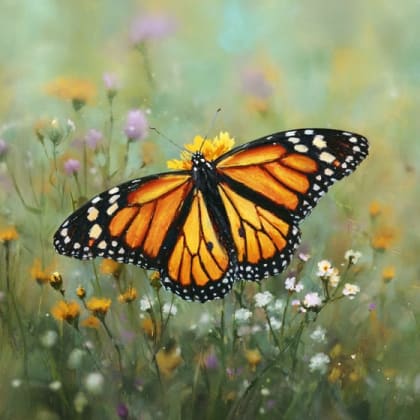





Monarch Butterfly

Step back in time through Lowell's Commercial Historic District, a vibrant testament to Indiana's rich architectural and economic past.
Step back in time through Lowell's Commercial Historic District, a vibrant testament to Indiana's rich architectural and economic past. This charming downtown area, listed on the National Register of Historic Places, showcases a captivating collection of buildings predominantly constructed between 1870 and 1952. Stroll along Commercial Avenue and Clark Street to admire an array of architectural styles, from the ornate Italianate and Queen Anne to the robust Romanesque Revival and elegant Art Deco, each telling a story of resilience and growth. It's a living museum, where the very streets and structures narrate the town's evolution from a burgeoning agricultural hub to a thriving commercial center.
The district boasts 28 contributing buildings, one historic site, and one historic object, each offering unique visual appeal. Iconic structures like the Roberts Building, Colfax Lodge, the historic Bacon House, and the Lowell National Bank provide a glimpse into the commercial and social life of yesteryear. The Lowell Town Hall, an impressive blend of Arts and Crafts and Neo-Classical styles, and the Lowell Carnegie Library further underscore the community's commitment to civic and intellectual development. Look for distinctive details like limestone facades, intricate brickwork, and preserved storefronts that reflect the craftsmanship of different eras.
Visiting the Lowell Commercial Historic District is an immersive journey into small-town Americana, offering more than just historical sightseeing. It's an opportunity to experience a sustained downtown, bustling with local shops, antique stores, and eateries, demonstrating how a community can honor its past while embracing the present. The district's preserved character, coupled with its active commercial life, makes it a memorable destination for anyone interested in history, architecture, or simply enjoying the unique charm of a historic Indiana town. Wondering what that bird or insect is? Find out on your visit using the Snappit nature app.
Lowell was formally platted in 1853 and began to flourish with the arrival of the Louisville, New Albany and Chicago Railroad in 1880, transforming it into an important hub for the surrounding rural community. The commercial district, centered primarily along Commercial Avenue, quickly became lined with two-story frame commercial buildings. A pivotal moment in the district's history occurred on October 4, 1898, when a devastating fire swept through Commercial Avenue, destroying many of the wooden structures. This disaster, however, spurred a period of rapid rebuilding between 1899 and 1903, with new town ordinances mandating masonry construction, which shaped the brick and stone character seen today. The Lowell Commercial Historic District was recognized for its significance and added to the National Register of Historic Places in 2003, acknowledging its architectural integrity and its role in representing the development of small-town commercial districts in the late 19th and early 20th centuries.
Take a self-guided walking tour to appreciate the diverse architecture and historical plaques.
* Browse the antique shops, gift stores, and local businesses that occupy many of the historic buildings.
* Dine at one of the local restaurants, many of which are housed in historically significant structures.
* Visit the Town Square and the Three Creeks Monument.
* Look for historical markers and signage that tell the stories of individual buildings and events.
Spring/Fall: Ideal walking weather, outdoor markets or festivals may occur.
Summer: Enjoy outdoor dining and potentially local events or concerts. Be prepared for warmer temperatures.
Winter: The district can be charming with holiday decorations. Indoor activities like shopping and dining are prevalent.
As a historic downtown, sidewalks are generally present, but some storefronts may have steps. Visitors should be prepared for varying levels of accessibility in individual shops and businesses. The overall area is flat, making walking relatively easy.
The array of distinct architectural styles, including Italianate, Queen Anne, Romanesque Revival, Bungalow/American Craftsman, and Art Deco, visible in the buildings along Commercial Avenue and Clark Street. Specific notable buildings include the Roberts Building, Colfax Lodge, Bacon House, Lowell National Bank, Lowell Town Hall, and Lowell Carnegie Library. The Three Creeks Monument in Town Square is also a significant historic object.
Each card links to a full Explore page with photos, traits, and fun facts.
Start with the big picture, then zoom in to explore individual wildlife observations around this place.
Wear comfortable shoes
The best way to explore the district is on foot, so comfortable walking shoes are a must.
Allow ample time for browsing
Many of the historic buildings house unique antique shops, boutiques, and specialty stores that are worth exploring.
Look up and down
Pay attention to architectural details on upper stories and decorative elements like cornices, brickwork, and unique windows.
Visit Town Square
Don't miss the Three Creeks Monument in the Town Square, a significant historical object in the district.
Check for local events
Depending on the time of year, there might be local markets, festivals, or community events happening in or around the historic district.
Consider local dining
Enjoy a meal or coffee at one of the independent restaurants or cafes housed within the historic buildings for an authentic experience.
May 17, 2026
May 17, 2026
May 16, 2026
May 16, 2026
May 8, 2026

Maryland, US
You might spot White-Tailed Deer and Eastern Gray Squirrel.
View guide →
.jpg)
District of Columbia, US
You might spot Eastern Gray Squirrel, Duck, and House Sparrow.
View guide →

Illinois, US
You might spot American Robin, Canada Goose, and House Sparrow.
View guide →

Virginia, US
You might spot Spotted Lanternfly and Northern Cardinal.
View guide →
Take the discovery with you
Identify the wildlife you spot, learn as you go, and keep a collection of the adventure.