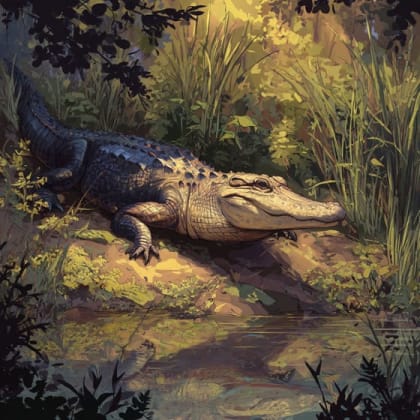





American Alligator

The Northeast Gainesville Residential District, affectionately known as the Duckpond neighborhood, offers a picturesque stroll through Gainesville's architectural past.
The Northeast Gainesville Residential District, affectionately known as the Duckpond neighborhood, offers a picturesque stroll through Gainesville's architectural past. This charming historic district, recognized on the National Register of Historic Places, preserves a vibrant collection of homes dating primarily from the late 19th and early 20th centuries, inviting visitors to experience a bygone era.
As you wander its tree-lined streets, you'll discover a rich tapestry of architectural styles, including elegant Queen Anne and Colonial Revival residences, intricate Victorian homes, charming Craftsman Bungalows, and grand Mediterranean Revival mansions. Notable landmarks within the district include the impressive Thomas Center, a Mediterranean Revival masterpiece, the stately Colonial Revival Tigert House, and the historically significant Bodiford House, showcasing the area's dedication to preservation. The distinctive grand front porches and detailed woodwork on many facades offer captivating photographic opportunities and a glimpse into early Florida design.
Visiting this district is a memorable step back in time, offering a tranquil escape from modern bustle. It's a place to appreciate the meticulous preservation efforts, the unique charm of historic homes, and the serene, park-like atmosphere created by its mature oak trees and the central Duckpond. Whether you're an architecture enthusiast or simply seeking a peaceful and visually rich experience, the Northeast Gainesville Residential District provides a deep connection to the city's heritage. Turn your visit into a safari! Use the Snappit app to scan and log wildlife sightings here.
The Northeast Gainesville Residential District boasts a history rooted in Gainesville's growth during the late 19th and early 20th centuries. The original section of the district was platted as early as 1854, evolving into one of Gainesville's oldest residential neighborhoods. Its development was significantly influenced by economic booms, such as the phosphate industry in the 1890s and Florida's economic growth in the 1920s, which spurred the construction of numerous buildings reflecting popular architectural styles of the time. The district gained official recognition for its cultural significance when it was entered into the National Register of Historic Places in 1980, a pivotal moment that paved the way for increased preservation efforts. Local non-profit organizations like Historic Gainesville Inc. played a crucial role in advocating for the district's preservation, instrumental in saving key structures like the Thomas Center and the Bodiford House from demolition and ensuring the district's nomination to the National Register. The district was expanded in 1997, further encompassing its rich architectural heritage.
Embark on a self-guided architectural walking tour, photograph the historic homes and their unique features, and enjoy a peaceful stroll through a neighborhood that feels like a step back in time. Look for distinct architectural elements like grand front porches, intricate woodwork, and unique rooflines.
Summer can be very hot and humid, making long walks uncomfortable. Winter offers cooler, drier weather, though some foliage might be less vibrant. Spring brings blooming gardens, while fall offers pleasant temperatures.
The district features mostly paved sidewalks suitable for walking. However, as an older residential area, some paths may be uneven. The terrain is generally flat, making it accessible for most visitors.
The diverse array of architectural styles including Victorian, Queen Anne, Colonial Revival, Mediterranean Revival, Craftsman, and Bungalow homes. Don't miss the Thomas Center, the Tigert House, the Bodiford House, and the historic Magnolia Plantation (Baird Mansion). The charming tree-lined streets and the central Duckpond itself are also highlights.
Each card links to a full Explore page with photos, traits, and fun facts.
Start with the big picture, then zoom in to explore individual wildlife observations around this place.
Wear comfortable shoes
You'll be doing a fair amount of walking to appreciate the diverse architecture.
Bring a camera
The historic homes and picturesque streets offer excellent photographic opportunities.
Consider a self-guided tour
Utilize online resources or maps of the district to identify key homes and architectural styles.
Respect privacy
Remember that this is an active residential neighborhood, so be mindful of residents' privacy.
Stay hydrated
Especially during warmer months, carry water to stay comfortable during your stroll.
Look for details
Pay attention to smaller architectural elements like stained glass, intricate porch railings, and unique window designs.
Jun 6, 2026
Jun 6, 2026
Jun 6, 2026
Jun 6, 2026
Jun 6, 2026

Maryland, US
You might spot White-Tailed Deer and Eastern Gray Squirrel.
View guide →
.jpg)
District of Columbia, US
You might spot Eastern Gray Squirrel, Duck, and House Sparrow.
View guide →

Illinois, US
You might spot American Robin, Canada Goose, and House Sparrow.
View guide →

Virginia, US
You might spot Spotted Lanternfly and Northern Cardinal.
View guide →
Take the discovery with you
Identify the wildlife you spot, learn as you go, and keep a collection of the adventure.