





northern spicebush
Lindera benzoin
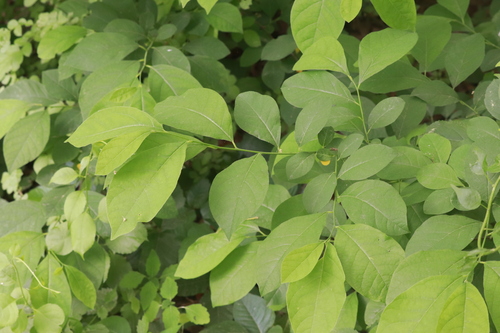
The northern spicebush is a lovely shrub with bright green leaves and tiny yellow flowers. It grows in woods and is known for its sweet, spicy smell that attracts butterflies and other insects.
Habitat: Forests
The northern spicebush is a deciduous shrub known for its early spring clusters of tiny, fragrant yellow-green flowers along its bare branches. In fall, it displays vibrant red berries and bright yellow leaves, standing out in the understory.
Category
PlantsRarity
Common
Danger
1/5 · Very low
Snaps
21
Its aromatic leaves and twigs can be brewed into a refreshing, slightly spicy tea!
Pioneers used its dried berries as a flavorful spice, similar to allspice, for cooking!
This plant is the sole host for the caterpillars of the stunning Spicebush Swallowtail butterfly!
You can tell a spicebush by scratching a twig and sniffing its distinctive spicy-citrus scent!
Northern spicebush has aromatic leaves that release a pungent, spicy scent when crushed, helping to deter certain hungry herbivores.
Northern spicebush can bloom with tiny yellow flowers in early spring before its leaves emerge, attracting early pollinators easily.
Northern spicebush produces lipid-rich red berries that provide vital energy and nutrients for many migrating birds during autumn.

Papilio troilus
Its caterpillars feed exclusively on spicebush leaves.
.jpg&width=800)
Catharus guttatus
Eats the plant's lipid-rich berries, providing crucial energy.
Apis mellifera
Visits the early spring flowers for nectar and pollen.

Dumetella carolinensis
Consumes the nutrient-dense berries, helping seed dispersal.
Aromatic plants produce and emit fragrant volatile organic compounds, often for defense or to attract pollinators.
Deciduous plants periodically shed all their leaves, typically during autumn or dry seasons.
Flowering plants are any plants that produce flowers as part of their reproductive cycle.
A shrub is a woody plant smaller than a tree, typically with multiple stems branching from or near the ground.

Spring blooming plants produce their flowers during the spring season, often signifying the end of winter and the start of new growth.

Fragrant flowers emit a pleasant aroma, often to attract pollinators or for defense.

Fruit-bearing plants produce fruits, which are the mature ovaries of flowering plants containing seeds.

Edible plants are those parts of a plant that are considered safe for human consumption.

Describes plants that are particularly attractive and beneficial to a wide range of pollinating organisms.

This human use trait indicates species from which spices are derived, used for flavoring, preserving food, or as aromatic agents.

Forest habitats are terrestrial environments dominated by dense tree cover, supporting a high diversity of plant and animal life.

Describes a species whose presence and role have a disproportionately large effect on its environment.
Danger
1/5 · Very low
Always look but don’t touch plants unless you know they are safe.
The easiest way to identify northern spicebush is to use the Snappit nature identifier app.
200-500 cm
150-300 cm
0.5-1 cm
Early spring
Yes
Mild
Perennial
Zoom in to split clusters and explore where this object has been snapped.
Jun 6, 2026
East Windsor Hill Historic DistrictPhoto attribution
(c) Mark Apgar, some rights reserved (CC BY)
License: CC BY 4.0 ↗
Image may be shown cropped inside the card frame.

New Jersey, US
You might spot Garlic Mustard, Sensitive Fern, and Common Mugwort.
View guide →

Pennsylvania, US
You might spot American Robin, Red-Winged Blackbird, and Lesser Celandine.
View guide →

Virginia, US
You might spot Spotted Lanternfly and Northern Cardinal.
View guide →

Pennsylvania, US
You might spot Spotted Lanternfly, Duck, and Asian Lady Beetle.
View guide →

Connecticut, US
You might spot Eastern Gray Squirrel, Dark-Eyed Junco, and House Sparrow.
View guide →

Ohio, US
You might spot Brown-Belted Bumble Bee and Eastern Carpenter Bee.
View guide →
Take the discovery with you
Snap it with Snappit to identify it, learn what makes it special, and add the discovery to your collection.






.jpg&width=800)


_001.jpg&width=800)



