.jpg&width=800)





partridgeberry
Mitchella repens
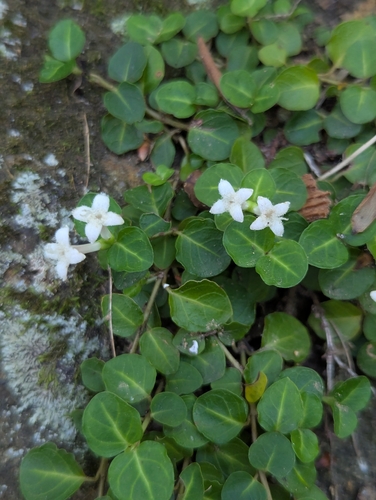
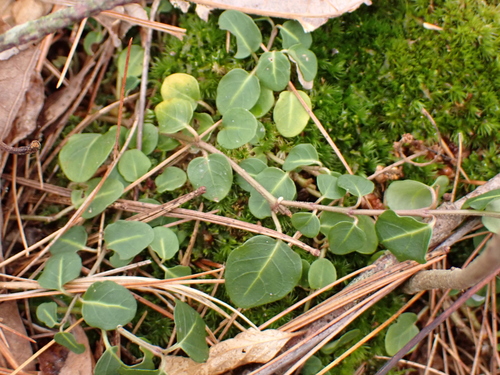
Partridgeberry is a small, creeping plant with shiny green leaves and pretty red berries. It grows close to the ground and loves shady spots in the forest.
Habitat: Forests
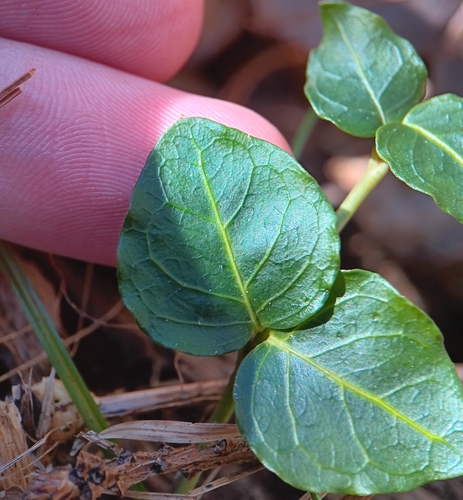
The partridgeberry is a low-growing, creeping evergreen vine with small, round, glossy dark green leaves. It produces tiny, fragrant white flowers that appear in pairs, followed by bright scarlet red berries that often last through winter.
Category
PlantsRarity
Common
Danger
1/5 · Very low
Snaps
101
Each partridgeberry is actually made from two tiny flowers that fused together!
Its scientific name, *Mitchella repens*, means it 'creeps' like a little explorer.
Native Americans used partridgeberry to make medicines for various ailments.
The berries often stay on the plant all winter, looking like tiny red ornaments!
Partridgeberry's bright red berries can stay on the plant all winter, helping birds find food when other sources are scarce.
This plant has two tiny flowers joined at the base, which allows for special cross-pollination to make extra-strong seeds.
Partridgeberry spreads across the ground, forming a dense mat that helps it survive harsh weather and strong winds.
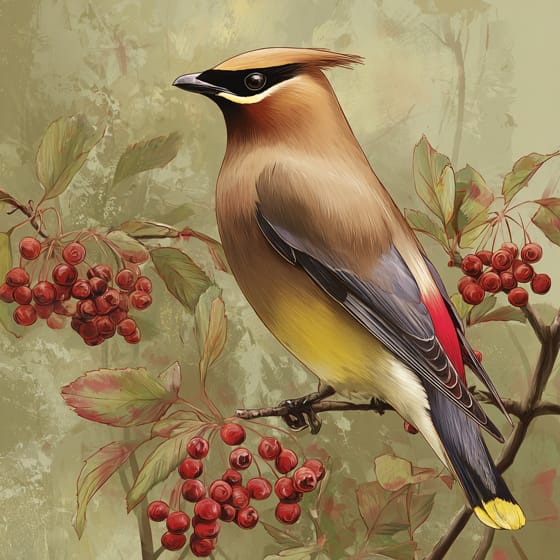
Bombycilla cedrorum
eats its persistent berries
Apis mellifera
collects nectar from flowers
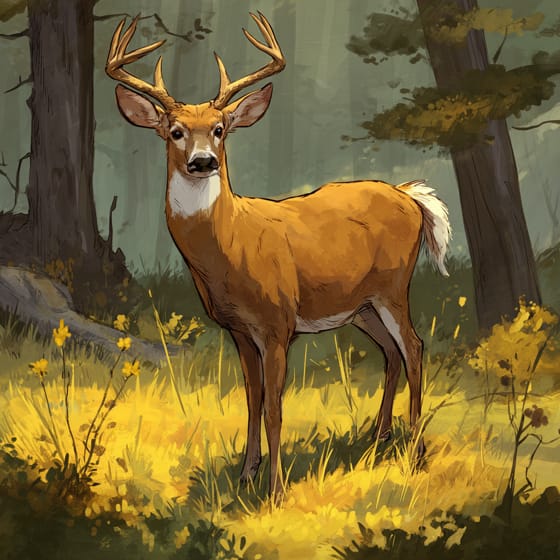
Odocoileus virginianus
browses its evergreen leaves
Shade tolerant plants are adapted to grow and thrive in areas with low light levels, requiring less direct sunlight.
Evergreen plants retain their foliage throughout the year, never shedding all their leaves at once.
Fruit-bearing plants produce fruits, which are the mature ovaries of flowering plants containing seeds.
Edible plants are those parts of a plant that are considered safe for human consumption.

Fall color refers to the seasonal change in foliage pigmentation, primarily in deciduous plants, displaying vibrant hues.

Rapid growing plants exhibit accelerated growth rates, quickly increasing in size and biomass within a short period.

Forest habitats are terrestrial environments dominated by dense tree cover, supporting a high diversity of plant and animal life.
No aliases listed yet.
Danger
1/5 · Very low
Always look but don't eat wild berries unless a grown-up says it's safe.
The easiest way to identify partridgeberry is to use the Snappit nature identifier app.
2-5 cm
15-60 cm
0.5-1 cm
Late spring to early summer
Yes
None
Perennial
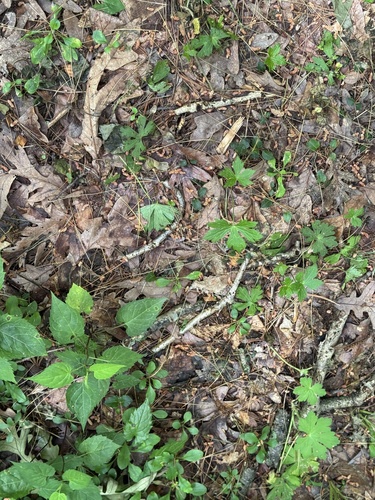
Zoom in to split clusters and explore where this object has been snapped.
Jun 7, 2026
SkylandsPhoto attribution
(c) gwt2102, some rights reserved (CC BY)
License: CC BY 4.0 ↗
Image may be shown cropped inside the card frame.
Jun 5, 2026
Jumel Terrace Historic DistrictPhoto attribution
(c) Zihao Wang, some rights reserved (CC BY)
License: CC BY 4.0 ↗
Image may be shown cropped inside the card frame.
Jan 14, 2026
Stony Brook Wildlife SanctuaryPhoto attribution
(c) John Baur, some rights reserved (CC BY)
License: CC BY 4.0 ↗
Image may be shown cropped inside the card frame.
Apr 25, 2024
The MonolithsPhoto attribution
(c) Tyler Ekholm, some rights reserved (CC BY)
License: CC BY 4.0 ↗
Image may be shown cropped inside the card frame.

South Carolina, US
You might spot American Alligator, Anole, and Great Blue Heron.
View guide →

Pennsylvania, US
You might spot Mountain Laurel, Ghost Pipe, and Sweetfern.
View guide →

Connecticut, US
You might spot Striped Wintergreen and Common Eastern Bumble Bee.
View guide →

Massachusetts, US
You might spot Eastern Newt, Purple Pitcher Plant, and Hobblebush.
View guide →

Vermont, US
You might spot Asian Bittersweet, Alder Buckthorn, and Eastern Newt.
View guide →

Pennsylvania, US
You might spot Large Yellow Underwing and Eastern Black Carpenter Ant.
View guide →
Take the discovery with you
Snap it with Snappit to identify it, learn what makes it special, and add the discovery to your collection.








.jpg&width=800)



_001.jpg&width=800)

