




purple crownvetch
Securigera varia
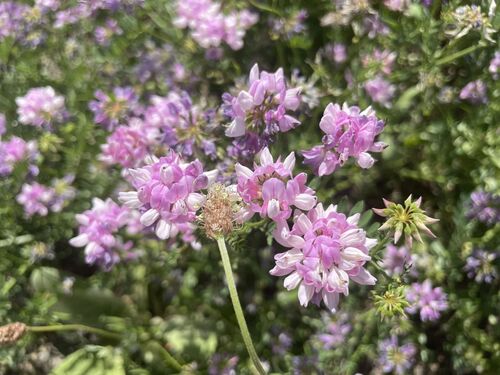
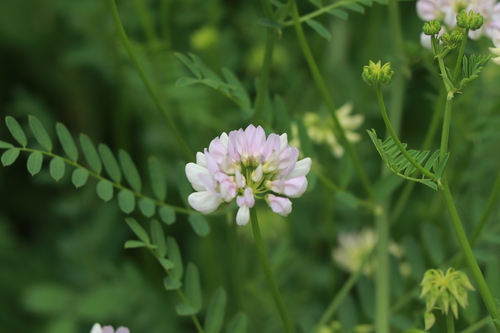
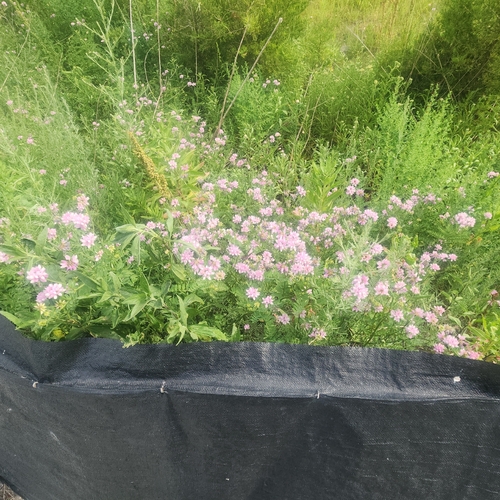
Purple crownvetch is a beautiful plant with lovely purple flowers that bloom in spring and summer. It grows low to the ground and is often found in fields and along roadsides.
Habitat: Grasslands
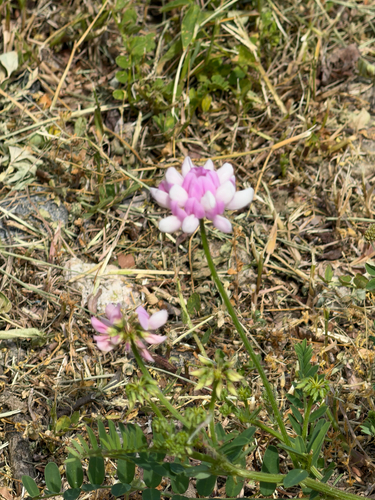
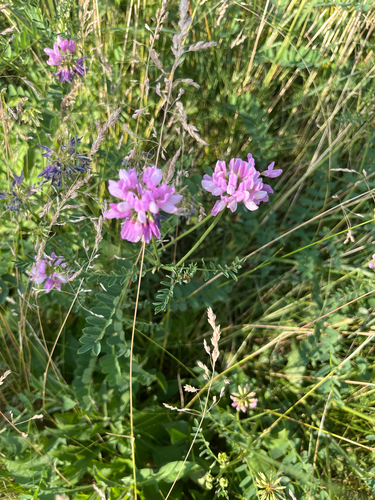
The purple crownvetch has clusters of small, delicate pinkish-purple flowers that resemble tiny crowns. Its long, slender stems vine across the ground, covered with compound leaves made up of many small, oval leaflets, creating dense green mats.
Category
PlantsRarity
Common
Danger
1/5 · Very low
Snaps
128
Crownvetch can grow so fast and thick, it can cover and shade out other plants nearby!
Each little flower looks just like a tiny pea, but it grows in a bundle, not a pod!
Its strong roots can grow down several feet, making it super tough to remove!
The unique flower clusters are shaped like a small 'crown,' giving the plant its royal name.
Purple crownvetch has deep, spreading roots that help it hold soil firmly, preventing erosion on slopes and disturbed ground.
Purple crownvetch can take nitrogen from the air and put it into the soil, making it richer for itself and other plants.
Apis mellifera
Visits flowers for nectar and pollen.
Rhizobium leguminosarum
Lives in roots, converting atmospheric nitrogen into nutrients.

Odocoileus virginianus
White-tailed deer may browse foliage, especially when other food is scarce.
Flowering plants are any plants that produce flowers as part of their reproductive cycle.
Describes organisms capable of converting atmospheric nitrogen into compounds usable by plants.
Spring blooming plants produce their flowers during the spring season, often signifying the end of winter and the start of new growth.
Summer blooming plants produce their flowers during the summer season, often providing vibrant color when many other plants have finished.

Fragrant flowers emit a pleasant aroma, often to attract pollinators or for defense.

Drought-tolerant plants can survive and flourish in conditions with limited water availability.

Colorful describes organisms or objects displaying a wide range of bright and distinct colors.

Grassland habitats are terrestrial biomes dominated by grasses and herbaceous plants, supporting a variety of grazing animals.

Describes plants that are particularly attractive and beneficial to a wide range of pollinating organisms.
No aliases listed yet.
Danger
1/5 · Very low
Always look but don't touch plants unless you know they are safe!
The easiest way to identify purple crownvetch is to use the Snappit nature identifier app.
30-90 cm
150-400 cm
0.5-1 cm
Late spring to early fall
No
Moderate
Perennial
Zoom in to split clusters and explore where this object has been snapped.
Jun 13, 2026
Blackstone Boulevard–Cole Avenue–Grotto Avenue Historic DistrictPhoto attribution
(c) lejones417, some rights reserved (CC BY-SA)
License: CC BY-SA 4.0 ↗
Image may be shown cropped inside the card frame.
Jun 7, 2026
East Windsor Hill Historic DistrictPhoto attribution
(c) Mark Apgar, some rights reserved (CC BY)
License: CC BY 4.0 ↗
Image may be shown cropped inside the card frame.
Jun 6, 2026
Ocean City Residential Historic DistrictPhoto attribution
(c) Peter A. Greenberg, some rights reserved (CC BY)
License: CC BY 4.0 ↗
Image may be shown cropped inside the card frame.
Jun 6, 2026
Connecticut College ArboretumPhoto attribution
(c) Sawyer Baran, some rights reserved (CC BY)
License: CC BY 4.0 ↗
Image may be shown cropped inside the card frame.
Jun 5, 2026
Duke GardensPhoto attribution
(c) Natalie Lemanski, some rights reserved (CC BY-SA)
License: CC BY-SA 4.0 ↗
Image may be shown cropped inside the card frame.

Michigan, US
You might spot Eastern Gray Squirrel, Tree-Of-Heaven, and House Sparrow.
View guide →

Pennsylvania, US
You might spot Mountain Laurel, Ghost Pipe, and Sweetfern.
View guide →

Rhode Island, US
You might spot Rugosa Rose and American Herring Gull.
View guide →

Rhode Island, US
You might spot Spotted Lanternfly, Duck, and American Robin.
View guide →

Vermont, US
You might spot Japanese Knotweed and Red-Bellied Woodpecker.
View guide →

Rhode Island, US
You might spot Spotted Lanternfly, Duck, and American Robin.
View guide →
Take the discovery with you
Snap it with Snappit to identify it, learn what makes it special, and add the discovery to your collection.








.jpg&width=800)


_001.jpg&width=800)




