Duck
### Reed College Parkway: A Gateway to Nature's Embrace
### Reed College Parkway: A Gateway to Nature's Embrace
**1. DESCRIPTION:**
Nestled within the vibrant city of Portland, Oregon, Reed College Parkway serves as a serene and picturesque gateway to the stunning Reed College Canyon, offering an unexpected urban escape for nature enthusiasts and families. This tree-lined boulevard, while a thoroughfare, leads directly into an ecologically rich 28-acre watershed that forms the heart of the Reed College campus. It's a place where the academic world gracefully intertwines with a thriving natural habitat, creating a unique environment for contemplation, recreation, and discovery.
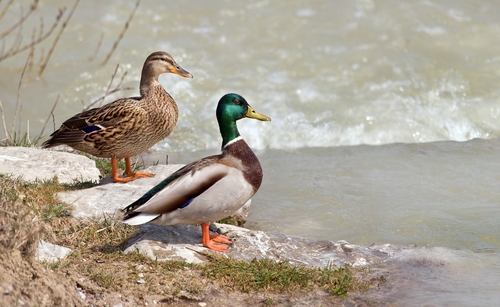
The Reed College Canyon is a living classroom and a sanctuary for diverse wildlife. Visitors can explore a network of walking trails that meander alongside the headwaters of Crystal Springs Creek, leading to Reed Lake, recognized as the oldest naturally occurring lake in Portland. Along these paths, keep an eye out for a variety of bird species, including the familiar Mallard and Canada Goose, as well as the elegant Great Blue Heron and the distinctive Wood Duck. Quiet observers might also glimpse mammals like the elusive Coypu or the ever-present Common Raccoon, all thriving amidst a lush botanical tapestry of western sword fern, twinberry honeysuckle, and Pacific trillium.
A visit to Reed College Parkway and the adjacent Canyon is an immersion into a vibrant urban ecosystem. It's a place where you can witness ongoing conservation efforts, like the management of invasive species and the restoration of native plant communities, aimed at enhancing the habitat for fish like steelhead trout and other wildlife. The blend of natural beauty, educational opportunities, and the chance to encounter remarkable species makes it a memorable destination for anyone seeking a peaceful respite or an engaging outdoor adventure in Portland.
**2. HISTORY:**
The land encompassing the Reed College Canyon was once part of William Ladd's homestead, where it served as a pasture. In 1910, Ladd donated this portion of his estate to become the site for the nascent Reed College. Early in the college's history, there were attempts to re-envision the canyon, including an elaborate plan in 1913 by architect Albert Doyle for a Tudor-Gothic style garden, but these proposals ultimately did not come to fruition, largely due to financial constraints.
Significantly, in 1913, the state Game Commission declared the canyon a wildlife refuge, marking the beginning of its preservation as a natural area. Despite some historical modifications, such as the excavation of a swimming hole in 1915 and the construction of a dam in 1929, the canyon gradually transformed into the thriving natural sanctuary seen today. Modern restoration efforts, particularly those initiated in the late 1990s and costing over $2 million, have focused on restoring the watershed to a self-sustaining ecosystem, benefiting native fish populations and diverse wildlife. The college community actively participates in these efforts through bi-annual "Canyon Day" events.
**3. VISIT GUIDE:**
* **Best time to visit:** Spring and fall offer pleasant weather and vibrant scenery. Spring brings blooming wildflowers like Pacific trillium, while fall showcases beautiful foliage. Bird activity is generally high during migration seasons (spring and fall) and in the breeding season (spring/early summer). Early mornings or late afternoons are often best for wildlife viewing. * **Recommended duration of visit:** 1-2 hours is usually sufficient to explore the main trails and enjoy the scenery. * **Key highlights or exhibits:** The scenic walking trails through the forested canyon, Reed Lake, Crystal Springs Creek, and the diverse array of plant and animal life. Keep an eye out for species like the Great Blue Heron by the water or a Barred Owl in the trees. * **What to do/see:** * Walk the well-maintained trails and bridges that span the canyon. * Observe waterfowl on Reed Lake, including Mallards, Canada Geese, and Wood Ducks. * Spot various plant species, from western sword fern to twinberry honeysuckle. * Engage in birdwatching; the canyon is home to numerous bird species, including the Dark-eyed Junco. * Look for signs of mammals like Coypu or Common Raccoon. * Enjoy the peaceful ambiance and photographic opportunities. * **Seasonal notes:** * **Spring:** Blooming wildflowers (e.g., Pacific trillium), increased bird activity, cherry blossoms on campus. * **Summer:** Lush green foliage, opportunities for observing aquatic life. * **Fall:** Changing leaf colors, continued bird migration. * **Winter:** Quieter trails, potential for different bird species, occasional beaver activity. * **Accessibility features:** Reed College is committed to accessibility, and their campus map allows users to toggle on accessibility features to view accessible paths, doors, and parking spaces. While the main campus has accessible routes, specific accessibility for all trails within the natural canyon itself may vary, with some paths being paved and others unpaved. Some longer walks around the campus that include the parkway feature "some gentle hills" and "sections without sidewalks," alongside paved trails. Wheelchairs may be available for specific college events.
**4. BEST FOR:** * Nature lovers and hikers * Birdwatchers and wildlife photographers * Families with children (with leashed dogs) * Students and researchers interested in urban ecology
**5. FAQ:**
* **Are the trails at Reed College Parkway open to the public?** Yes, the trails within the Reed College Canyon, accessible via the Reed College Parkway area, are open to the public. However, as it's private property maintained by Reed College, visitors are asked to respect guidelines such as staying on established trails, observing wildlife from a distance, never feeding animals, and keeping dogs leashed. * **What kind of wildlife can I expect to see in Reed College Canyon?** Reed College Canyon is home to a rich diversity of wildlife. You can often spot various birds, including Mallards, Canada Geese, Great Blue Herons, and Wood Ducks on Reed Lake and along the creek. Mammals like Coypu and Common Raccoons are present, and the area is also home to a variety of plants, amphibians such as Dunn's Salamander and Pacific chorus frog, and insects like the Banded Alder Borer. * **Where can I park when visiting Reed College Parkway and the Canyon?** Free parking is available in the college's parking lots. Visitors are encouraged to use campus lots rather than parking on neighboring city streets. There are three main parking lots on campus: the east lot (off Woodstock Boulevard), the west lot (along 28th Avenue), and the north lot (along Steele Street).
**6. TIPS:**
* Wear comfortable walking shoes suitable for both paved and unpaved trails. * Bring binoculars for enhanced bird and wildlife viewing. * Carry a water bottle and snacks, especially for longer walks. * Remember to keep dogs on a leash and carry waste bags to clean up after them. * Visit during quieter times (early mornings or weekdays) for a more peaceful experience and better wildlife viewing opportunities. * Check the Reed College website for any campus-specific advisories or events that might impact access.
**7. TAGS:** Nature Preserve, Wildlife Watching, Hiking, Family-Friendly, Birdwatching, Urban Oasis, Dog-Friendly (on leash), Ecological Research
**8. SNAPPABLE SPECIES:** * Mallard * Canada Goose * Great Blue Heron * Wood Duck * Coypu * Common Raccoon * Pacific chorus frog * Western sword fern * Twinberry honeysuckle * Pacific trillium * Barred Owl * Dark-eyed Junco Enhance your adventure: download the Snappit app to identify the local species you encounter.
Each card links to a full Explore page with photos, traits, and fun facts.
Start with the big picture, then zoom in to explore individual wildlife observations around this place.
Jan 26, 2026
Jan 25, 2026
Jan 24, 2026
Jan 19, 2026
Jan 17, 2026

Maryland, US
You might spot White-Tailed Deer and Eastern Gray Squirrel.
View guide →
.jpg)
District of Columbia, US
You might spot Eastern Gray Squirrel, Duck, and House Sparrow.
View guide →

Illinois, US
You might spot American Robin, Canada Goose, and House Sparrow.
View guide →

Virginia, US
You might spot Spotted Lanternfly and Northern Cardinal.
View guide →
Take the discovery with you
Identify the wildlife you spot, learn as you go, and keep a collection of the adventure.