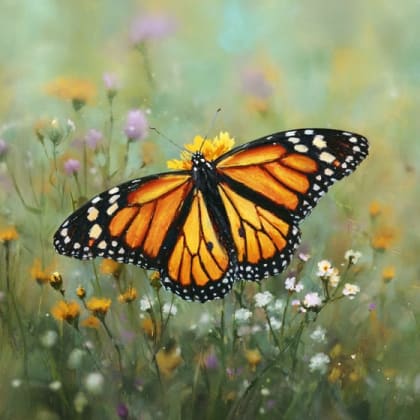





Monarch Butterfly

Step back in time to Missouri's first European settlement.
Step back in time to Missouri's first European settlement.
The Ste. Genevieve Historic District, largely encompassed by the Ste. Genevieve National Historical Park, offers an unparalleled journey into French colonial life in America. Established in 2020 as the 422nd unit of the National Park Service, this unique destination preserves the largest collection of standing French colonial vertical log architecture in North America. Visitors can explore a town that served as a vibrant cultural melting pot, showcasing the enduring legacy of French Canadian settlers, along with influences from Spanish, British, German, African, and Native American communities.
Key attractions within the district include several rare 18th-century homes built in distinctive "poteaux-en-terre" (post-in-ground) and "poteaux-sur-sol" (post-on-sill) construction styles. These include the Bauvais-Amoureux House, one of only a handful of surviving *poteaux-en-terre* structures in North America, and the Jean-Baptiste Vallé House, featuring what is believed to be the first formal rose garden west of the Mississippi River. The Green Tree Tavern, another significant log structure, highlights frontier life and cultural convergence, though it is currently closed due to unsafe conditions. The park's Visitor Center provides comprehensive exhibits, a detailed diorama, and a video to immerse visitors in the town's rich history.
A visit to Ste. Genevieve National Historical Park is more than just seeing old buildings; it's an immersive experience into a pivotal period of American history. It offers a tangible connection to the early frontier, showcasing architectural ingenuity and the diverse communities that shaped the region. Exploring the well-preserved streets and engaging with the stories of its inhabitants makes this historic district a truly memorable and educational destination. Explore the grounds like a pro—download the Snappit app to instantly identify animals and plants.
Ste. Genevieve was established around 1750 by French Canadian emigrants, making it the first permanent European settlement west of the Mississippi River in what is now Missouri. The settlers were drawn to the fertile agricultural lands known as "Le Grand Champ" (The Big Field). After a devastating flood in 1785, the town was relocated about three miles northwest to its current higher ground. The area was successively under French, Spanish, and then American rule after the Louisiana Purchase in 1803. The importance of Ste. Genevieve's unique French colonial architecture and land-use patterns led to its designation as a National Historic Landmark District in 1960. In 2018, the National Park Service was authorized to establish a National Historical Park, which officially came into being on October 30, 2020, preserving and interpreting this nationally significant heritage.
Take guided tours of the National Park Service-owned historic homes (Bauvais-Amoureux House, Jean-Baptiste Vallé House), watch the introductory film at the Visitor Center, and explore the town's streets to admire the French colonial architecture. The broader historic district also includes other sites like the Felix Vallé House State Historic Site and Bolduc House Museum.
Winter hours (November 1 - February 28) are typically 10 AM to 4 PM. The Green Tree Tavern is currently closed for safety reasons. Check the official NPS website for current conditions and specific tour availability, as tours may depend on staffing and weather.
The Ste. Genevieve Welcome Center is wheelchair accessible with an access ramp. However, due to their historic nature, the Bauvais-Amoureux House, Jean-Baptiste Vallé House, and Green Tree Tavern are not fully wheelchair accessible, often having steps, flagstone paths, or gravel parking. Limited accessible parking may be available at some sites for visitors with mobility limitations.
Start here for park information, exhibits, a detailed diorama of the historic town, and to obtain free tickets for guided tours of the historic homes.
A rare example of *poteaux-en-terre* (post-in-ground) construction, offering insight into early colonial architecture.
A significant *poteaux-sur-sol* (post-on-sill) structure, notable for its association with Ste. Genevieve's last commandant under Spanish rule and its historic rose garden.
The historic common field, showcasing the unique agricultural land-use patterns of the French colonial era.
Each card links to a full Explore page with photos, traits, and fun facts.
Start with the big picture, then zoom in to explore individual wildlife observations around this place.
Begin your visit at the Ste. Genevieve Welcome Center to gather maps, information, and secure tickets for guided house tours.
Wear comfortable walking shoes, as you'll be exploring a town with historic streets and pathways.
Check the official National Park Service website for Ste. Genevieve National Historical Park before your visit for current operating hours, tour schedules, and any alerts or closures.
Consider visiting during the spring or fall for the most comfortable weather and fewer crowds.
Allow extra time to explore the broader historic town of Ste. Genevieve, which includes shops, other historic sites, and dining options.
Bring a camera to capture the unique French colonial architecture and picturesque streetscapes.
Apr 30, 2026
Apr 20, 2026
Mar 29, 2026
Mar 20, 2026
Oct 21, 2025

Maryland, US
You might spot White-Tailed Deer and Eastern Gray Squirrel.
View guide →
.jpg)
District of Columbia, US
You might spot Eastern Gray Squirrel, Duck, and House Sparrow.
View guide →

Illinois, US
You might spot American Robin, Canada Goose, and House Sparrow.
View guide →

Virginia, US
You might spot Spotted Lanternfly and Northern Cardinal.
View guide →
Take the discovery with you
Identify the wildlife you spot, learn as you go, and keep a collection of the adventure.































.jpg&width=800)