.jpg&width=800)





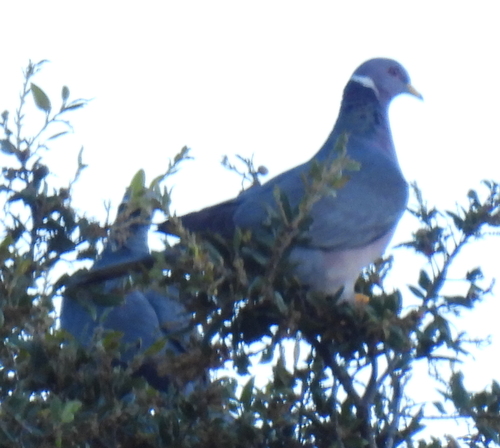
Band-tailed Pigeon
Patagioenas fasciata
The Band-tailed Pigeon is a beautiful bird with a long tail and soft gray feathers. They love to eat seeds and fruits and can often be seen in trees or flying in the sky.
Habitat: Forests
The Band-tailed Pigeon is a large, sturdy grey pigeon with a distinctive white band across its nape and an iridescent bronze-green patch on its neck. It has bright yellow legs and a yellow bill tipped with black. Its slightly iridescent purple head and dark tail make it unique.
Category
BirdsRarity
Common
Danger
1/5 · Very low
Snaps
7
A Band-tailed Pigeon can gulp down huge acorns whole, helping to spread tree seeds far away.
Their unique call sounds less like a coo and more like an owl's deep hoot or 'whoo-WHOO!'.
These pigeons are the only native pigeon species found in North America!
They drink water by sucking it up like a straw, unlike most birds that tilt their heads back.
Band-tailed Pigeons can produce a nutritious 'crop milk' because of special glands, helping their young grow super fast.
Band-tailed Pigeons can eat berries toxic to many animals because their specialized digestive system processes them safely.
Band-tailed Pigeons have strong, agile wings that help them expertly fly through dense forest canopies.
These forest birds eat mostly fruits, nuts, and seeds from tall trees.
Age differences: Young squabs are fed 'crop milk' by both parents before switching to seeds and berries.
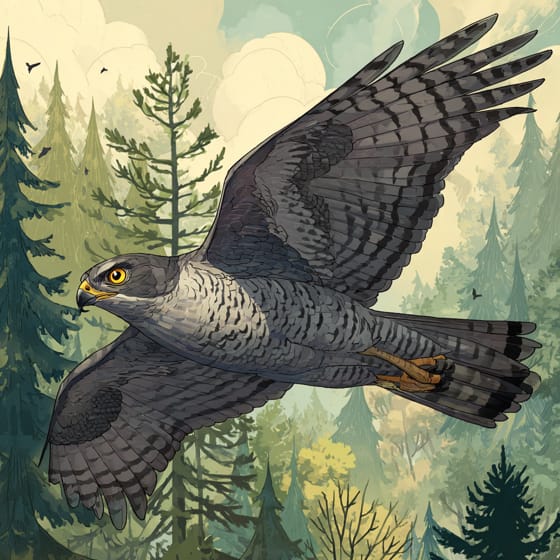
Accipiter gentilis
A primary avian predator in dense forest habitats.
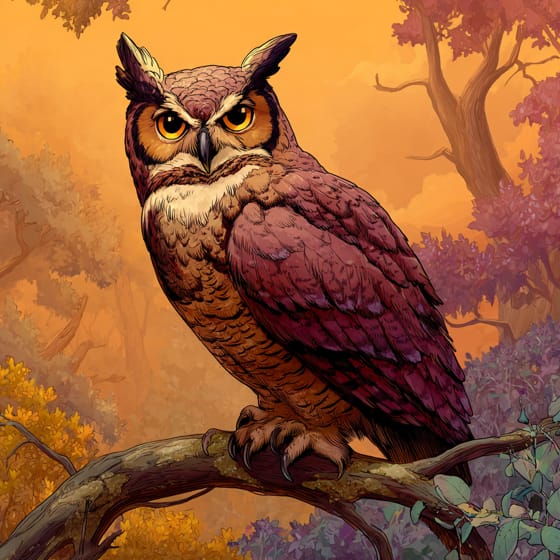
Bubo virginianus
Hunts pigeons, especially during dawn or dusk periods.

Quercus gambelii
Pigeons rely on its acorns as a vital food source.

Vaccinium ovatum
Feeds on its berries, helping to disperse the seeds.
Feathered describes animals, primarily birds, possessing a covering of feathers.
Social animals live in organized groups, cooperating for survival benefits such as foraging, defense, and raising offspring.
Aerial creatures spend a significant portion of their lives airborne, utilizing flight for various activities such as hunting, migration, or nesting.
This trait characterizes organisms whose diet consists entirely or primarily of plant material.

Forest habitats are terrestrial environments dominated by dense tree cover, supporting a high diversity of plant and animal life.

Diurnal animals are primarily active during daylight hours, typically resting or sleeping at night.

This trait identifies organisms that exhibit exceptional swiftness in movement for hunting, escape, or travel.
No aliases listed yet.
Danger
1/5 · Very low
Enjoy watching birds from a distance and don't try to touch or catch them.
The easiest way to identify Band-tailed Pigeon is to use the Snappit nature identifier app.
33-40 cm
66-71 cm
0.25-0.5 kg
12-15 years
80 km/h
These forest birds eat mostly fruits, nuts, and seeds from tall trees.
Forests
Zoom in to split clusters and explore where this object has been snapped.
May 10, 2026
Hakone GardensPhoto attribution
(c) Timothy Whitehead, some rights reserved (CC BY)
License: CC BY 4.0 ↗
Image may be shown cropped inside the card frame.

California, US
You might spot Western Fence Lizard and Eastern Fox Squirrel.
View guide →

Oregon, US
You might spot Oregon Oak, Pacific Poison Oak, and American Bullfrog.
View guide →

California, US
You might spot Western Fence Lizard and Pacific Poison Oak.
View guide →

Washington, US
You might spot Rock Pigeon, Great Blue Heron, and Duck.
View guide →

Washington, US
You might spot Duck, Western Sword Fern, and Rock Pigeon.
View guide →

California, US
You might spot Duck, Western Fence Lizard, and Dark-Eyed Junco.
View guide →
Take the discovery with you
Snap it with Snappit to identify it, learn what makes it special, and add the discovery to your collection.




.jpg&width=800)







