





Red-banded Leafhopper
Graphocephala coccinea
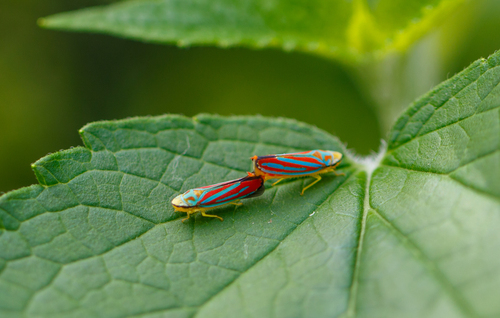
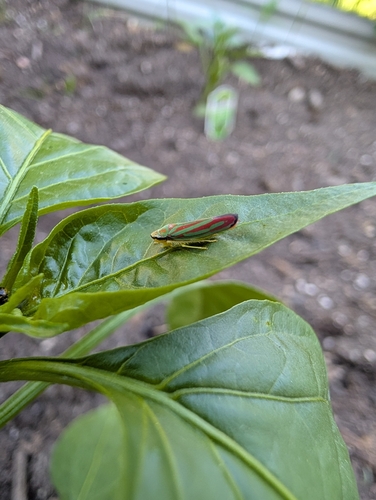
The Red-banded Leafhopper is a small, colorful insect that loves to hop around on leaves. With its bright red and green stripes, it can be a fun surprise to spot in gardens and fields!
Habitat: Urban areas
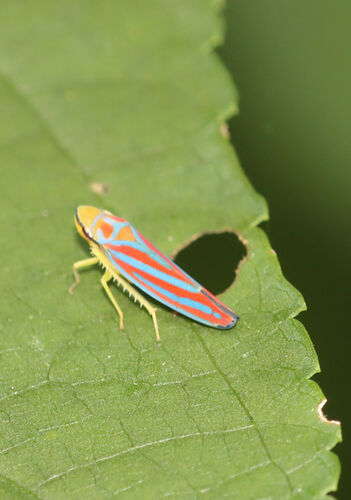
The Red-banded Leafhopper is a small, striking insect with a vibrant blue-green body. It has distinctive bright red stripes running along its wings, making it easily recognizable. Its slender body and wedge-shaped head further set it apart.
Category
InsectsRarity
Common
Danger
1/5 · Very low
Snaps
52
Leafhoppers can shoot tiny droplets of sugary waste called honeydew!
Male leafhoppers 'sing' tiny songs to attract mates by vibrating their bodies!
Their eyes are compound, giving them a wide, all-around view of their world!
They have special 'radar' on their legs to detect vibrations in plants!
Red-banded Leafhopper can launch itself far because it has powerful legs that help them escape danger quickly.
Red-banded Leafhopper has a needle-like mouthpart that helps them sip nutritious sap from plants without harming them much.
Red-banded Leafhopper has bright red and blue-green colors that help them warn predators they might taste bad.
These tiny insects sip on plant juices for all their energy and hydration!
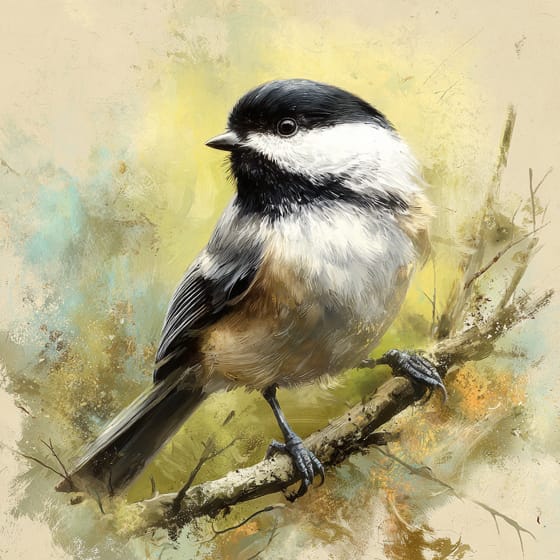
Parus atricapillus
Chickadees feast on insects like leafhoppers.
_Misumena_vatia_male.jpg&width=800)
Misumena vatia
Spiders ambush insects on flowers.

Acer rubrum
Leafhoppers feed on sap from maple trees.
Geocoris pallens
Predatory bugs hunt small insect nymphs.
Marked with parallel bands or lines of color.
Colorful describes organisms or objects displaying a wide range of bright and distinct colors.
This trait characterizes organisms whose diet consists entirely or primarily of plant material.
Diurnal animals are primarily active during daylight hours, typically resting or sleeping at night.

This trait identifies organisms that exhibit exceptional swiftness in movement for hunting, escape, or travel.

This habitat trait indicates species that can coexist with humans in urban and suburban environments, utilizing man-made structures and green spaces.

Describes organisms that transfer pollen, enabling the fertilization and reproduction of plants.
No aliases listed yet.
Danger
1/5 · Very low
It's best to watch insects from a distance and not touch them, as some might be delicate.
The easiest way to identify Red-banded Leafhopper is to use the Snappit nature identifier app.
6-9 mm
20-60 days
These tiny insects sip on plant juices for all their energy and hydration!
Urban areas
Foraging
6
Zoom in to split clusters and explore where this object has been snapped.
Jun 11, 2026
Scoville ParkPhoto attribution
(c) threelark, some rights reserved (CC BY)
License: CC BY 4.0 ↗
Image may be shown cropped inside the card frame.
Jun 2, 2026
Historic Meridian ParkPhoto attribution
(c) Jeremy Maxwell, some rights reserved (CC BY)
License: CC BY 4.0 ↗
Image may be shown cropped inside the card frame.
Sep 9, 2025
Marked Tree Lock and SiphonsPhoto attribution
(c) hr_dragonfly, some rights reserved (CC BY)
License: CC BY 4.0 ↗
Image may be shown cropped inside the card frame.

Ohio, US
You might spot Eastern Fox Squirrel and Spotted Lanternfly.
View guide →

Illinois, US
You might spot Brown-Belted Bumble Bee and Eastern Gray Squirrel.
View guide →

Ohio, US
You might spot Spotted Lanternfly and Eastern Fox Squirrel.
View guide →

Pennsylvania, US
You might spot Spotted Lanternfly, Duck, and Asian Lady Beetle.
View guide →

New Jersey, US
You might spot Common Mugwort and White-Tailed Deer.
View guide →

Indiana, US
You might spot Monarch, Black Swallowtail, and American Pokeweed.
View guide →
Take the discovery with you
Snap it with Snappit to identify it, learn what makes it special, and add the discovery to your collection.







.jpg&width=800)



