





valley oak
Quercus lobata
The valley oak is a big, beautiful tree that can grow very tall and wide. Its leaves are shaped like big fingers and turn golden in the fall. This tree provides homes for many animals and shade for people!
Habitat: Grasslands
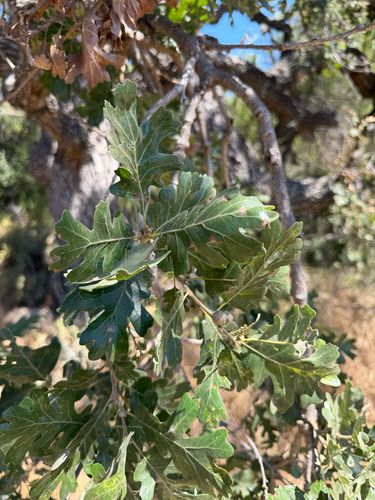
The valley oak is a large, deciduous tree known for its massive trunk and broad, spreading crown. It has deeply lobed, dark green leaves and thick, deeply furrowed gray-brown bark, making it distinct from many narrower oaks.
Category
PlantsRarity
Common
Danger
1/5 · Very low
Snaps
14
Fuzzy young leaves help keep the tree cool during hot California summers!
Its taproot can reach deeper than a six-story building for water!
Its wide branches can shade an area larger than two tennis courts!
Valley oak acorns were a vital food for many Native American tribes!
Valley oak can survive long dry summers because its deep taproot reaches far down for water.
Valley oak has thick, furrowed bark that protects its vital tissues, helping it survive some wildfires.
Valley oak can produce abundant acorns, providing a vital food source and aiding in its widespread reproduction.
Valley oak has a lifespan of hundreds of years, allowing it to adapt to long-term environmental changes.

Sciurus griseus
Feeds on nutrient-rich acorns.

Aphelocoma californica
Buries acorns, helping to spread seeds.
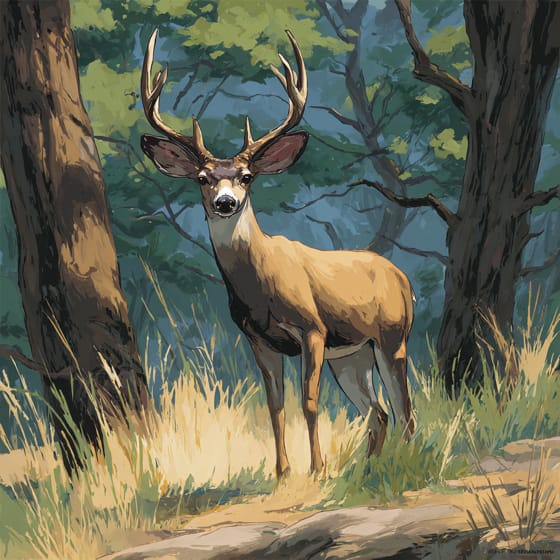
Odocoileus hemionus
Browses on leaves and young shoots.

Sphyrapicus nuchalis
Drills holes for sap and creates habitat.
Pisolithus tinctorius
Fungus helps roots absorb water and nutrients.
Deciduous plants periodically shed all their leaves, typically during autumn or dry seasons.
Shade tolerant plants are adapted to grow and thrive in areas with low light levels, requiring less direct sunlight.
Broadleaf trees are angiosperms characterized by flat, wide leaves that are typically shed annually in temperate climates.
Nut bearing plants produce hard-shelled fruits, commonly known as nuts, which contain a single seed and are a valuable food source.

Fall color refers to the seasonal change in foliage pigmentation, primarily in deciduous plants, displaying vibrant hues.

Grassland habitats are terrestrial biomes dominated by grasses and herbaceous plants, supporting a variety of grazing animals.

Timber refers to wood that has been prepared for use in building and carpentry.

This trait characterizes organisms with an exceptionally long lifespan compared to others of their kind.

Describes a species whose presence and role have a disproportionately large effect on its environment.
No aliases listed yet.
Danger
1/5 · Very low
Stay away from the branches and don't climb the tree without an adult.
The easiest way to identify valley oak is to use the Snappit nature identifier app.
1500-3000 cm
1000-3500 cm
1-5 cm
Spring
Yes
Mild
Perennial
Zoom in to split clusters and explore where this object has been snapped.
Jun 10, 2026
Conejo Valley Botanical GardenPhoto attribution
(c) klicklo, some rights reserved (CC BY)
License: CC BY 4.0 ↗
Image may be shown cropped inside the card frame.

California, US
You might spot Warrior's Plume and Purple Owl's-Clover.
View guide →

California, US
You might spot Western Fence Lizard, Duck, and California Brittlebush.
View guide →

California, US
You might spot Western Fence Lizard and Eastern Fox Squirrel.
View guide →
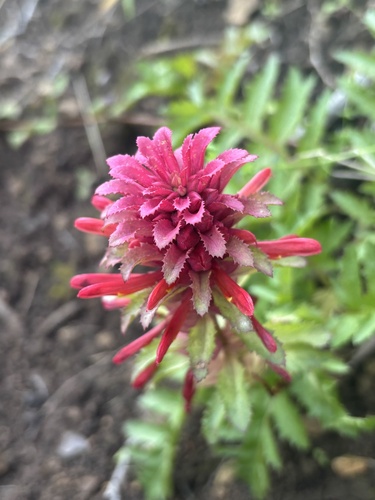
California, US
You might spot Warrior's Plume, Western Leatherwood, and White Globe Lily.
View guide →

California, US
You might spot Western Fence Lizard, Duck, and Canada Goose.
View guide →

California, US
You might spot Horse-Fly Carpenter Bee and Anna's Hummingbird.
View guide →
Take the discovery with you
Snap it with Snappit to identify it, learn what makes it special, and add the discovery to your collection.








.jpg&width=800)


_001.jpg&width=800)


