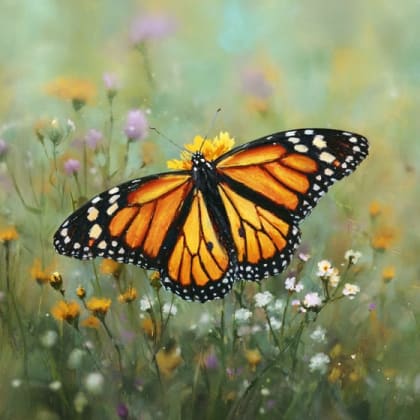





Monarch Butterfly

East Grand Boulevard Historic District offers a journey through Detroit's opulent past.
East Grand Boulevard Historic District offers a journey through Detroit's opulent past. This distinguished corridor, designated a National Register of Historic Places site in 1999, showcases a remarkable collection of early 20th-century architecture and urban planning. It's a place where the grandeur of Detroit's industrial boom is etched into every stately home and elegant apartment building, offering visitors a unique glimpse into a bygone era of prosperity and sophisticated urban design.
The district is renowned for its diverse residential architecture, primarily featuring large homes and moderate-sized apartment buildings constructed between 1900 and 1925. Notable examples include the Renaissance and Colonial Revival architectural styles evident in structures like the Kingston Arm Apartments, El Tovar Apartments, and St. Paul Manor Apartments. These buildings, along with numerous historic mansions, stand as enduring testaments to the "City Beautiful" movement and the aspirations of Detroit's elite. The boulevard itself, beautifully tree-lined, was designed to be a prominent adornment of the city.
Visiting the East Grand Boulevard Historic District is like stepping onto a living architectural museum. It's a chance to appreciate the scale and artistry of turn-of-the-century urban development, imagining a time when this was one of Detroit's most prestigious addresses. The preservation and ongoing revitalization efforts in the area make it a compelling destination for anyone interested in history, architecture, and the rich narrative of Detroit. Planning to visit? Download the Snappit app to identify the wildlife you spot in real-time.
buffs * Photography * Self-guided tours
Drive or walk along East Grand Boulevard to admire the diverse architectural styles, including Renaissance and Colonial Revival. Take photographs of the grand residences and their intricate details. Experience the scale of early 20th-century urban design.
Spring/Summer: Trees are in full leaf, offering shade and enhancing the boulevard's green aesthetic.
Fall: Autumn foliage provides a colorful backdrop to the historic buildings.
Winter: Less ideal for outdoor exploration due to cold weather, but snow can offer a picturesque, albeit chilly, view of the historic homes.
As a public street, the boulevard is accessible by car. Sidewalks are generally available for walking, though their condition may vary. No specific accessibility information for individual buildings is available as they are private residences or apartment buildings.
The array of historic mansions and apartment buildings, particularly the El Tovar Apartments, St. Paul Manor Apartments, and Kingston Arm Apartments, which exemplify the architectural styles of the era.
Each card links to a full Explore page with photos, traits, and fun facts.
Start with the big picture, then zoom in to explore individual wildlife observations around this place.
Consider a self-guided driving tour to cover the full extent of the district comfortably.
Bring a camera to capture the intricate architectural details and grand scale of the homes.
Look for historical markers or plaques that may provide additional information about specific buildings.
Combine your visit with other nearby Detroit attractions for a fuller day of exploration.
Be respectful of residents, as the district consists primarily of private homes and apartment buildings.
Wear comfortable shoes if you plan to walk any significant portion of the boulevard.
Apr 25, 2026
Photo attribution
(c) Mike Carnill, some rights reserved (CC BY)
License: CC BY 4.0 ↗
Image may be shown cropped inside the card frame.
Jun 6, 2026
Jun 6, 2026
Jun 6, 2026
Jun 6, 2026

Maryland, US
You might spot White-Tailed Deer and Eastern Gray Squirrel.
View guide →
.jpg)
District of Columbia, US
You might spot Eastern Gray Squirrel, Duck, and House Sparrow.
View guide →

Illinois, US
You might spot American Robin, Canada Goose, and House Sparrow.
View guide →

Virginia, US
You might spot Spotted Lanternfly and Northern Cardinal.
View guide →
Take the discovery with you
Identify the wildlife you spot, learn as you go, and keep a collection of the adventure.






























%2C_Female_01.jpg&width=800)
