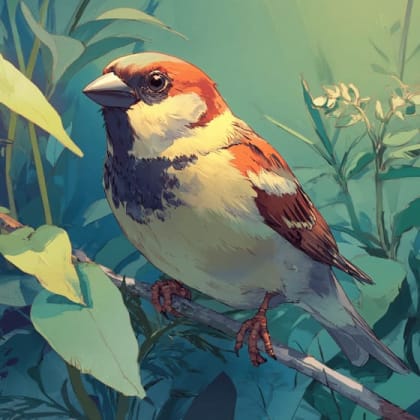





House Sparrow

Nestled in Oak Park, Illinois, the Oak Park Conservatory is an historic Edwardian-style glasshouse that provides a lush, botanical oasis for visitors.
Nestled in Oak Park, Illinois, the Oak Park Conservatory is an historic Edwardian-style glasshouse that provides a lush, botanical oasis for visitors. Recognized as one of Oak Park's top historical sites and listed on the National Register of Historic Places, this living museum boasts over 3,000 plants across its three distinct, climate-controlled showrooms, making it the third-largest conservatory in the Chicago area. It's a testament to community passion, preserving natural beauty and offering a tranquil retreat from urban life.
The Conservatory's indoor spaces transport visitors across the globe. The Mediterranean Room delights with fragrant herbs like lavender, rosemary, and thyme, alongside a magnificent Ponderosa Lemon tree. Step into the Tropical Room to encounter a rainforest environment featuring towering fig, banana, and papaya trees, a serene pond with koi, goldfish, and turtles, and the cheerful squawks of resident talking parrots, including Sara and Skipper. The Desert Room showcases an impressive collection of cacti and succulents, such as various Agave (known as "century plants"), Haworthia, and Kalanchoe, along with fascinating carnivorous plants like Venus Fly Traps and Pitcher Plants. Outside, the Elsie Jacobsen Discovery Garden and Rubinstein Memorial Garden feature Illinois native ecosystems and serve as tranquil spaces for reflection and interaction with nature.
Visiting the Oak Park Conservatory is a unique opportunity to experience diverse ecosystems under one roof, providing a sensory journey through different climates and plant life. Its free admission, engaging educational programs, and stunning photographic opportunities make it a memorable destination for all ages. Whether you're seeking inspiration for your garden, a peaceful escape, or an educational adventure, the Conservatory offers a rich and rewarding experience. Turn your visit into a safari! Use the Snappit app to scan and log wildlife sightings here.
The Oak Park Conservatory originated from a community effort in 1914, established to house exotic plants collected by local residents during their travels. The current Edwardian-style glass structure was constructed in 1929. After facing a period of neglect, a dedicated group of concerned citizens intervened in 1970, successfully preserving and ultimately enhancing this unique resource. Significant expansion occurred in 2000 with the opening of the Conservatory Center, providing additional space for education and events. In March 2005, the Oak Park Conservatory was officially added to the U.S. National Register of Historic Places. In recent years, the Conservatory has also adopted eco-friendly initiatives, including the installation of solar panels, beehives for pollination, and cisterns for rainwater collection.
Wander through the three distinct showrooms, observe the diverse plant collections, spot the resident turtles and koi, engage with the talking parrots, and enjoy the seasonal displays. Educational programs and workshops are often available, and younger visitors can participate in the Exploration Station.
The outdoor gardens are best enjoyed during warmer months. The Conservatory hosts various seasonal plant sales, including succulents, mums, and bulbs, throughout the year, and often features holiday-themed decorations.
The Conservatory is generally wheelchair-accessible, and its main pathways are paved, making it easy to navigate for visitors of all mobility levels.
Don't miss the fragrant Ponderosa Lemon tree in the Mediterranean Room, the vibrant fruit trees, colorful koi pond, and resident talking parrots in the Tropical Room, and the unique Century Plants (Agave) and carnivorous plants in the Desert Room. The outdoor Elsie Jacobsen Discovery Garden and Rubinstein Memorial Garden are also notable.
Each card links to a full Explore page with photos, traits, and fun facts.
Start with the big picture, then zoom in to explore individual wildlife observations around this place.
To avoid crowds and find easier street parking, consider visiting on a weekday or during off-peak hours.
Bring your camera to capture the stunning diversity of plants and the unique architectural details of the historic glasshouse.
Engage with the friendly talking parrots in the Tropical Room—they are known to be quite responsive and entertaining!
Check the Oak Park Conservatory's website or social media for details on current seasonal events, plant sales, and workshops before your visit.
Don't overlook the outdoor Elsie Jacobsen Discovery Garden and Rubinstein Memorial Garden, especially during warmer months, which highlight Illinois native plants.
Wear comfortable shoes as you'll be walking through several distinct climate zones.
Jun 6, 2026
Photo attribution
(c) Jessica W., some rights reserved (CC BY)
License: CC BY 4.0 ↗
Image may be shown cropped inside the card frame.
Jun 6, 2026
Jun 6, 2026
Jun 6, 2026
Jun 6, 2026

Maryland, US
You might spot White-Tailed Deer and Eastern Gray Squirrel.
View guide →
.jpg)
District of Columbia, US
You might spot Eastern Gray Squirrel, Duck, and House Sparrow.
View guide →

Illinois, US
You might spot American Robin, Canada Goose, and House Sparrow.
View guide →

Virginia, US
You might spot Spotted Lanternfly and Northern Cardinal.
View guide →
Take the discovery with you
Identify the wildlife you spot, learn as you go, and keep a collection of the adventure.



















%2C_Female_01.jpg&width=800)





