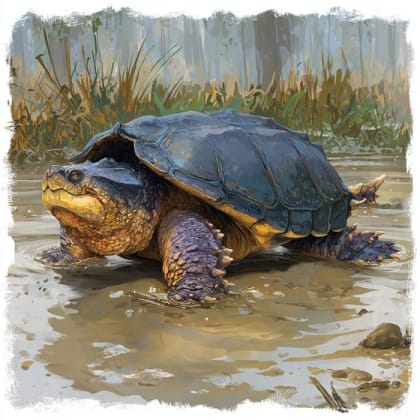
Duck

Stroudwater Historic District offers a charming journey back to 18th and 19th-century Maine.
Stroudwater Historic District offers a charming journey back to 18th and 19th-century Maine. This remarkably preserved village, nestled at the confluence of the Stroudwater and Fore Rivers in Portland, stands as a testament to early New England settlement, shipbuilding, and industrial enterprise. Recognized on the National Register of Historic Places since 1973, it provides a unique window into a bygone era, largely untouched by the extensive fires and modern development that reshaped much of Portland.
The district boasts a significant concentration of well-preserved homes reflecting Colonial, Federal, and Greek Revival architectural styles, presenting a rich tapestry for architecture enthusiasts. Key landmarks include the George Tate House, a National Historic Landmark dating to 1755, with its distinctive gambrel roof and historical significance as the home of a mast agent for the British Royal Navy. Visitors can also explore the historic Stroudwater Burying Ground, where the earliest marked grave dates to 1739, and discover remnants of the Cumberland and Oxford Canal, once a vital trade route connecting Portland to interior Maine.
A visit to Stroudwater Historic District is an immersive experience, offering a peaceful escape into a meticulously maintained historical landscape. It's a place to wander along quiet streets, admire period architecture, and imagine life in a bustling colonial port. The district's intact character and the stories embedded in its structures make it a memorable destination for anyone seeking to connect with Maine's rich heritage and the architectural beauty of early American villages. Take the ultimate field guide with you: use the Snappit app to identify birds, plants, and animals on your trip.
The Stroudwater Historic District's roots trace back to permanent European settlement in 1727, initiated by Colonel Thomas Westbrook. He served as the mast agent for King George II, establishing a landing for shipping massive pine timbers, destined for the British Royal Navy as ship masts, down the Fore River to England. This early activity spurred the growth of an industrial village, featuring sawmills, gristmills, and a tannery. Following the American Revolution, the area experienced further prosperity through a thriving shipping trade. A significant period of growth occurred around 1830 with the completion of the Cumberland and Oxford Canal, which facilitated trade between Portland and Sebago Lake. However, the canal's economic importance eventually waned with the advent of railroads, leading Stroudwater to transition into a predominantly residential community. The district's unique preservation is partly due to its avoidance of Portland's post-Civil War industrial expansion and the devastating fires that affected other parts of the city. It was officially added to the National Register of Historic Places in 1973, recognizing its exceptional historical and architectural integrity.
Take a self-guided walking tour to appreciate the diverse architectural styles. Visit the Tate House Museum for a guided tour and delve deeper into the area's history. Walk the Stroudwater River Trail, which follows the canal's tow path, offering scenic views and a chance to reflect on its industrial past.
The Stroudwater River Trail has a section between Blueberry Road and Hutchins Drive that is closed in winter to protect deer habitat.
The main streets within the historic district are paved, making it accessible for most visitors. The Stroudwater River Trail features gravel and packed earth surfaces, with boardwalks over wet areas, but also includes some steep grades and stairs near trailheads.
A National Historic Landmark, offering insights into colonial life and the mast trade.
One of Portland's oldest cemeteries, with gravestones dating back to 1739.
Explore sections of the historic canal and its original tow path, now part of the Stroudwater River Trail.
Admire the collection of Colonial, Federal, and Greek Revival homes, including the Captain James Means House (1797), Francis Waldo House (c. 1765), and Dr. Jeremiah Baker House (1799).
Each card links to a full Explore page with photos, traits, and fun facts.
Start with the big picture, then zoom in to explore individual wildlife observations around this place.
Wear comfortable walking shoes, as exploring the district is best done on foot.
Bring a camera to capture the beautiful historic architecture and scenic river views.
Check the operating hours for the George Tate House Museum in advance, especially if you wish to take a guided tour inside.
Be respectful of residents, as many of the historic homes are private residences.
Consider downloading or picking up a local map or guide for historical context on specific buildings.
If exploring the Stroudwater River Trail, be aware of seasonal closures on certain sections.
Jun 7, 2026
Jun 7, 2026
Jun 7, 2026
Jun 7, 2026
Jun 7, 2026

Maryland, US
You might spot White-Tailed Deer and Eastern Gray Squirrel.
View guide →
.jpg)
District of Columbia, US
You might spot Eastern Gray Squirrel, Duck, and House Sparrow.
View guide →

Illinois, US
You might spot American Robin, Canada Goose, and House Sparrow.
View guide →

Virginia, US
You might spot Spotted Lanternfly and Northern Cardinal.
View guide →
Take the discovery with you
Identify the wildlife you spot, learn as you go, and keep a collection of the adventure.