





Bushtit
Psaltriparus minimus
Bushtits are tiny, cheerful birds that love to flit around in trees and bushes. They often travel in little groups, making sweet, chirpy sounds as they go!
Habitat: Urban areas
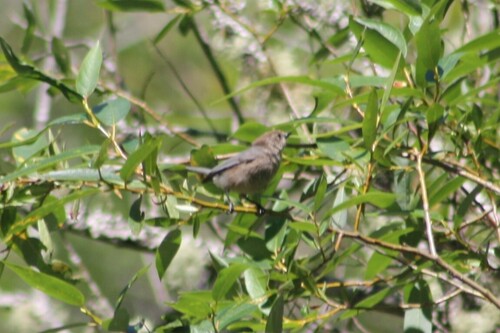
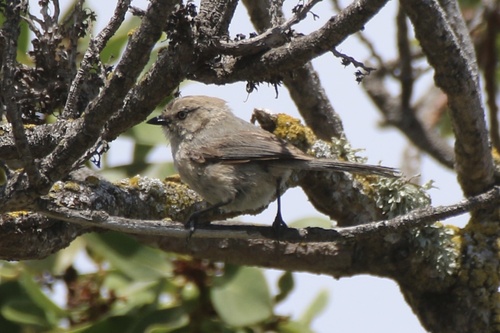
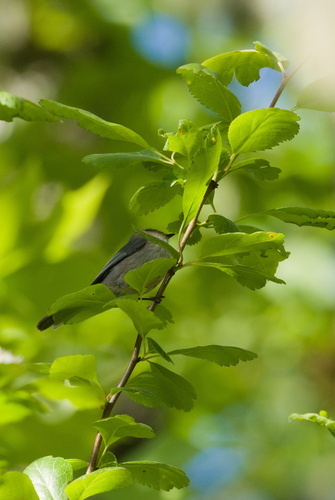
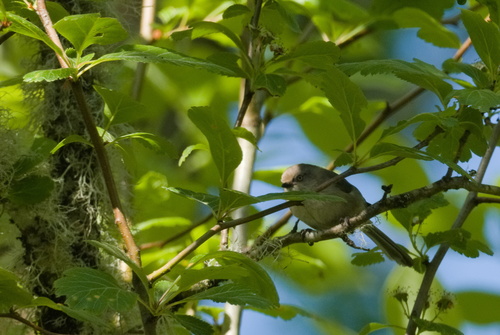
The Bushtit is a tiny, grayish-brown bird with a long tail that makes it look like a flying lollipop. It has a pale belly and a short, stubby bill. Its small size and constant movement distinguish it.
Category
BirdsRarity
Common
Danger
1/5 · Very low
Snaps
23
A Bushtit's tiny egg is smaller than a jelly bean!
Bushtit families build elaborate hanging nests woven with thousands of pieces of spider silk!
Bushtits are so light, they weigh less than two pennies!
These tiny birds often huddle together in large groups at night to stay super warm!
Bushtit has an amazing, stretchy nest woven from spider silk that helps it expand as the baby birds grow.
Bushtit can forage in large, chattering flocks that helps them find food and spot predators more easily.
Bushtit can hang upside down from branches and leaves because of their nimble feet, helping them reach hidden insects.
These tiny birds mostly munch on small insects and spiders, sometimes enjoying berries too!
Feathered describes animals, primarily birds, possessing a covering of feathers.
Social animals live in organized groups, cooperating for survival benefits such as foraging, defense, and raising offspring.
Singing animals produce complex vocalizations, often for purposes of attracting mates, defending territory, or communicating within their species.
Arboreal animals live primarily in trees, utilizing them for shelter, food, and protection from predators.

This trait identifies organisms whose diet primarily consists of insects and other small invertebrates.

Diurnal animals are primarily active during daylight hours, typically resting or sleeping at night.

Pertaining to species that are significantly smaller than typical or average for their kind.

This habitat trait indicates species that can coexist with humans in urban and suburban environments, utilizing man-made structures and green spaces.
No aliases listed yet.
Danger
1/5 · Very low
Enjoy watching birds from a distance and be quiet so you don't scare them away.
The easiest way to identify Bushtit is to use the Snappit nature identifier app.
8-11 cm
12-16 cm
0.005-0.006 kg
2-4 years
35 km/h
These tiny birds mostly munch on small insects and spiders, sometimes enjoying berries too!
Urban areas
Zoom in to split clusters and explore where this object has been snapped.
Jun 19, 2026
Bloedel ReservePhoto attribution
no rights reserved
License: CC0 1.0 ↗
Image may be shown cropped inside the card frame.
Jun 18, 2026
Desert Garden ConservatoryPhoto attribution
(c) Adam Petrucco, some rights reserved (CC BY)
License: CC BY 4.0 ↗
Image may be shown cropped inside the card frame.
Jun 6, 2026
ProfessorvillePhoto attribution
(c) Cricket Raspet, some rights reserved (CC BY)
License: CC BY 4.0 ↗
Image may be shown cropped inside the card frame.
May 5, 2025
Peavy ArboretumPhoto attribution
no rights reserved
License: CC0 1.0 ↗
Image may be shown cropped inside the card frame.
May 5, 2025
Peavy ArboretumPhoto attribution
no rights reserved
License: CC0 1.0 ↗
Image may be shown cropped inside the card frame.

California, US
You might spot Acorn Woodpecker and Western Fence Lizard.
View guide →

Washington, US
You might spot Pacific Tree Frog and Long-Toed Salamander.
View guide →

California, US
You might spot Peridot Sweat Bee and Western Fence Lizard.
View guide →

California, US
You might spot Western Fence Lizard and Eastern Fox Squirrel.
View guide →

Washington, US
You might spot Great Blue Heron, Aggregating Anemone, and Ochre Sea Star.
View guide →

New Mexico, US
You might spot Duck, Greater Roadrunner, and American Robin.
View guide →
Take the discovery with you
Snap it with Snappit to identify it, learn what makes it special, and add the discovery to your collection.






.jpg&width=800)









