





Common Merganser
Mergus merganser
The Common Merganser is a beautiful duck with a long, slender body and a sharp beak. They love to swim and dive underwater to catch fish, making them great hunters in the water!
Habitat: Wetlands
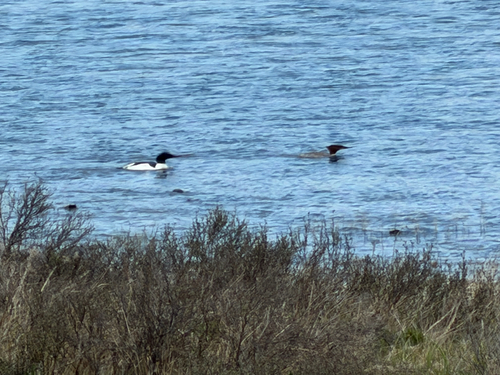
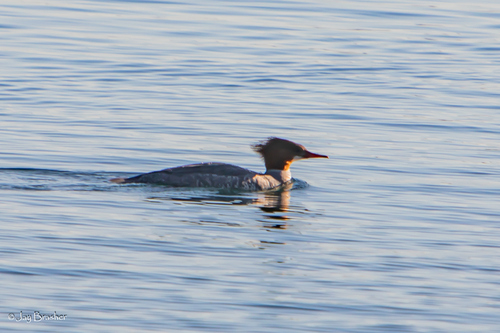
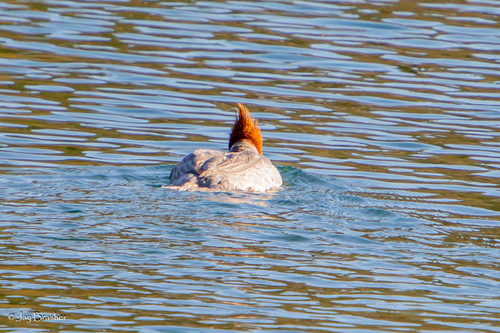
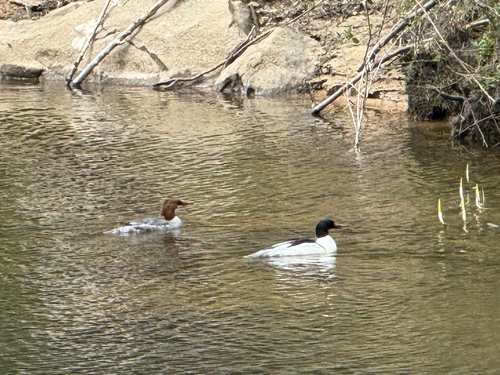
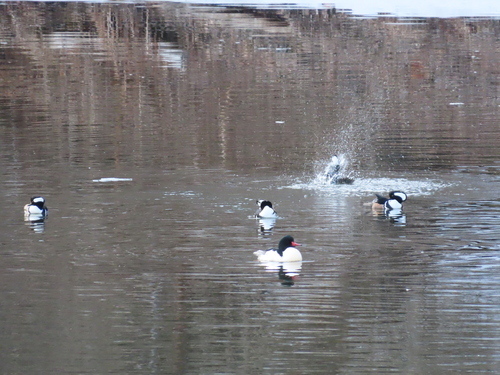
The Common Merganser has a sleek body and a distinctive thin, serrated red bill. Males boast an iridescent green head, white body, and black back. Females have a shaggy rusty-red head and a gray body.
Category
BirdsRarity
Common
Danger
1/5 · Very low
Snaps
61
A large group of mergansers is called a 'raft' or even a 'flotilla'.
Baby mergansers often jump from tree nests up to 40 feet high!
These ducks must 'run' across water to get airborne for flight!
They can stay underwater for over a minute, diving deep to hunt fish.
Common Mergansers can dive deep and chase fish because their bodies are built for fast underwater swimming.
Common Mergansers have a serrated, hook-tipped bill that helps them firmly grasp slippery fish underwater.
Common Mergansers have waterproof feathers, keeping them warm and dry while diving in cold water.
These ducks are expert underwater hunters, mainly eating fish and aquatic creatures.
Age differences: Young ducklings eat more aquatic insects, transitioning to mostly fish as they mature.
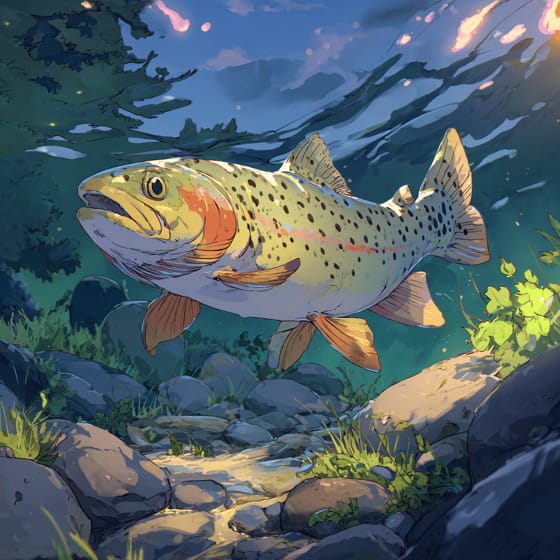
Oncorhynchus mykiss
Mergansers hunt and eat smaller trout in rivers and lakes.

Haliaeetus leucocephalus
Bald eagles are powerful predators of adult mergansers.
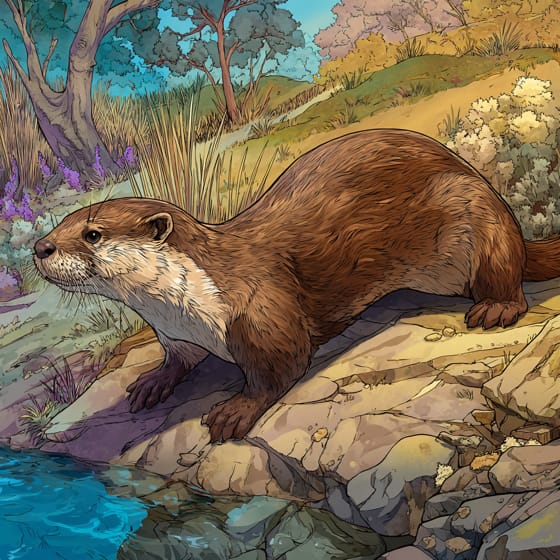
Lutra canadensis
River otters may prey on mergansers or their eggs opportunistically.
Insecta (various)
Ducklings and sometimes adults eat aquatic insects in their habitat.
Feathered describes animals, primarily birds, possessing a covering of feathers.
Characterized by having toes connected by a membrane, typically aiding in swimming.
Social animals live in organized groups, cooperating for survival benefits such as foraging, defense, and raising offspring.
Piscivorous organisms are animals that primarily subsist on a diet of fish.

This habitat trait identifies species found in wetlands, which are areas of land saturated with water, either permanently or seasonally, including marshes, swamps, and bogs.

This trait identifies organisms whose diet consists entirely or primarily of animal tissue.

Diurnal animals are primarily active during daylight hours, typically resting or sleeping at night.

Freshwater habitats include non-saline aquatic environments such as rivers, lakes, ponds, and wetlands, vital for numerous species.

Describes a species whose presence and role have a disproportionately large effect on its environment.

Aquatic habitats encompass environments where organisms live predominantly in water, including oceans, rivers, lakes, and wetlands.

Migratory animals undertake seasonal movements from one region to another, typically in response to changes in climate or food availability.
Danger
1/5 · Very low
Always watch birds from a distance and don't try to touch them.
The easiest way to identify Common Merganser is to use the Snappit nature identifier app.
58-72 cm
82-97 cm
0.9-2.1 kg
5-13 years
80 km/h
These ducks are expert underwater hunters, mainly eating fish and aquatic creatures.
Wetlands
Zoom in to split clusters and explore where this object has been snapped.
May 24, 2026
Grizzly & Wolf Discovery CenterPhoto attribution
(c) Whitney Brook Matson, some rights reserved (CC BY)
License: CC BY 4.0 ↗
Image may be shown cropped inside the card frame.
May 13, 2026
Tobin Harbor Historic DistrictPhoto attribution
(c) Jay Brasher, some rights reserved (CC BY)
License: CC BY 4.0 ↗
Image may be shown cropped inside the card frame.
May 13, 2026
Tobin Harbor Historic DistrictPhoto attribution
(c) Jay Brasher, some rights reserved (CC BY)
License: CC BY 4.0 ↗
Image may be shown cropped inside the card frame.
Mar 7, 2026
Salem Historic DistrictPhoto attribution
(c) Chelsea Carroll, some rights reserved (CC BY)
License: CC BY 4.0 ↗
Image may be shown cropped inside the card frame.

Maine, US
You might spot American Bullfrog and Three-Toothed Cinquefoil.
View guide →

Colorado, US
You might spot Eastern Fox Squirrel, Bee, and Duck.
View guide →

Washington, US
You might spot Pacific Banana Slug and Oregon Forestsnail.
View guide →

Pennsylvania, US
You might spot Spotted Lanternfly, Duck, and Asian Lady Beetle.
View guide →

New York, US
You might spot Bald Eagle, Common Eastern Bumble Bee, and Red-Tailed Hawk.
View guide →

New Jersey, US
You might spot Monarch, Great Blue Heron, and American Robin.
View guide →
Take the discovery with you
Snap it with Snappit to identify it, learn what makes it special, and add the discovery to your collection.




.jpg&width=800)







