





prickly lettuce
Lactuca serriola
Prickly lettuce is a leafy plant that grows in gardens and fields. It has sharp, spiky leaves and can grow quite tall. Some people even use it in salads!
Habitat: Urban areas
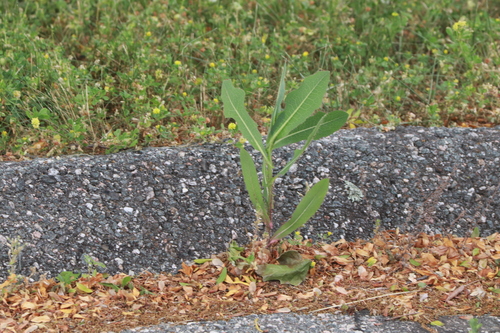
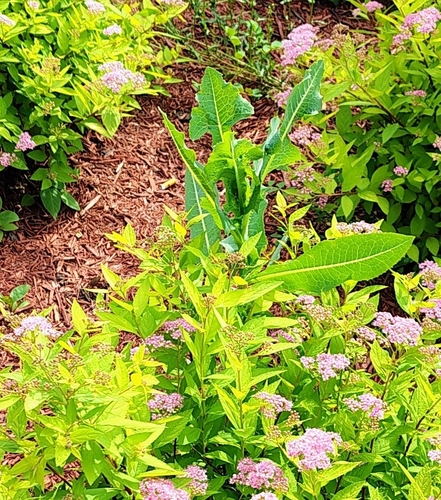
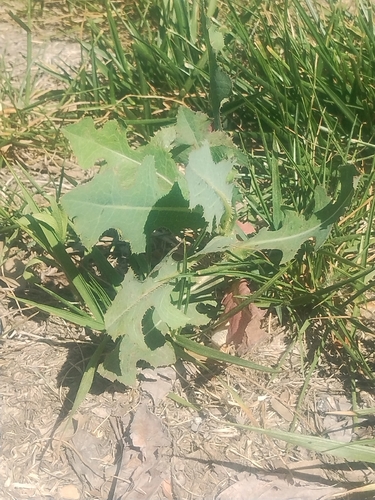
The prickly lettuce is an upright plant with blue-green, deeply lobed leaves featuring distinctive prickles along the midrib and edges. It produces small, pale yellow, daisy-like flower heads clustered at the top of its stem, sometimes appearing almost white.
Category
PlantsRarity
Common
Danger
2/5 · Low
Snaps
17
Its leaves can twist and point like a natural compass, guiding lost explorers.
Its white sap contains a mild latex that was once used as a folk remedy.
The plant grows so fast, it can reach over 6 feet tall in a single summer!
This plant is a wild cousin of the common garden lettuce you might eat!
Prickly lettuce can rotate its leaves to align vertically north-south, reducing sun exposure during peak heat to conserve water.
Prickly lettuce has spiny leaves and stems that deter herbivores from munching on its foliage, helping it survive.
Prickly lettuce has a long taproot that can reach deep into the soil for water, allowing it to thrive in dry conditions.

Odocoileus virginianus
Deer browse on its leaves.

Oryctolagus cuniculus
Rabbits may graze its foliage.
Apis mellifera
Bees visit its small yellow flowers.
Flowering plants are any plants that produce flowers as part of their reproductive cycle.
Biennial plants complete their life cycle over two growing seasons, typically forming foliage in the first year and flowering/seeding in the second.
Medicinal plants possess chemical compounds that can be used for therapeutic purposes to treat illnesses or maintain health.
Edible plants are those parts of a plant that are considered safe for human consumption.

Rapid growing plants exhibit accelerated growth rates, quickly increasing in size and biomass within a short period.

Possessing sharp, pointed projections or spines on the body or surface.

This habitat trait indicates species that can coexist with humans in urban and suburban environments, utilizing man-made structures and green spaces.
No aliases listed yet.
Danger
2/5 · Low
Don't touch the prickly leaves too much, as they can be sharp!
The easiest way to identify prickly lettuce is to use the Snappit nature identifier app.
30-200 cm
30-60 cm
1-2 cm
Summer-fall
Yes
None
Annual
Zoom in to split clusters and explore where this object has been snapped.
Jun 7, 2026
East Windsor Hill Historic DistrictPhoto attribution
(c) Mark Apgar, some rights reserved (CC BY)
License: CC BY 4.0 ↗
Image may be shown cropped inside the card frame.
Jun 4, 2026
Marsh Botanical GardenPhoto attribution
no rights reserved
License: CC0 1.0 ↗
Image may be shown cropped inside the card frame.
Jun 2, 2026
Lock and Dam No. 15Photo attribution
no rights reserved
License: CC0 1.0 ↗
Image may be shown cropped inside the card frame.

New York, US
You might spot American Robin, Pond Slider, and Northern Cardinal.
View guide →

New Mexico, US
You might spot Pronghorn, Great-Tailed Grackle, and Redstem Stork's-Bill.
View guide →

New York, US
You might spot Rock Pigeon, American Robin, and Spotted Lanternfly.
View guide →

Pennsylvania, US
You might spot Spotted Lanternfly, Duck, and Asian Lady Beetle.
View guide →

Connecticut, US
You might spot Eastern Gray Squirrel, Dark-Eyed Junco, and House Sparrow.
View guide →

Illinois, US
You might spot American Robin, Canada Goose, and House Sparrow.
View guide →
Take the discovery with you
Snap it with Snappit to identify it, learn what makes it special, and add the discovery to your collection.








.jpg&width=800)



_001.jpg&width=800)



