.jpg&width=800)





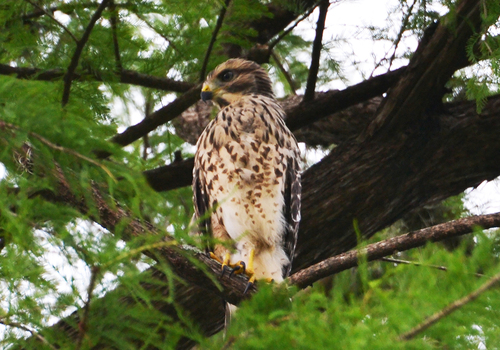
Red-shouldered Hawk
Buteo lineatus
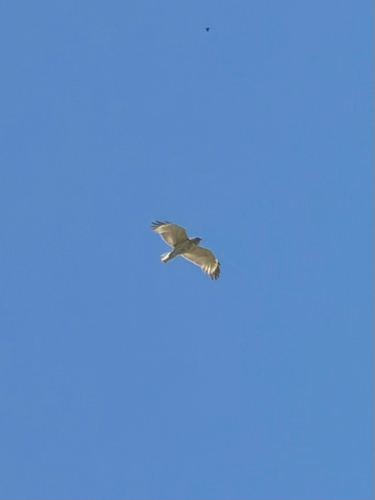
The Red-shouldered Hawk is a beautiful bird with bright red shoulders and a loud call. It loves to soar high in the sky and can often be seen perched on trees, watching for its next meal.
Habitat: Forests
The Red-shouldered Hawk has a rich reddish-brown barred underside, with broad black and white bands on its tail. Its upperparts are mottled brown, and it sports distinctive rufous-red patches on its shoulders, giving it its name.
Category
BirdsRarity
Common
Danger
2/5 · Low
Snaps
135
A young hawk can fly within six weeks of hatching, learning to hunt quickly!
Red-shouldered Hawks often 'still hunt', waiting patiently on a perch for prey.
Their nests are often reused for many years, sometimes just needing a quick renovation!
They love to eat snakes and frogs, making them helpful pest controllers in wetlands.
Red-shouldered Hawks can spot tiny prey from high in the trees because of their incredibly sharp eyesight.
Red-shouldered Hawks have specialized feathers that allow nearly silent flight, helping them ambush unsuspecting prey.
Red-shouldered Hawks possess strong, sharp talons that help them firmly grip and carry their captured prey.
Red-shouldered Hawks use a loud, distinctive 'kee-aah' call that helps them declare territory and communicate.
These hawks are carnivores that hunt and eat small mammals, reptiles, amphibians, and sometimes other birds.
Microtus pennsylvanicus
A primary small mammal prey item for the hawk.
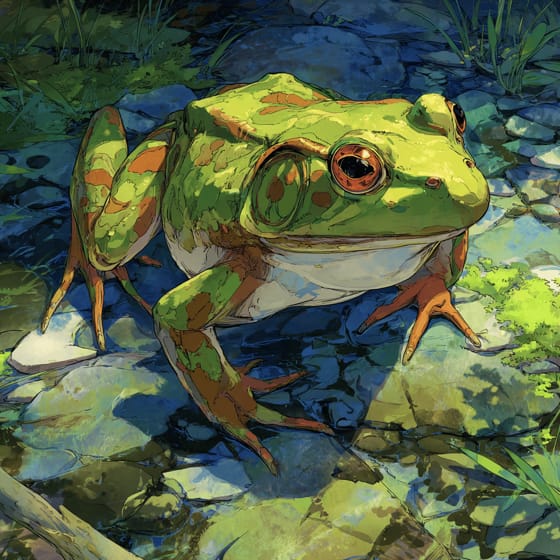
Rana catesbeiana
Common amphibian prey, especially near water.
Thamnophis sirtalis
Frequently preys on various non-venomous snakes.
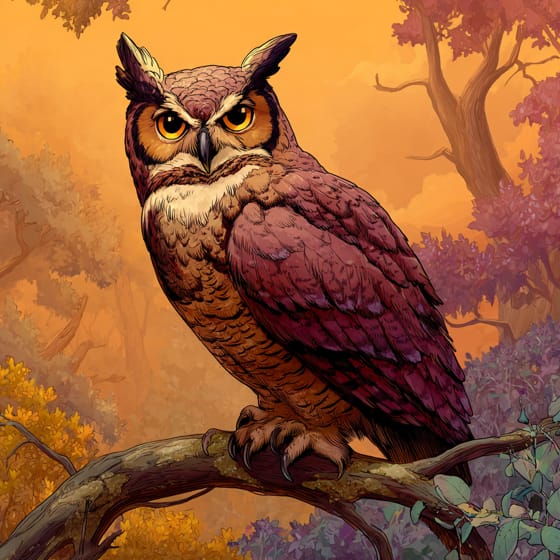
Bubo virginianus
Larger owls sometimes prey on hawk eggs, young, or adults.
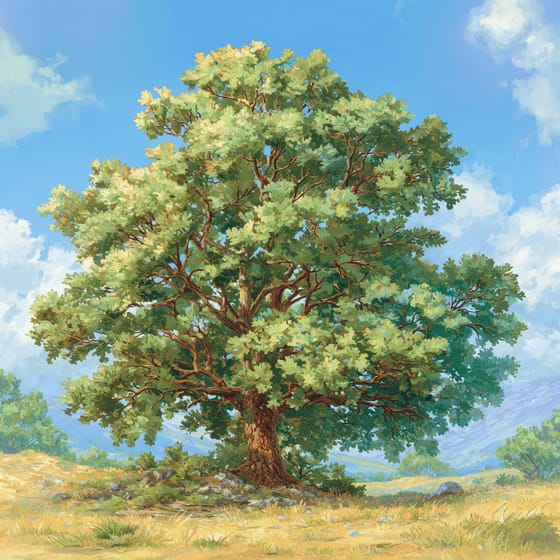
Quercus alba
Often builds nests in large, mature trees like oaks.
Feathered describes animals, primarily birds, possessing a covering of feathers.
Solitary animals live alone for most of their lives, only interacting with others for mating or parental care.
Aerial creatures spend a significant portion of their lives airborne, utilizing flight for various activities such as hunting, migration, or nesting.
Colorful describes organisms or objects displaying a wide range of bright and distinct colors.

An ambush predator hunts by patiently waiting and concealing itself, then launching a sudden attack when unsuspecting prey comes within range.

Forest habitats are terrestrial environments dominated by dense tree cover, supporting a high diversity of plant and animal life.

This habitat trait identifies species found in wetlands, which are areas of land saturated with water, either permanently or seasonally, including marshes, swamps, and bogs.

This trait identifies organisms whose diet consists entirely or primarily of animal tissue.

Diurnal animals are primarily active during daylight hours, typically resting or sleeping at night.
No aliases listed yet.
Danger
2/5 · Low
Always watch birds from a distance and don't try to touch them.
The easiest way to identify Red-shouldered Hawk is to use the Snappit nature identifier app.
38-58 cm
90-127 cm
0.5-0.7 kg
10-20 years
65 km/h
These hawks are carnivores that hunt and eat small mammals, reptiles, amphibians, and sometimes other birds.
Forests
Zoom in to split clusters and explore where this object has been snapped.
Jun 3, 2026
Brackenridge ParkPhoto attribution
(c) Wes Copas, some rights reserved (CC BY)
License: CC BY 4.0 ↗
Image may be shown cropped inside the card frame.
May 17, 2026
Bean Hill Historic DistrictPhoto attribution
(c) Sawyer Baran, some rights reserved (CC BY)
License: CC BY 4.0 ↗
Image may be shown cropped inside the card frame.

Tennessee, US
You might spot House Sparrow, Northern Mockingbird, and Gulf Fritillary.
View guide →

California, US
You might spot Acorn Woodpecker and Western Fence Lizard.
View guide →

South Carolina, US
You might spot American Alligator, Anole, and Great Blue Heron.
View guide →

California, US
You might spot Monarch, Canada Goose, and Western Gull.
View guide →

Connecticut, US
You might spot Striped Wintergreen and Common Eastern Bumble Bee.
View guide →

Connecticut, US
You might spot Bold Jumping Spider and American Tuliptree.
View guide →
Take the discovery with you
Snap it with Snappit to identify it, learn what makes it special, and add the discovery to your collection.




.jpg&width=800)





