





Solomon's plume
Maianthemum racemosum
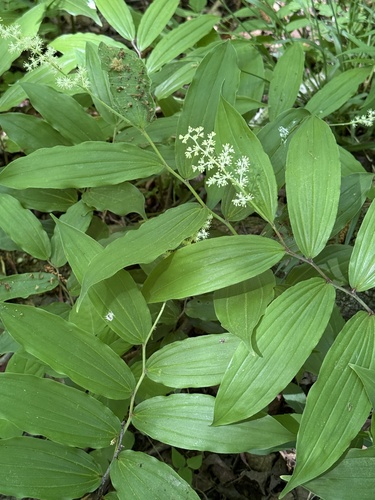
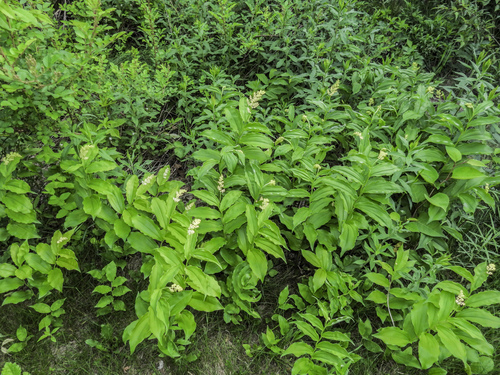
Solomon's plume is a lovely plant with tall, leafy stems and clusters of tiny white flowers. It grows in shady places and is a great addition to gardens and forests.
Habitat: Forests
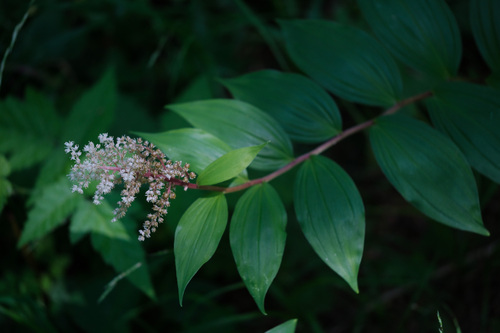
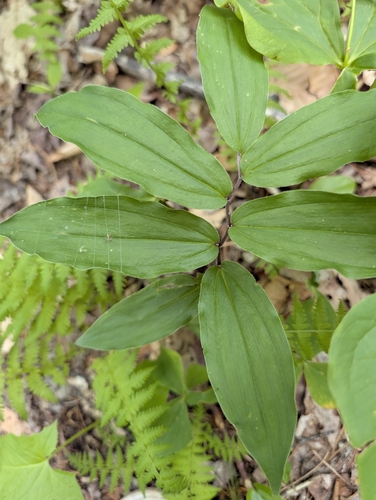
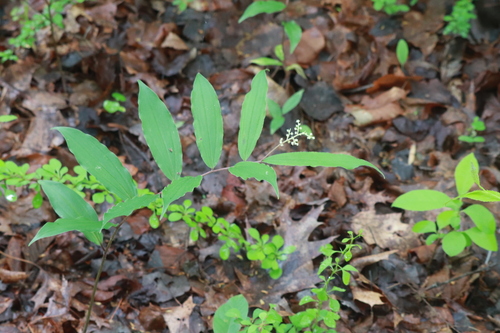
The Solomon's plume has gracefully arching stems adorned with broad, oval leaves. Its tip culminates in a feathery cluster of tiny, creamy-white flowers, which mature into bright red berries. This plant stands out from true Solomon's Seal with its terminal flower plume.
Category
PlantsRarity
Common
Danger
1/5 · Very low
Snaps
113
Its common name comes from unique scars on its rootstock that resemble ancient seals!
Native Americans used the roots to make healing poultices and even a nutritious soup.
Surprisingly, Solomon's plume is a relative of asparagus and lilies, despite its woodland looks!
The nodding cluster of flowers really does look like a delicate feather plume swaying in the breeze!
Its bright red berries attract birds, which eat them and help spread Solomon's plume seeds far and wide.
Solomon's plume can thrive in deep shade, using dappled light to grow where other plants struggle.
Deciduous plants periodically shed all their leaves, typically during autumn or dry seasons.
Flowering plants are any plants that produce flowers as part of their reproductive cycle.
Shade tolerant plants are adapted to grow and thrive in areas with low light levels, requiring less direct sunlight.
Spring blooming plants produce their flowers during the spring season, often signifying the end of winter and the start of new growth.

Fragrant flowers emit a pleasant aroma, often to attract pollinators or for defense.

Describes plants that are particularly attractive and beneficial to a wide range of pollinating organisms.

Forest habitats are terrestrial environments dominated by dense tree cover, supporting a high diversity of plant and animal life.
No aliases listed yet.
Danger
1/5 · Very low
Always look but don't touch plants unless you know they are safe.
The easiest way to identify Solomon's plume is to use the Snappit nature identifier app.
30-90 cm
30-60 cm
0.3-0.5 cm
Late spring to early summer
Yes
Mild
Perennial
Zoom in to split clusters and explore where this object has been snapped.
Jun 4, 2026
Glen HavenPhoto attribution
(c) Brooke Smith, some rights reserved (CC BY)
License: CC BY 4.0 ↗
Image may be shown cropped inside the card frame.
Jun 2, 2026
Lyman School for BoysPhoto attribution
no rights reserved
License: CC0 1.0 ↗
Image may be shown cropped inside the card frame.
May 28, 2026
Hoyt ArboretumPhoto attribution
no rights reserved
License: CC0 1.0 ↗
Image may be shown cropped inside the card frame.
May 27, 2026
Lyme Common Historic DistrictPhoto attribution
(c) Nick Kleinschmidt, some rights reserved (CC BY)
License: CC BY 4.0 ↗
Image may be shown cropped inside the card frame.
May 25, 2026
East Granby Historic DistrictPhoto attribution
(c) Mark Apgar, some rights reserved (CC BY)
License: CC BY 4.0 ↗
Image may be shown cropped inside the card frame.

New York, US
You might spot Sundial Lupine, Spotted Horsemint, and New Jersey Tea.
View guide →

Pennsylvania, US
You might spot American Robin, Red-Winged Blackbird, and Lesser Celandine.
View guide →

Massachusetts, US
You might spot Maidenhair Spleenwort and Red Trillium.
View guide →

Connecticut, US
You might spot Bold Jumping Spider and American Tuliptree.
View guide →

California, US
You might spot Redwood, Pacific Trillium, and Evergreen Huckleberry.
View guide →

Massachusetts, US
You might spot Common Eastern Bumble Bee and Eastern Skunk Cabbage.
View guide →
Take the discovery with you
Snap it with Snappit to identify it, learn what makes it special, and add the discovery to your collection.







.jpg&width=800)


_001.jpg&width=800)



