





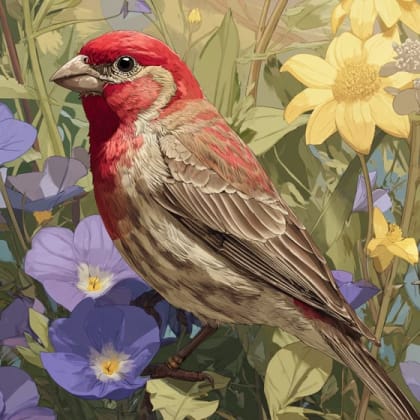
Northern Cardinal

Step back in time to Greenville's elegant past within the Colonel Elias Earle Historic District.
Step back in time to Greenville's elegant past within the Colonel Elias Earle Historic District. This charming residential neighborhood, originally part of Colonel Elias Earle's sprawling estate, stands as a beautifully preserved showcase of early 20th-century American architecture. Designated as a National Register Historic District, it offers visitors a unique opportunity to experience the distinctive character and historical evolution of Greenville, South Carolina.
The district is particularly notable for its rich collection of homes primarily constructed between 1915 and 1930, embodying a variety of popular historical revival styles. As you wander its tree-lined streets, you'll encounter exquisite examples of Neo-Classical, Dutch Colonial, Georgian Revival, English Cottage, and Tudor architecture. These residences, often featuring large, grassy front yards and thoughtful design elements like porte-cocheres and side driveways, reflect its significance as one of Greenville's early automobile-era neighborhoods.
Beyond the architectural diversity, the district is home to two of Greenville's oldest and most significant landmarks: the historic Earle Town House, dating back to approximately 1820, and "Whitehall," the stately 1813 summer residence of Governor Henry Middleton. Exploring this district offers a serene journey through a pivotal period in Greenville's development, revealing the prosperity and changing lifestyles of its residents through the enduring beauty of its homes. Wondering what that bird or insect is? Find out on your visit using the Snappit nature app.
buffs * Photography * Quiet strolls and leisurely walks
Engage in a self-guided walking tour to admire the diverse architectural styles, notice the well-maintained landscaping, and imagine life in an early 20th-century "automobile neighborhood." Look for historical markers that might provide additional context on specific homes or the district's history. Please remember that most properties are private residences, so respect the privacy of the homeowners.
South Carolina summers can be hot and humid, making early morning or late afternoon visits preferable. Winters are generally mild, but some architectural details might be less vibrant without surrounding greenery.
As a residential neighborhood, the district features public sidewalks suitable for walking. While the streets are generally level, individual property access varies.
The architectural styles themselves are the main exhibits. Focus on identifying the different revival styles like Neo-Classical, Colonial Revival, Tudor, and Bungalow. Don't miss the Earle Town House (107 James Street) and "Whitehall" (310 West Earle Street) as these are the oldest and most significant structures.
Each card links to a full Explore page with photos, traits, and fun facts.
Start with the big picture, then zoom in to explore individual wildlife observations around this place.
Wear comfortable shoes
The best way to experience the district is on foot, so comfortable walking shoes are essential.
Go on a self-guided tour
Utilize online resources or local tourism information for a self-guided walking tour map that highlights key homes and architectural styles.
Bring a camera
The diverse and well-preserved architecture makes for excellent photographic opportunities.
Respect privacy
Remember that these are private residences; admire from the street and do not trespass or disturb residents.
Visit during daylight hours
To fully appreciate the architectural details and the overall ambiance, visit during the day.
Combine with other Greenville attractions: The district is close to other historical and cultural sites in Greenville, making it easy to integrate into a broader exploration of the city.
Jun 6, 2026
Jun 5, 2026
Jun 5, 2026
Jun 5, 2026
Jun 5, 2026

Maryland, US
You might spot White-Tailed Deer and Eastern Gray Squirrel.
View guide →
.jpg)
District of Columbia, US
You might spot Eastern Gray Squirrel, Duck, and House Sparrow.
View guide →

Illinois, US
You might spot American Robin, Canada Goose, and House Sparrow.
View guide →

Virginia, US
You might spot Spotted Lanternfly and Northern Cardinal.
View guide →
Take the discovery with you
Identify the wildlife you spot, learn as you go, and keep a collection of the adventure.























.jpg&width=800)



